In all fairness, I thought General Grievous was a lousy villain.
EDIT: Let me elaborate.
He has a stupid name, a non-threatening wheeze, campy dialogue in a movie of campy dialogue, a lack of emotions, no narrative buildup, no Force powers, and he had a stupid name.
Hmm, several of these could equally apply to Vader, especially given that the Original Trilogy has far more campy dialogue, and a generally more campy atmosphere, than any of the Prequel films, he isn’t exactly brimming with any emotion other than contempt and anger like Grievous, and that he wasn’t given a chance to demonstrate his full powers in the OT.
Concerning Grievous, I thought he was something a bit different after the Sith Lords in the first two Prequel films, and gave the Droid army a face, like Cody did with the Clone Troopers. Given that he has four lightsabers and is built with an especially profound cyborg strength, he is still an extremely powerful threat against anything that isn’t Force-sensitive, including the many thousands of Clone Troopers that made up the majority of the Republic’s army, so lore-wise giving him no Force Powers wasn’t that bad a thing. Indeed he would also be a threat to relatively untrained Force-sensitives like Leia and pre-Episode VI Luke.
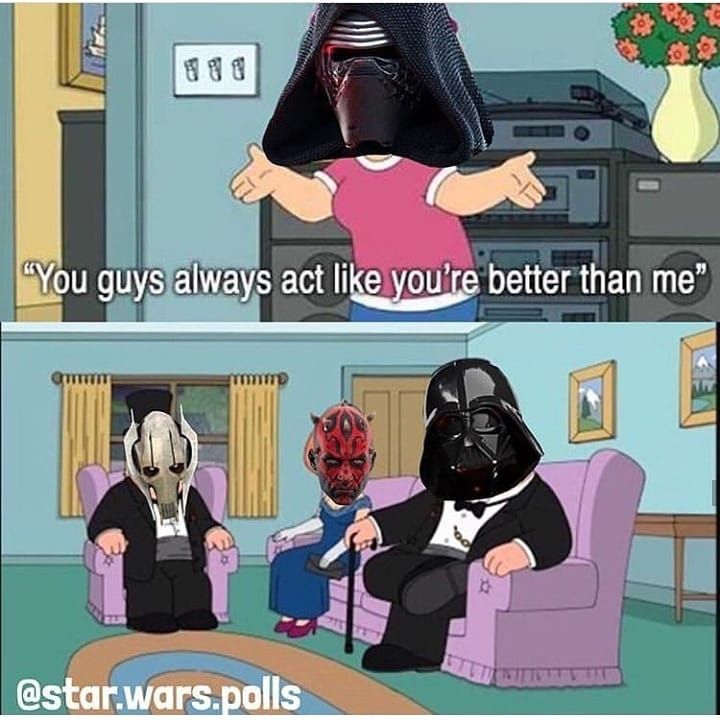
As for Kylo, he was little more than a Vader wannabe in VII. VIII, for all its flaws, at least gave him some different background what with him and Luke both feeling that the other was betraying them, but Grievous was still a lot more original and interesting for me personally, and I would rather have seen him survive to live on in more films than Kylo to be honest.
They never showed us the real grievous. This is what we all wanted
2D cartoons always have a frakload of artistic licence and exaggeration to them as part of their ‘cartoony’ atmosphere, even sci-if ones, so I really don’t think much of the 2002 Clone Wars series.
That set a bad precedent. Captain Phasma was pretty silly and non-threatening in the Disney movies but she was well fleshed out and very bad ass in the tie-in novels.
Too bad they didn’t actually show this in the films, given that the films take precedence over all other media as they were what started all off. To be fair this is the same with Baze Malbus and Chirrut Imwe, who are also given a lot more development in a tie-in novel, and I think it would be great if this had been highlighted in Rogue One, but there is only so much you can put in to a film if you don’t want it to be a Middle-Earth style epic, which is of course not to everyone’s taste. That’s why I think it’s unfair for people to criticise Rogue One for ‘lack of character development’, because it’s one film whose plot has to begin and end there and then, rather than Episodes I, IV or VII which all had two sequels to rely upon for additional ‘character development’. They could only do so much for each character without drowning the plot in character backstory and development.


 ) for example became pretty memorable for me.