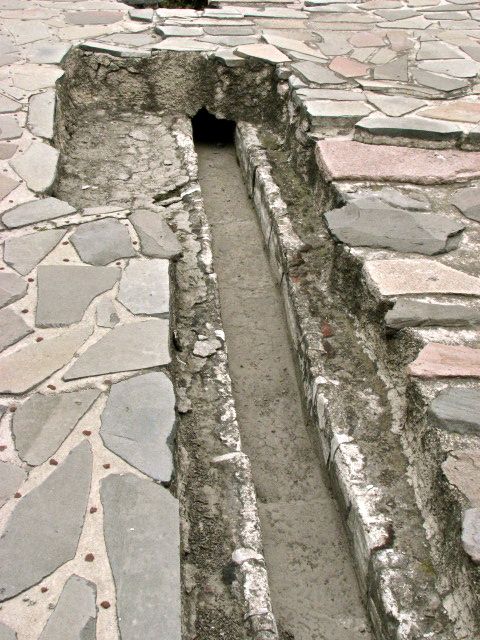
Tenochtitlán had a sophisticated water system for its time. Above is a water channel discovered under several layers of the plaza.
Two large terracotta aqueducts fed the city fresh water from springs at the on-shore hill of
Chapultepec. Each aqueduct possessed a double channel and each was more than 4 km (2.5 mi) long.
Lago de Texcoco itself was brackish (salty), although fed by fresh underwater springs. In 1453, during the reign of
Moctezuma I, a dike was completed that separated the frresh, underwater springs from the broader, brackish areas of the lake. This was a considerable engineering accomplishment, given the lack of draft animals, wheeled vehicles, or metal tools. The levee of
Nezahualcoyctl, when completed, was between 12 and 16 km (7.5 to 9.9 mi) in length. The new areas of fresh water adjacent to the island were used to create the famous
chinampas, or floating gardens, some of which still exist. These were artificial islands created by driving stakes into the lakebed and then fencing them with wattle. Layered with mud and decaying vegetation, the fenced portion eventually reached above the waterline where it could be planted. The stakes themselves sometimes took root and became trees. The Mexica thus created their own arable land. The
chinampas were easily accessible from the city and--just as important--easily defended by the moat created by the lake.
Tenochtitlán had no sewers, but it did have an extensive system of public and private toilets where waste was collected in canoes to be used as
fertilizer on the chinampas. The
Mexica waste system, along with the frequent baths enabled by the fresh water from the aqueducts, created a remarkably healthy environment for a large city. It was certainly far superior to anything existing in Europe at the time. Unfortunately none of this afforded any defense against the diseases the Spanish brought. (Photo from the
Templo Mayor archaeological site)