• The forum software have been upgraded to the latest version.

    If you notice anything that looks off, or does not work, please let us know.

    For more information, click here.

Mayan Art Megathread

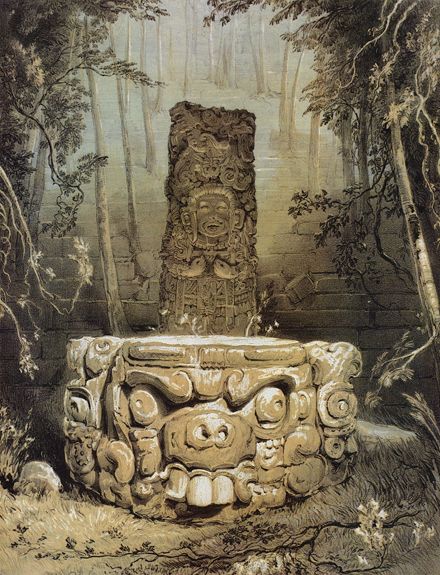
This particular mural, from the source I found, I believe is wrongly attributed to Waldeck. He definitely visited Palenque (the picture of the Mayan king on a double-jaguar-headed-throne above is definitely Palenque) but I am pretty sure the picture below is Catherwood's work, not Waldeck; this is simply because the picture is MUCH more true to the Mayan original than Waldeck normally was. But I am too far away from my sourcebooks at the moment, so for now, here is the beautiful artwork! :artist:

View attachment 24282

This is indeed Waldeck, I see it in a book of his art, "Monuments anciens du Mexique". Regardless, it's magnificient! I find some artist's representations of such ancient carvings better to look at than the original, thanks to the current condition of the pieces, variations in color of the stone, etc..
 
This is indeed Waldeck, I see it in a book of his art, "Monuments anciens du Mexique". Regardless, it's magnificient! I find some artist's representations of such ancient carvings better to look at than the original, thanks to the current condition of the pieces, variations in color of the stone, etc..

I agree; I do love some of the artists impressions of the ruins. I got a big book on Frederick Catherwood and his work at home!

d0d483de04a88fa267c66afa4e6c81a9.jpg

It has been some time since I visited this thread, thanks for bringing me back!
 
I agree; I do love some of the artists impressions of the ruins. I got a big book on Frederick Catherwood and his work at home!

View attachment 97055

It has been some time since I visited this thread, thanks for bringing me back!

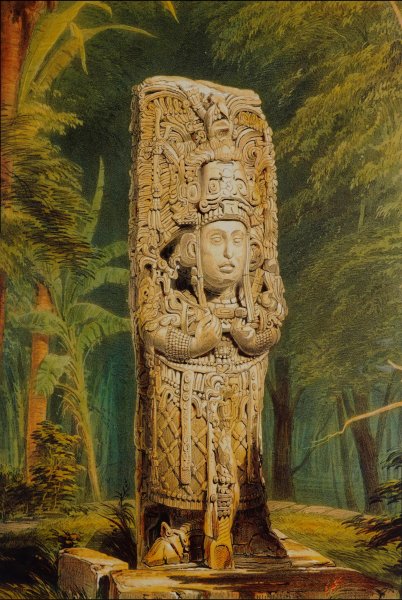
Thank you for starting this thread! I'm still making my way thru it as I find time. And I couldn't agree more, Catherwood is magnificent. I'm sure I've perused the same book at Archive dot org, along with books by Adela Breton, and now Waldeck (pity that he embellished his work, because he was so talented) . I recently read an historical fiction book that told about the journey of a Pakal descendent from Palenque, a young woman, who traveled across the Yucatan to wed her husband, the ruler of Copan. And HE has a stela at Copan that is beautifully represented by Catherwood, Stela H. It was interesting to see such places and families represented with a taste of what life was like at the time.
 

Attachments

  • Stela-H-at-Copan_Catherwood_1841.jpg
    Stela-H-at-Copan_Catherwood_1841.jpg
    5.1 MB · Views: 2
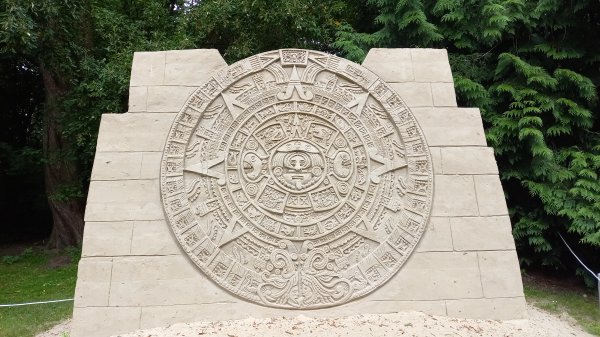
20210817_120224.jpg

Sandsculpture as part of a exhibition around the theme 'Time'

Grrr, Imrahil
 
I thought this could belong here:

Screenshot_20210927-232025_Instagram.jpg

Grrr, Imrahil
 
Last edited:
Something like that, I am not sure on the size, so it could be a giant ;)

Grrr, Imrahil
 
A Lustrian Ogre?

Sometime it happens.

raw
 
Turns out the next Black Panther movie Wakanda Forever (coming out in NOV 2022?) is going to feature Namor, which I am excited about.

Plot twist- his culture is based on an Atlantis-adjacent culture that shares roots in Mayan/Mesoamerican history?

Marvel Studios’ Black Panther: Wakanda Forever | Official Trailer - YouTube

I am interested! Hope the movie is good. The first movie was ok, the Black Panther character movie was awesome but as much as the first Black Panther movie was a great spectacle I felt it was a bit bland. Looking forward to the next one, I hope it is good.
 
small-watery-realm-waterlily-jaguar-3230-azul2-copy.png

Well I am back from my first Mesoamerican Meeting. This year's conference was on Water, specifically waterscapes as it applies to the Maya world, ranging in time from BC in the Preclassic Era through the Classic to Terminal Collapse periods, and through the Colonial period to present day.

I had a fantastic time :D

I attended a two-day workshop where we learned to read and translate Maya glyphs, followed by attending two more days of seminars with several archaeologists and other researchers presenting findings/papers relating to the topic. Each day was 9 to 5 (with a lunch break) but I felt the days flew by. I hope I can attend again in the future, if not I will certainly be attending the workshops online!
 
View attachment 128700

Well I am back from my first Mesoamerican Meeting. This year's conference was on Water, specifically waterscapes as it applies to the Maya world, ranging in time from BC in the Preclassic Era through the Classic to Terminal Collapse periods, and through the Colonial period to present day.

I had a fantastic time :D

I attended a two-day workshop where we learned to read and translate Maya glyphs, followed by attending two more days of seminars with several archaeologists and other researchers presenting findings/papers relating to the topic. Each day was 9 to 5 (with a lunch break) but I felt the days flew by. I hope I can attend again in the future, if not I will certainly be attending the workshops online!

That sounds like some very fun times and very interesting above all.

Grrr, !mrahil
 
Found a little more on this site.... about half way down.
http://cookjmex.blogspot.com/2012_10_01_archive.html
165850-GT+plaza+plumbing.jpg

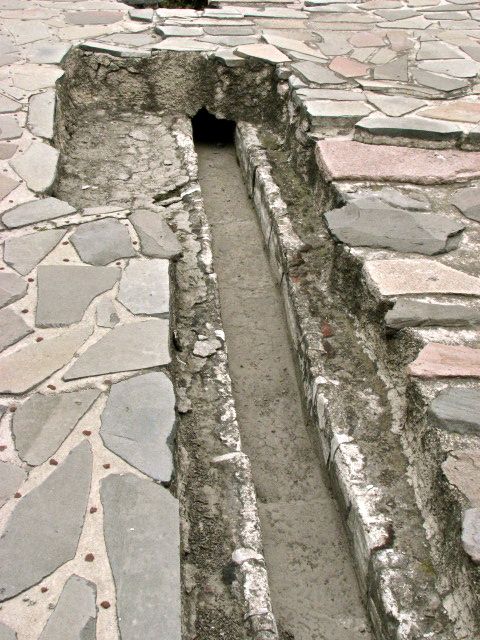
Tenochtitlán had a sophisticated water system for its time. Above is a water channel discovered under several layers of the plaza. Two large terracotta aqueducts fed the city fresh water from springs at the on-shore hill of Chapultepec. Each aqueduct possessed a double channel and each was more than 4 km (2.5 mi) long. Lago de Texcoco itself was brackish (salty), although fed by fresh underwater springs. In 1453, during the reign of Moctezuma I, a dike was completed that separated the frresh, underwater springs from the broader, brackish areas of the lake. This was a considerable engineering accomplishment, given the lack of draft animals, wheeled vehicles, or metal tools. The levee of Nezahualcoyctl, when completed, was between 12 and 16 km (7.5 to 9.9 mi) in length. The new areas of fresh water adjacent to the island were used to create the famous chinampas, or floating gardens, some of which still exist. These were artificial islands created by driving stakes into the lakebed and then fencing them with wattle. Layered with mud and decaying vegetation, the fenced portion eventually reached above the waterline where it could be planted. The stakes themselves sometimes took root and became trees. The Mexica thus created their own arable land. The chinampas were easily accessible from the city and--just as important--easily defended by the moat created by the lake. Tenochtitlán had no sewers, but it did have an extensive system of public and private toilets where waste was collected in canoes to be used as fertilizer on the chinampas. The Mexica waste system, along with the frequent baths enabled by the fresh water from the aqueducts, created a remarkably healthy environment for a large city. It was certainly far superior to anything existing in Europe at the time. Unfortunately none of this afforded any defense against the diseases the Spanish brought. (Photo from the Templo Mayor archaeological site)

Tenochtitlán's advanced water system was truly remarkable for its era. A fascinating feature of this system is the underground water channel, which was unearthed beneath multiple layers of the plaza. The city was supplied with fresh water from two large terracotta aqueducts that extended more than 4 km (2.5 mi) each from the springs at Chapultepec hill along the shoreline. This was quite an engineering feat, especially considering the absence of draft animals, wheeled vehicles, and metal tools during that time.
In this context, considering an online essay revision service could help refine and polish your writing, ensuring that the historical significance of Tenochtitlán's water system is effectively communicated.
 
Tenochtitlán's advanced water system was truly remarkable for its era. A fascinating feature of this system is the underground water channel, which was unearthed beneath multiple layers of the plaza. The city was supplied with fresh water from two large terracotta aqueducts that extended more than 4 km (2.5 mi) each from the springs at Chapultepec hill along the shoreline. This was quite an engineering feat, especially considering the absence of draft animals, wheeled vehicles, and metal tools during that time.
In this context, considering an online essay revision service could help refine and polish your writing, ensuring that the historical significance of Tenochtitlán's water system is effectively communicated.


That's a pretty interesting first post!
Welcome to Lustria, @JackHarmon :)
 
Back
Top