First weekend in AGES I've actually done stuff!
Hopefully this continues, but for the moment I've decided to go a little heavier in detail and explaining the choices I've made with pieces.
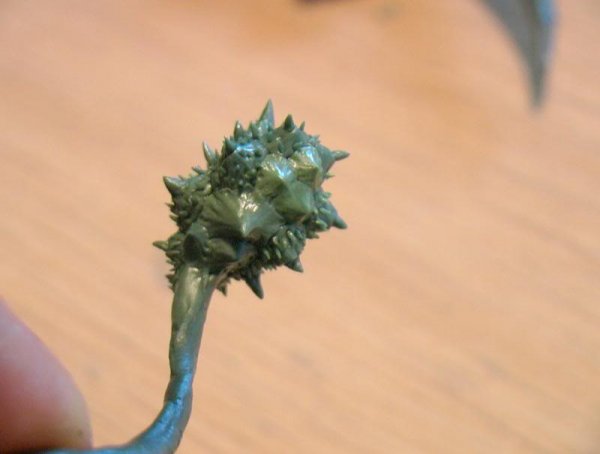
To pick up from where I last was, I explained the pros, cons and realistic (as far as is realistically possible) considerations that I like to go through when creating something, I like to look at what it is, does and supporting artwork. I also like starting out with bits that are highly fiddly and likely to annoy me as once they're out the way things are all gravy from that point on (in theory).
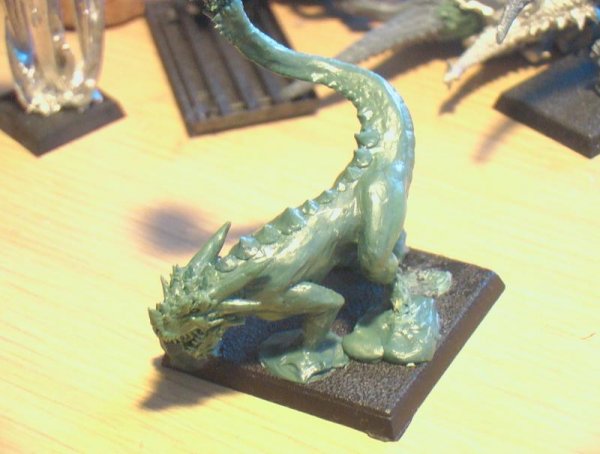
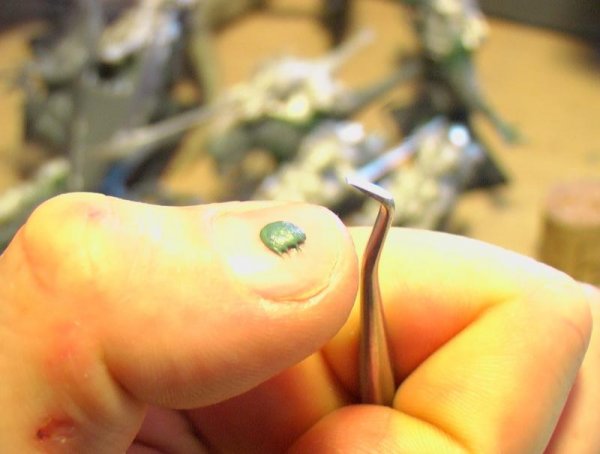
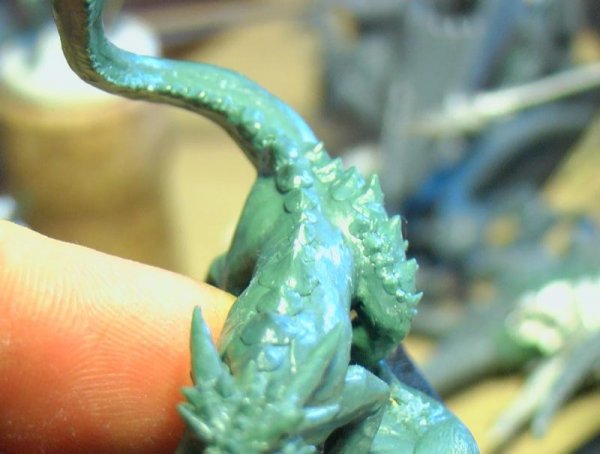
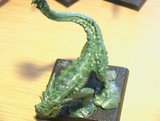
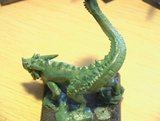
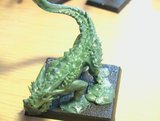
With that said, I start off from finishing the work on the spikes on the tail, though luckily at this point most of it is done and all I have to do is fill in the blanks (or scales in this case). My reason for the under side scales on the club end not being like the ones on top is the same as for a Tarantula, flickable spikes on top makes sense, less likely to get caught in anything, easier to flick off and you don't need to over/off balance yourself quite as much in doing so (it's also a perfect excuse for me to not have to spend AGES sculpting these scales all over the bottom too).
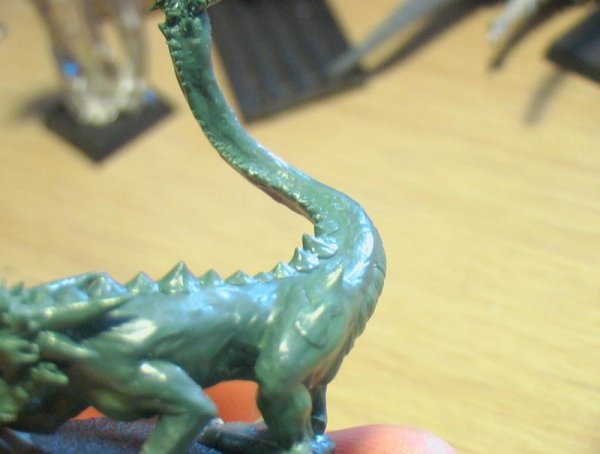
Next bit is to lay down some of the muscle bands to the tail and create some thickness to it. I know very little on dinosaur anatomy and do my best to look at research books and sculpts to at least try to get a feeling, both for the muscles and the movements/stresses involved and although a creature like this does not exist in the fossil record, it's still possible to get an idea of what is needed (I look at large sauropods for some help on this, as some have large whip like tails). This same pattern of muscle bands can be seen in other dinosaurs too, so I start by layering down bands (top first, then bottom, then the middles section on either side and rub vigourously with metal and wooden tools to hide the joins*)
*Something new I thought I'd try here to help in deciding which putties to use.
Green stuff: Big problem with it here is it's bubble gum like consistency, it means for joining two separate areas, even when both are freshly mixed, that you have to really press, work and rework the joins with metal and wooden tools to get the two different areas to blend together and hide the join, something that is nowhere near as long or irritating if you're using softer baking clays like fimo or sculpeys.
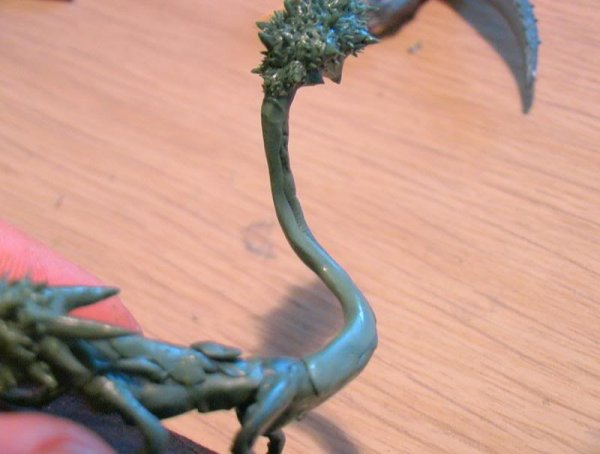
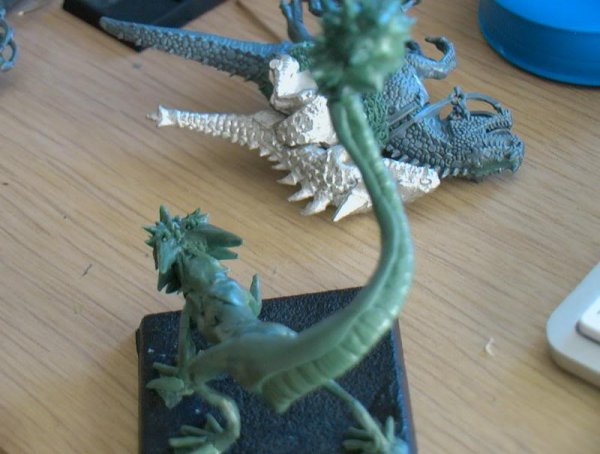
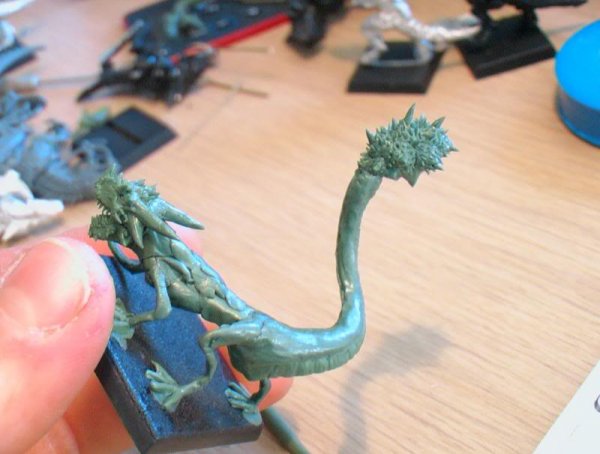
I also use lighter tools like clay shapers to add in shape on the underside of the tail and a bit of texture (though if you're planning on casting your work, don't go too light with detail otherwise it might not show, especially if you're casting in metal).
I now begin to move on to the thighs and legs:
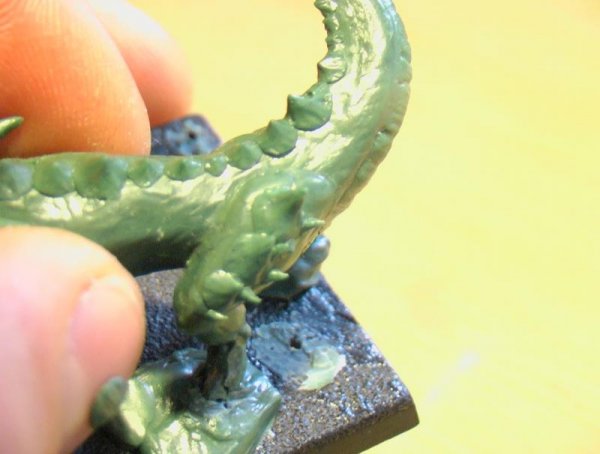
It's worth mentioning here that considering factors I've already mentioned come back into play, so for example the whole, long tail that gets flicked business. In order to help stabilise such a heavy and mobil tail, you don't just need a wider pelvis and stance, you need bigger feet to help spread the weight as it gets rocked back and forth and larger quads, adductors and abductors to support and stabilise the weight as it shifts from one side to another in mid tail swing.*
These muscles will also need to have quite a large spread across the body, they don't attach at one point, there's a considerable amount of spread across the tail and torso to allow for shifting and unbalancing of weight.
*Anatomy note:
It's always worth bearing in mind that even though this is a four legged creature with a tail, the anatomy is going to be rather similar to humans, there's four limbs with similar level motions, so you therefor will need Quads, hamstrings, adductors, abductors, stabilising muscles, etc. I will cover more of the upper body muscles a little further down the page.
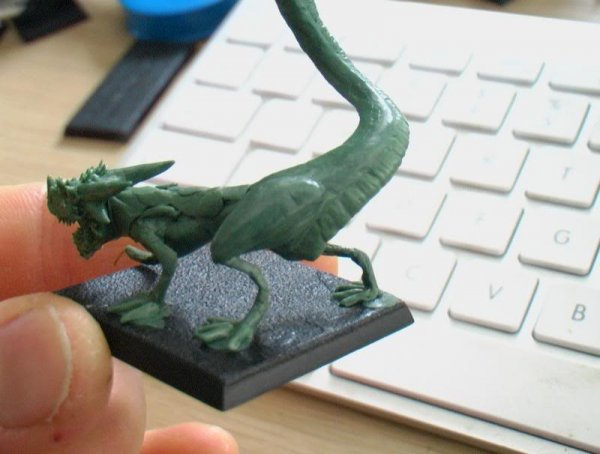
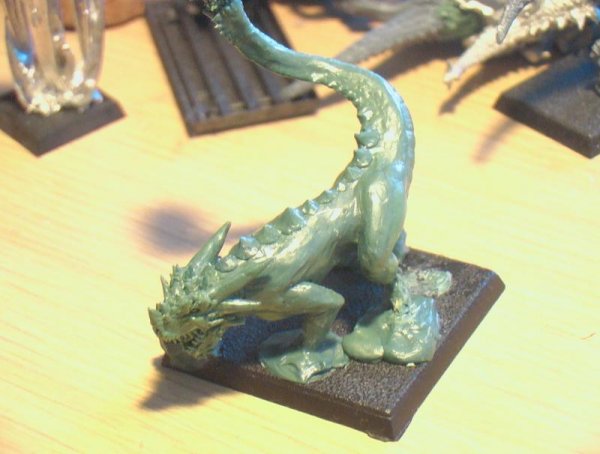
For these reasons I've also gone with using four toes on the feet instead of three, bit more support and wider foot pattern too, this could also tie in to help explain why this creature is also supposed to be aquatic (don't look at me like that, I don't write the rules, if I did there would be more unicorns). Sculpting feet can be a bit trial and error, depending on the look you're after, I'd have a look at larger dinos like triceratops, though in this instance I've gone with a more of a theropod style of feet. The sockets are for claws which get added in later. The knuckles in various places look a little off, but it's better to come back to these in the snagging list stage which comes towards the end.
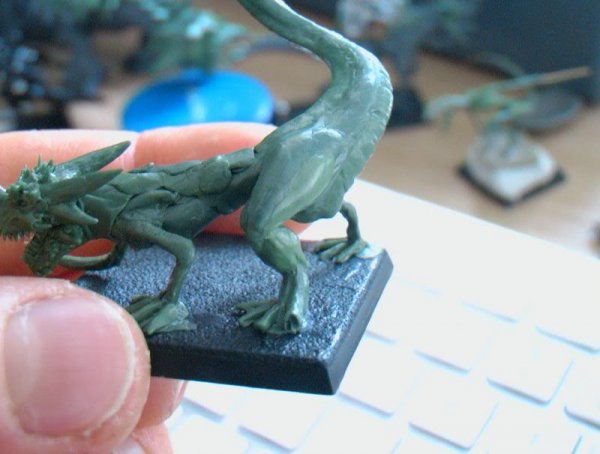
Having worked on the other side now in the same fashion I can begin to work towards the head, first thing I do is look at supporting muscles such as you would get on a human or humanoid, because of the rib cage you will still have muscles like the TVA (transverse abdominus), rectus abdominus, and various intercostals and obliques.
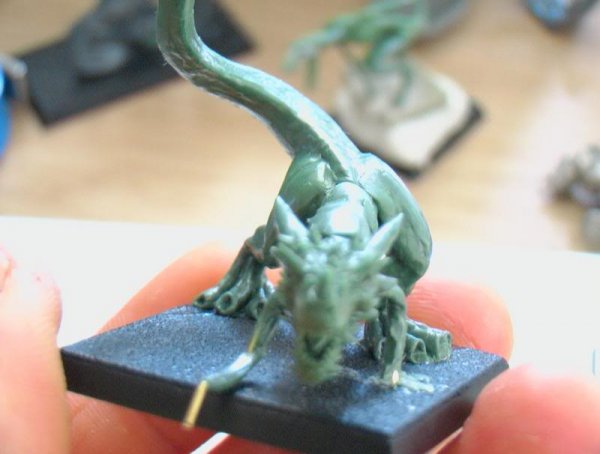
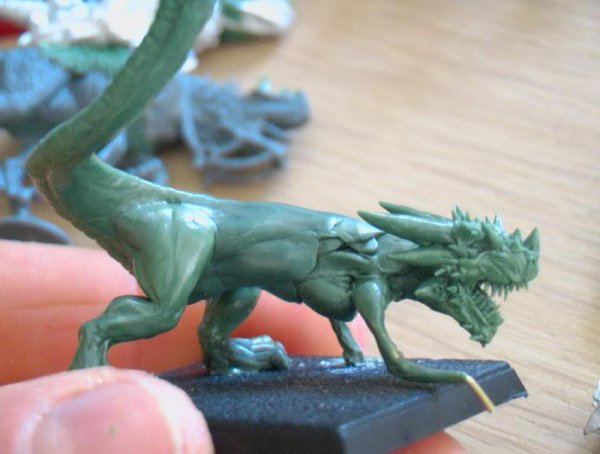
Work starts now on what would effectively be the torso area on a two legged creature, so you still have muscles like the lats, rotator cuffs end even bicep and tricep muscles like on your arms. This is because it all comes down to movement, doesn't matter on the shape or size of a creature, if it can mimic movements you do, then it will have a very similar muscle design set (look at the muscles in the front leg of a dog and compare it to a person's and you'll be surprised at how similar they are).
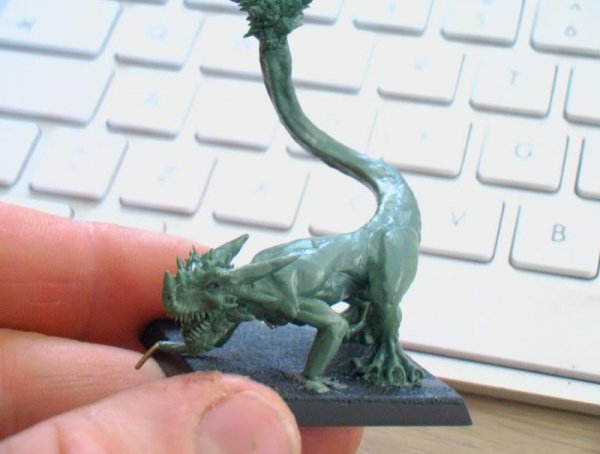
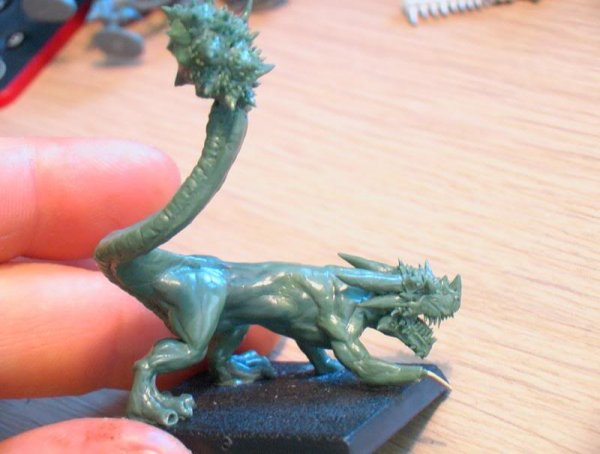
This side is a better photo and should help you see what I've been getting at. I should also add at this stage that, the muscles will look blocky, this is by now means a final stage, it's so I can get down greater detail and landmarks before moving on to the next stage of design where I'll be adding detail, skin texture and scales*. I haven't gone hyper toned or lean but that is because there's little point given that it's not what I'm trying to achieve with the end result.
Best to think of this as a skinless stage if that helps.

*Note on clays:
This is another disadvantage green stuff has over other lighter putties, it means you can lay down a basic muscle layer then add detail to it, due to how viscous it is and how quickly it dries.





 g.
g.