• The forum software have been upgraded to the latest version.

    If you notice anything that looks off, or does not work, please let us know.

    For more information, click here.

What is your favorite part of history

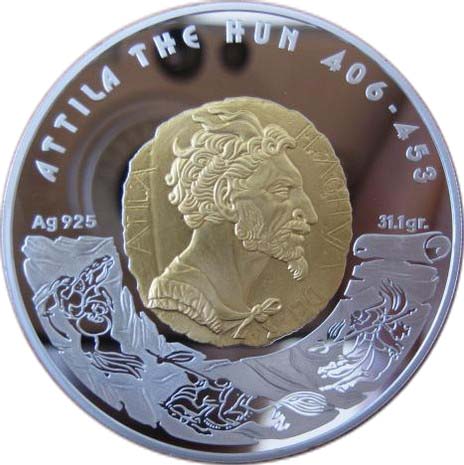
Because Attila was a bad ass. Cruel by today's standard's (and even by the standards back then), but effective. A group of barbarians striking fear in the greatest power of the time.
But by that time the Roman Empire was split in twain and thus divided had varying levels of control
 
True... but they were still the powerhouse of the world. Weaker than their earlier selves, but still should have been unparalleled.
Not particularly. Both sides of the empire retained a modicum of the earlier legions organization. Field armies had become much less threatening however.

Furthermore, both eastern anand Western empires were increasingly diluted by Germanic mercenaries and commanders, which further compromised training and effectiveness. This also caused a weakening on tbe northern border because they had to deal with barbarian immigration/incursions

Honestly in my estimation Bellisarius and his African expedition was the last true example of a projection of Roman power.
 
Not particularly. Both sides of the empire retained a modicum of the earlier legions organization. Field armies had become much less threatening however.

Furthermore, both eastern anand Western empires were increasingly diluted by Germanic mercenaries and commanders, which further compromised training and effectiveness. This also caused a weakening on tbe northern border because they had to deal with barbarian immigration/incursions

Honestly in my estimation Bellisarius and his African expedition was the last true example of a projection of Roman power.
But Attila and the Huns were still definitely the underdogs. It was still an amazing feat to stand up against Rome.
 
g447.jpg
 
1350-ish, Black Plague and 100 Years War. Mostly, I love it because it's the transition period between the knights dominating the battlefield and the rise of the well trained commoner.
 
"favourite time" is difficult...
A time in which I would like to live? I honestly think right now is better than any point in the past. Far from perfect but let's face it: Earlier times were crap in SO many regards we cannot even imagine.


I used to be a fan of ancient Greece and Egypt, and they are still interesting to me, but these days I am more into the times that we know more about. There is a whole lot of HUGE holes in our knowledge about ancient times. In medieval times that gets a lot better.


1350-ish, Black Plague and 100 Years War. Mostly, I love it because it's the transition period between the knights dominating the battlefield and the rise of the well trained commoner.

An interesting time indeed!
I tend to say early 15th century is my "favourite" for that very reason. Another reason why that new PC game "Kingdom Come: Deliverance" is exactly right for me btw., being set in 1403.


I also kinda "like" ~400 AD. Stilll a bit of Romans around, and already quite well into the the big Migration Period (~350AD - ~ 600AD) with all the cultural clashes and technological adaption to different kinds of warfare.


...and then the Viking times (~800AD - ~1000AD). Also covering the Moors for example.


....Argh I cannot decide.

 
"favourite time" is difficult...
A time in which I would like to live? I honestly think right now is better than any point in the past. Far from perfect but let's face it: Earlier times were crap in SO many regards we cannot even imagine.


I used to be a fan of ancient Greece and Egypt, and they are still interesting to me, but these days I am more into the times that we know more about. There is a whole lot of HUGE holes in our knowledge about ancient times. In medieval times that gets a lot better.


An interesting time indeed!
I tend to say early 15th century is my "favourite" for that very reason. Another reason why that new PC game "Kingdom Come: Deliverance" is exactly right for me btw., being set in 1403.


I also kinda "like" ~400 AD. Stilll a bit of Romans around, and already quite well into the the big Migration Period (~350AD - ~ 600AD) with all the cultural clashes and technological adaption to different kinds of warfare.


...and then the Viking times (~800AD - ~1000AD). Also covering the Moors for example.


....Argh I cannot decide.

I agree our knowledge of the ancient world is incomplete. We do know quite a bit though
 
I agree our knowledge of the ancient world is incomplete. We do know quite a bit though
Well, that's the main problem: we don't know how much we know (or not) and that has led to a huge number of false (or maybe false, for some it is hard to tell) assumptions about how the society worked.
 
Well, that's the main problem: we don't know how much we know (or not) and that has led to a huge number of false (or maybe false, for some it is hard to tell) assumptions about how the society worked.
Most of what we know comes from philosophers as well. This compounds the issue
 
Most of what we know comes from philosophers as well. This compounds the issue

Definitely!

Like for example a colleague and I were talking about big battles in history. Turns out that estimates of army sizes or numbers of casualties in some historical battles vary immensely (like in: one source says 50,000 and another says one million).
Most prominent examples are the Battle of Jerusalem, Thermopylae and the Battle of Marathon.
Half the stories about them are just legends. And often our sources are sepulchral texts (like paintings in Egyptian tombs) and those were very prone to shamelessly exaggerate.
 
Definitely!

Like for example a colleague and I were talking about big battles in history. Turns out that estimates of army sizes or numbers of casualties in some historical battles vary immensely (like in: one source says 50,000 and another says one million).
Most prominent examples are the Battle of Jerusalem, Thermopylae and the Battle of Marathon.
Half the stories about them are just legends. And often our sources are sepulchral texts (like paintings in Egyptian tombs) and those were very prone to shamelessly exaggerate.
Which battle of Jerusalem?

Yes troops counts outside of those of the enlightenment (Louis XIV and upwards) are horribly embellished for dramatic effect.

One of my professors once posed the question "I wonder what happened to the dead at the battle of drepana?"

He went on to sarcastically posit a theory where all the bodies eventually came together because of the tide and formed a sort of "corpse raft" until carrion took care of them.
 
Back
Top