If there is interest, I will cover all nine of the Nine, one deity at a time and see what suggestions and comments you guys have. If there is not much interest in me doing this. I will stop.
I will start with Khemra because one of the PCs, Neshik the gnome, is a priest of Khemra. As a favored soul, Neshik could rebel against Khemra and not lose his powers. Neshik, like most favored souls, is not aware he can do this, but Neshik has no intention of doing this. He is Neutral Good despite Khemra being Lawful Neutral. That’s okay. And Neshik’s actions have largely been Lawful Good anyway. I’m not super strict on alignments in my setting.
Neshik is going around healing commoners, fighting crime, and defending commoners from monsters while praising Khemra’s name. This is mildly unorthodox, but these actions are advancing Khemra’s goals, so no one is complaining.
Khemra in Great Detail
Basic Stats
Alignment: Lawful Neutral
Godly Nicknames: The Blazing Eye, The Compact Forger, the Sun Blinded
Priests’ Nickname: Keepers of the Way. Short form, Keepers. Originally I made them kind of like the Lasombra from Vampire the Masquerade as in “My Brother’s Keeper” but I’m not sure that Biblical reference works in a fantasy world based on D&D.
Favored Weapon: Heavy Mace
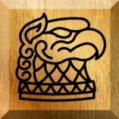
Most Common Symbol: A golden sun wreathed in orange and red flames with a purple eyeball in the middle. Common symbols include suns, fire, books, quills, birds of prey, and scepters among other things.
Favored Magic: Divination, Purification, Wraths
Divine Tool of Power: Khemra forged a shield out of Khemra's eyes.
Primary Dominion: The Sun
Primary Gift to Mortals: Reading and Writing
Synopsis: Khemra believes in creating ordered societies where everyone has a place and role in their society and everyone works together for collective benefit. She is very concerned with traditions and histories being forgotten. She taught mortals the first writing systems to help preserve knowledge and combat this forgetting. Khemra believes that only through the Compact she helped push were all the Nine able to put aside their differences and overthrow Turoch. She continues to try to enforce the tenets of the Compact over her siblings to make sure everyone still behaves today as they earlier agreed that they would. Depending on who you ask, either Khemra moves the sun across the sky every day or Khemra
is the sun. The fact that the sun sets every night is a testament to her willingness to limit her own influence due to the provisions set forth by the Compact.
Priests and Primary Followers: Khemra’s priests are so interested in good government they usually have at least an advisory role in most states. Khemra’s priests like to demonstrate that they are team players and generally don’t make power grabs. The exception is the theocratic nation of Khemarok where they rule directly (they still condescendingly invite other priests to join them). They are the primary state religion of the (Grey) Elven Empire and a handful of smaller nations. Khemra worship is broad elsewhere but does not permeate very deep into the lower classes of most places.
Common Times to Invoke her Name: Khemra is often praised at dawn and/or dusk to thank her for the sun. Khemra is often prayed to before conducting research or a similar tasked based on writing or preserved lore in some way.
Basic Tenets: -Follow the roles you were destined for and make sure others do likewise and don’t overstep their bounds.
-Seek and share knowledge and make sure it is preserved for future generations.
-Help create and maintain ordered societies for this is the way to ultimately benefit all.
Khemra’s Portfolio includes but is not limited to: The sun, literacy, history, law, oaths of fealty, hierarchies, translators, traditions, travel, regulation of the Nine as a whole, grandeur, royalty, and being a foe to the undead
Godly Rivals
When the Nine joined forces to overthrow Turoch, they drafted an agreement known as the Divine Compact or just “the Compact”. The Compact was an agreement on how the Nine would share the running of the Creation after the Divine Rebellion. The chaotic deities began ignoring the Compact almost immediately after Turoch was dead and Khemra remains very bitter about this. Phidas and Hallisan were also both upset by this too, but they have since moved on and Khemra has not. Phidas and Hallisan admit that the world is changing on its own independently and the Nine need to adapt with it. Khemra still hopes to reinstate the original Compact or get together with all the Nine and create a revised Compact. Khemra’s mortal and spirit minions have a well-deserved reputation for meddling in the affairs of other deities’ domains and worship and this has won the Keepers many enemies.
Khemra is easily the most hidebound and dogmatic of all the Nine. This means she is somewhat predictable, and she is rarely proactive. In most cases she reacts to the machinations of her siblings rather than creating her own machinations.
Hallisan and Phidas are both romantic rivals for Khemra’s affections. Khemra tries to split her time evenly with both though she probably secretly likes Hallisan slightly better. Like most of the goddesses, Khemra secretly pines for Korus, but Korus doesn’t like her
that way. Khemra is happy to work with both Hallisan and Phidas to advance and strengthen civilization but is annoyed that both Hallisan and Phidas’ priests are trying to muscle her priesthood out of the royal halls in the mortal realm. That said, the Keepers generally get along well with Hallisan’s Guardians and Phidas’ Masks. At the very least, their respective priesthood always try to
appear civil. It’s customary when Guardians and Masks have a beef with the Keepers to keep their dispute behind closed doors and out of public view.
Korus and Khemra usually get along. The biggest point of contention is that Khemra is the patroness of civilization and Korus is the god of the wilderness. Sometimes they butt heads when Korus feels civilization is spreading too rapidly. Khemra yields to Korus more often than not when this happens. The Stewards of Korus and Keepers of Khemra usually get along well in the mortal plane.
Mera is usually pretty easy to get along with. Mera thought the Compact gave the Evil gods too much leeway. That’s the main point of contention between them. If evil succeeds when good people do nothing, Mera views Khemra as a divine embodiment of a good person doing nothing. For her part, Khemra is a little miffed that Mera set herself up as the goddess of hearth fires. She views this as a partial usurping of Khemra’s position as the sun goddess. Khemra would never admit it, but she is secretly jealous of Mera’s popularity with the masses of peasants.
Greymoria was technically the last deity to violate the terms of the Compact. Greymoria actually held to the
letter of the Compact longer than Khemra did! Greymoria never bribed mortals with a Divine Gift until
after the Second Age dawned. Greymoria doesn’t break the letter of the Compact much, but she violates the
spirit of the Compact each and every time she creates a new monstrous race. The sheer volume of creatures that Greymoria has created annoys Khemra greatly. Khemra also dislikes the fact that most of Greymoria’s children are at least nominally hostile to civilization.
Maylar is a jerk. Maylar believes in survival of the fittest and constantly tests everyone, gods, mortals, spirits, and beasts alike. Maylar says he is making Creation as a whole stronger, but Khemra believes he is a liar. Maylar is merely tearing down otherwise solid structures. As far as Khemra is concerned, Maylar just likes to watch things burn and his “survival of the fittest” creed is a lie to justify his childish actions. Khemra is not very proactive but she will proactively go against Maylar’s schemes and minions without hesitation
Khemra finds Zarthus more vexing than Maylar because a tiny secret part of Khemra believes Zarthus is right. At the very least, Zarthus, clearly has good intentions. When Khemra’s minions slaughter Maylar’s minions the people cheer. When Khemra’s minions slaughter Zarthus’ minions Khemra’s minions look like the bad guys. Khemra is less offended by Maylar
killing Khemra’s followers than she is by Zarthus
defaming Khemra’s followers and they do this a lot.
Nami is a free spirit and Khemra is not. Khemra believes that Nami flouts the Compacts specifically to annoy Khemra. Nami is hard for Khemra to oppose because unlike Maylar, Nami is not very predictable. If anything, Nami violates the Compact
less often than Maylar and Zarthus but when she does cheese off Khemra, it’s in a very inventive and novel way.
Khemra Spirits
I covered spirits in broad strokes on
page 12.
Of all the Nine, Khemra is the least likely deity to send spirits to the mortal plane. Whenever possible, Khemra prefers to act through her mortal agents. I haven’t come up with many Khemra spirit concepts yet. Neshik’s spiritual guide is a golden skinned spirit of healing and wisdom. She may or may not be the only Khemra spirit the PCs ever see.
Khemra most commonly likes deploying spirits of wisdom. Most of Khemra’s soldiers, healers, messengers and questing spirits are
also spirits of wisdom.
Khemra does not pull punches when she does deploy spirits to do her bidding she deploys powerful spirits preferring quality over quantity. The exception to the rule is when a mortal Khemra affiliated spell-caster learns summoning magic. This isn’t set in stone but I’m thinking the go-to land animal summoned would be a leopard. The go-to aerial creature would be a kite and the go-to sea animal would be a sting ray. Sting rays like warm shallow water and that is the closest thing I can come up with for a somewhat formidable sea creature having a spiritual tie-in to Khemra.
Khemra has very few minions that are subtle. I figure most of Khemra’s spirit minions would literally glow in the dark and most are associated with the dawn, dusk or midday. Most are regal looking and majestic. While not a universal weakness, many Khemra spirits are weaker at night than they are during the day.
Khemra and Geo-Politics
In nearly every large human nation that uses feudalism, the priesthoods of Khemra, Phidas, and Hallisan are locked in an eternal struggle to curry favor with the king or queen. In fact, in my ongoing RPG, Neshik has been helping the Khemra gain favor over Hallisan in Fumaya. When the Keepers cannot sway the rulers directly, they will attempt to recruit the rulers’ courtiers and advisors.
Khemra worship is generally more popular with highborn people than commoners but relatively few commoners are openly hostile or distrustful of the Keepers.
Since Khemra is the Keeper of the Compact and the Compact states that the Nine should be worshipped equally, on paper, Khemra’s Keepers are officially tolerant of other worshippers, even followers of the Chaotic deities. In practice, Khemra’s earthly minions are not above oppressing and restraining heathens.
Even though the Cult of the Compact has very little to do with the Divine Compact, the Cult of the Compact usually gets along with Khemra’s priesthood. Khemra’s priesthood is the only priesthood that doesn’t view themselves as competitors with the Cult of the Compact.
Khemra is the state patron of Khemarok (duh). Khemarok is a theocracy vaguely based on Ancient Egypt with a dash of Classical China’s meritocratic bureaucracy. Worship of other deities is not forbidden here (in fact it’s encouraged) but most worship rituals for the other deities are actually presided over by priests of Khemra because priests of other deities generally find Khemarok an unpleasant place to dwell.
In East Colassia, Khemra is the state patron of Magicland (though being the most powerful priesthood in Magicland is like being the thinnest person at Fat Camp). Khemra worship can be found in every nation of the East Colassian Confederacy. Marginalland, Mariverlandia, and Mooringsland do not have official state patrons, but the Keepers are arguably the most politically powerful religious group in these regions. The freedom loving people of Marshlandia and Musseland are mildly distrustful of Khemra priests but even they have a few Keepers among them. Meraland is run by the priests of Mera but its run in a very similar fashion to Khemarok. In this case, familiarity breeds contempt. The Keepers and the Tenders do not get along here. The Mereshnari barbarians favor Korus above the other deities but Khemra and Nami are vying for second place.
I have not developed Penarchia in great detail. Penarchia is going to have at a dozen tiny kingdoms. At least one or two of them will have Khemra as a state patron. At least four or five of them will have the Keepers as a significant political player. Penarchia is a bit more chaotic than most other continents so more than a few Penarchian kingdoms are going to have populaces who are opposed to Keepers.
I have not developed Umera in much detail but the nations here are going to be based off of Feudal Japan, Imperial China, or both. I think the Keepers will be fairly powerful in this environment. I have not figured out what Eastern style Khemra worship would look like. Probably not that different from Keepers in Western style settings.
Khemra is the state patron of the Elven Empire. The Elven Empire has a secular government ruled by the Imperial Elven family and their handpicked governors, but Khemra is extremely influential, far more powerful than the other priesthoods. Worship of the three Chaotic deities are heavily restricted in the Elven Empire. This oppression of these groups is more a reflection of the whims of the Imperial Family than it is a reflection of the biases of the Elven Keepers.
Wood Elves are not hostile or distrustful of Khemra or her Keepers, but they do not view Khemra as being especially important. Khemra’s priesthood among the Wood Elves is quite small and wields little influence.
The situation is similar with the Dark Elves. Khemra’s priesthood and worshipers are not mistreated, but they are not very numerous or powerful. Unlike the Wood Elf Keepers, the Dark Elf Keepers are not content with their lowly position. They are plotting to gain power and status. Their strategy is to focus on developing the magical power of their theurgists with the hope of parleying their divine magic into political influence.
The freedom loving half-elves of Apseldia usually dislike the Keepers of Khemra. Khemra worship is not forbidden and the Keepers maintain a public temple in the capital, but Keepers can expect to have distrustful citizens dogging their steps constantly.
In the dwarf nations of Meckelorn and Stahlheim, the Guardians of Hallisans are by far the most numerous and well respected priesthood. The Masks of Phidas and Keepers of Khemra have been fighting for second place spot among dwarven kind for countless generations. As of right now, the Keepers hold the Number Two spot in Meckelorn and the Number Three spot in Stahlheim.
Mondert remains an oddity among dwarves. In Mondert, Mera and Korus are held in high regard. Maylar, Greymoria, and Phidas are generally distrusted. Zarthus, Hallisan, Khemra, and Nami are respected but maintain very small priesthoods.
As of yet, I have created very few fleshed out barbarian tribes. As a patroness of civilization, Khemra worship is almost certainly more popular among civilized folk, but I should probably come up with a least a few nomadic folk that hold Khemra in high regard.
Khemra Creatures
As of yet, I have not create a single monster or fantasy race that holds Khemra as their primary favored deity or their original creator. As the architect of the Compact, she has focused more of her effort on the primary race of Scarterra: Dragons in the First Age, Elves in the Second Age, and Humans in the Third Age.
So far, every other deity apart from Khemra has created
at least one vanity race on Scarterra to embody the god’s or goddess’ ideals. If I come up with a good concept (or one of you comes up with a good concept) I will create such a race for Khemra. While Khemra does frown on her siblings spamming the world with new races, I never said Khemra wasn’t a hypocrite. Also, Khemra could adopt a monstrous race initially created by someone else. Mera adopts Greymoria's cast-offs all the time. Phidas has adopted more than a few cast-offs as well.
So far, I have only come up with two races that are overtly hostile to Khemra. Satyrs and Orcs. They are mainly anti-Khemra because they are pro-Nami.
As far as I’m aware, D&D lore only has two Lawful Neutral races that are not extra-planar entities or hive minded insects (or both). These two races I'm aware of are Myconids and Ibixians. Myconids we covered already. They may be biased towards Lawful Neutral alignments, but it takes more than a compatible alignment to be a favored race under a deity. Underground fungus men that get high on their own spores seems an odd fix for the children of an erudite sun goddess. I cannot put my finger on
why I feel this way, but I’d prefer my world not have any sapient communal insects.
Ibixians are a pretty obscure D&D creature without a lot of fluff written about them. They are desert and savanna dwelling nomadic goatmen and goatwomen with a democratic society with a lot of very rigid unwritten norms. I have the idea that the Ibixians were created in the Second Age by Khemra, but the Ibixians were driven extinct by the Second Unmaking. Most deities took special effort to defend their vanity races, but Khemra wouldn’t play favorites. She focused on saving the greatest possible numbers of mortals rather than prioritizing her followers. I like the idea that the nation of Khemarok was built in the ruins of a lost Ibixian land. The problem is, dead races generally make poor story elements because this would be little more than a footnote.
Given that Khemra the sun goddess is loosely based on Ra the Ancient Egyptian sun god, I could create a Khemra inspired race based on Egyptian mythology. Egyptian mythology had a lot of animal headed humans. I could go something with that route, or I could reinterpret the folklore of sphinxes in a Khemra-friendly direction. That is assuming I decide sphinxes are a corporeal monster and not a type of spirit.
The Clergy
Not all priests and priestesses are divine-spell casters. Not all divine spell-casters are priests.
In absolute terms, the Keepers of Khemra have more divine spell-casters than most of the rest of the Nine surpassed only by Hallisan and Mera. Proportionally, the Keepers have fewer divine spell-casters than most of their counterparts among the rest of the Nine. This is because temples of Khemra have very vigorous recruitment drives. On average, Khemra temples have much larger staffs than the temples of other deities. The Keepers detractors say their temples are bloated with redundant and unnecessary priests and bureaucrats.
As hidebound as the Keepers are, they are fairly flexible with recruitment practices. They are happy to oblate new trainees as children and they rarely turn away adults who “hear the call” later in life. They like to recruit to children of nobility, but they don’t turn their nose up at commoners who want to join, especially commoners that can read.
Most child recruits are shipped off to boarding schools. The Keepers have a number of monasteries who sole job is to house and train new members, Hogwarts style. Most adult recruits do not go to these training monasteries, instead learning on the job in apprenticeship style training.
The Keepers of Khemra do not actively seek out recruits to become divine bards. If by dumb luck, one of their regular recruits happens to be a musical prodigy, they will train the musical prodigy as a divine bard. Only about 1% of Khemra’s spell-casters are divine bards. Fewer than any other priesthood.
It is not forbidden for the Keepers to induct or train arcane magic users into their ranks but this is generally discouraged. Fewer than a half a percent of the Keepers wield any arcane magic at all. The Keepers command the loyalty of fewer mages than any other priesthood save the Guardians of Hallisan.
Khemra’s doctrines value history and respecting one’s elders. This means that many Keepers are big on filial piety and ancestor worship. The Keepers claim more Spirit Loas among their ranks than any other priesthood save maybe Mera's priesthood which also values filial piety greatly.
Whether they can cast spells or not, every Keeper is a member of one of the Five Orders: Dawn, Zenith, Dusk, Day, or Eclipse. It’s not encouraged for Keepers to transfer between different Orders, but it is not forbidden either. Keepers are reassigned between Orders as pragmatism whenever their superiors think this will help the priesthood as a whole. Most new members who do not possess special skills in martial prowess or diplomacy start in the Day Order. Many older members choose to transfer into the Dawn Order so they can pass on their wisdom to new recruits. Politically ambitious Keepers frequently seek transfers to the Zenith Order. About half of all Keepers stay in the same Order their entire careers.
Favored souls of Khemra are rarer than any other favored souls except for favored souls of Phidas which doesn’t exist at all. There are at least fifty conventional theurgists for every single favored soul.
Most favored souls of Khemra are born during eclipses, thus they are called “the Eclipsed Touched” whether they were literally born during an eclipse or not. Eclipse Touched have special status. As far as anyone knows, Eclipse Touched are only born during Khemra’s zodiac year. Generally three or four are born each Zodiac year worldwide. Every eighty-one years is considered the Year of Khemra Ascendant. During these years up to two dozen Eclipse Touched are born.
They are the only Keepers that are allowed to propose major reforms to the priesthood’s ecclesiastical law and traditions. Eclipse Touched are also given a lot of autonomy to make their own decision, go where they wish, do as they wish. This sparks some jealousy among other Keepers. Sometimes Eclipse Touched are sent on far away adventures simply to get the Eclipse Touched out of the hair of the other Keepers. Thus far, no Eclipse Touch has been deliberately sent on a suicide mission.
Officially, the Orders are equal. Unofficially, a lot of Keepers view the Zenith Order as the most prestigious posting one can receive. Non-favored souls believe being assigned to the Eclipse Order is a punishment assignment. One thing that makes Neshik so popular is he never asked for a support staff.
Dawn Order: They handles recruitment and training. They also handle travel arrangements. Their vestments typically involve the color orange.
Zenith Order: They are the arbiters of ecclesiastical law and the ambassadors to princes. They are also charged with monitoring the activities of other priesthoods and organization parleys and joint ventures with the others. Their vestments typically involve the color white.
Dusk Order: The sky turns red with the blood of Khemra’s enemies and the blood the Keeper’s shed in defense of their faithful. The Dusk Order are primarily guards and soldiers. Their vestments typically involve the color red.
Day Order: Every task not explicitly given to another Order falls to the Day Order. This includes presiding over actual worship services and managing the libraries among many other things. This is by far the largest order. Their vestments typically involve the color yellow.
Eclipse Order: Favored souls of Khemra and the support staff to favored souls of Khemra. This is by far the smallest order. Their vestments typically involve the color grey.
Officially, all Khemra temples are part of the same planet wide hierarchy. In practice, the difficulties of long distance communication mean regional temples that are far away from Khemarok hold a lot of autonomy.
At the very top of the pyramid are the five Pentarchs. The Pentarch Council is made up of the highest ranking member of each of the five Orders. The five Pentarchs have the final say on all matters pertaining to their Order. If a decision affects
all followers of Khemra, the Council conducts a vote.
This practice of the Pentarchy voting is carried down at the lower ranks. Obedience to higher ranks is not optional. If there is a disagreement among equals, a vote is carried out and the vote is always binding until countermanded by a superior.
The five Pentarchs are usually quite old and not very spry. They certainly cannot be everywhere at once. In fact, they rarely leave their temple, so they rely on fifteen Champions to be their eyes, ears, hands, and mouthpieces.
The Champions of Dusk are the three mightiest warriors the Keepers command. The Champions of Day are the Keepers' three best administrators. The Champions of Dawn are the Keepers' three most revered teachers. The Champions of Eclipse are pretty much purely ceremonial titles given to the three most powerful Eclipse-Touched (or the three most well-liked Eclipse Touched).
Material Needs
The priesthood of Khemra is frequently in the good graces of kings, dukes, and other potentates. They get most of their operating funds from donations from rich and powerful people. They will graciously accept any donation no matter how small, but they generally do not actively shake down peasants for copper pieces.
Khemra is a patroness of literacy and learning. Temples of Khemra often have extensive libraries. High ranking Keepers can bring in serious coin selling their services as sages and professors. Back before the printing press, all books had to be copied by hand. Low ranking Keepers are often put to work as book binders and copyists which also brings the priesthood additional funds selling books.
The Keepers are well organized, and have a very solid transportation network between their temples and holdings meaning they can facilitate a profitable trade in potions, scrolls and other magical items. That said, this is less common than among other priesthoods. Zarthus, Hallisan, Greymoria, and Phidas all bestow their theurgists with a special aptitude for the magical sphere of Crafts. Khemra spell casters have no special aptitude in making magical items.
Because the Keepers maintain a global organization, cash rich temples can share the wealth with poorer temples relatively easily. Khemra temples are rarely hurting for funds. That said, Khemra temples generally house very large staffs, so they have a lot of mouths to feed. Since most of the Keepers money goes towards buying food and supplies, Khemra temples seem to be fairly austere and spartan. Even high ranking clergy rarely enjoy a lot of creature comforts.
Khemra temples are rarely modest or grandiose. They tend to be far less ornate than Hallisan, Zarthus and Phidas temples. They tend to be far more ornate than Maylar and Greymoria temples. Given that most temples are swarming with low ranking acolytes it's easy to assure that the temples are always spotlessly clean.
Priestly Ranks
Candidate: Person is in consideration to join the priesthood
Acolyte: Member is accepted into priesthood.
Cleric: Member is able to take on normal activities unsupervised. Many priests live to a ripe old age and are never be promoted above this.
Aurum: Member who is able to boss around other members. There are roughly a thousand Aurums.
Apogee: Member who is of great status. Most temple heads are Apogees though Aurum’s are eligible to run smaller temples. There are between one hundred and two hundred Apogees.
Champions: The three personal assistants of the Pentarchs. There are fifteen champions.
Pentarch: The head of one of the five Orders. There are five pentarchs.
Pharaoh: The ruler of Khemarok. Always Eclipse Caste. By law, the Pharaoh cannot be a Pentarch. By tradition, the Pharaoh has no influence outside of Khemarok and in practice, the Pharaoh is mostly a figurehead head of state. The bureaucrats actually run the nation. In theory, if I decide to create a tiny Khemra theocracy in Penarchy or the Border Baronies, that nation would also have a Pharaoh.
Common Honorifics
Teacher (someone who teaches, replaces Cleric)
Revered teacher (someone who teaches, replaces Aurum)
Auger (skilled in divinatory magic, addendum)
Oracle (mastery of divinatory magic, addendum)
Scholar (expert in some form of academic discipline, prefix)
Elder (the head of a temple).
Neshik the gnome is usually referred to as “Aurum Neshik of the Eclipse Order.” As a skilled alchemist, healer, and herbalist Neshik could be referred to as “Aurum Neshik of the Eclipse Order, Scholar Emeritus of alchemy sciences and natural philosophy.” Few are likely to do this unless they are trying to butter him up with flattery. Anyone who met Neshik probably realized he is fairly informal and not likely to be swayed by this.
In the extremely unlikely event Neshik retired from adventuring and found himself running a Khemra temple, he would be addressed “Elder Neshik, Aurum of the Eclipse order.”
Neshik has only a single dot in Divination magic. If he raised this trait to three or four dots, he could be “Aurum Neshik Auger of the Eclipse Order, Scholar Emeritus of Alchemical sciences and natural philosophy.” Five dots would make him an Oracle and probably also be accompanied with a promotion to Apogee. The Keepers value their Oracles greatly.
As a short hand of address, Instead of saying “Hey you gnome!” if another Keeper who is not a first name basis with Neshik wants to address him he will probably say “Scholar” instead of “Aurum” or “Mister.”
Officially, spell casting and non-spell casting priests and priestesses are equal in Khemra’s eyes. In practice, spell-casters are much more likely to be promoted than non-spell casters. Those skilled in Divination magic are extremely likely to find themselves on the fast track to promotions. Outside the Day Order, it is very rare for non-spell casters to ever be promoted to the rank of Aurum or higher. Non-spell casters wield a lot of informal power. A theurgist that is consistently rude to his non-spellcasting brethren is likely to regret their behavior finding his letters lost and requested supplies not forthcoming.
There is a small bias towards promoting Keepers of noble birth. This is usually done to curry favor with the noble Keeper’s relatives but there is a limit to this nepotism. The leaders might promote a high born Keeper over a slightly more qualified low born Keeper, but they won’t promote royal morons to high ranks if they cannot handle the job.
Keepers who joined the priesthood as children usually obtain promotions easier than Keepers who joined the priesthood as adults. There is not an overt bias, but priests and priestesses who grew up in the system generally know how to play the office politics better.
There is no overall gender bias among the Keepers as a whole. The Day Order is predominantly female and the Dusk Order is predominantly male. The other three Orders are fairly evenly represented along gender lines. Most titles and forms of address are gender neutral.
I have not figured out if the Keepers should encourage their priests and priestesses to marry and have children or if they discourage their priests and priestesses to marry and have children. I do know that most Keepers would frown on sex outside of marriage.
The fact that they recruit aggressively means they would likely encourage their Keepers to make little Keepers. The fact that they support rigid personal discipline suggests that they would encourage their Keepers to not let sensual pleasures and family obligations distract them from their duties.
The debate on whether Keepers should get married or not is probably the number one theological debate among the Keepers. That and the question of whether slavery and serfdom are morally justified or not.
Factions, Schisms, and Heresies
Khemra is the only deity on Scarterra that can truly claim to have a planet wide organization. Phidas and Hallisan are
trying to unite all their priests under a single umbrella but this has yet to occur. Both Phidas and Hallisan have roughly 2/3 of their followers under a single organization. Khemra has over 90% of her followers following the Pentarchs.
That’s still not 100%. First off, the Pentarchs have no feasible way to offer regular guidance and instructions to priests and priestesses of Khemra among barbarian tribes and monstrous races. Tiamalan Kobolds may hold Khemra in great reverence (as they do all the Nine), but they have very little interest in bending the knee to a human or elven dominated priestly council because of some stuffy protocols.
Second off, sometimes individual Keepers decide the Pentarchs’ red tape gets in the way of Khemra’s true goals. Many of these Keepers are self-taught theurgists, others are priests who leave the Order. There are not many of these mavericks but those of Khemra's faithful bold enough to stand outside the tent usually have strong piety and high Willpower scores meaning they are usually magically powerful. I haven’t figured out a colorful nickname for these guys, but I probably should.
These mavericks may anger the Pentarchs and their agents, these mavericks have not been forsaken by Khemra herself. Their magic still works just fine. Khemra is actually more flexible to dogmatic variation than most of her followers. Because of this, the Pentarchs may try to sideline and constrain the mavericks but they rarely try to have them imprisoned or killed.
Most of the time, these mavericks are lone adventurers and they rarely train protégés. If they do take on apprentices, it’s rare for one of these heretical factions to boast more members than can be counted on one hand. They are usually not a threat to the Pentarchs because they mostly go on quests to slay monsters, gain glory and do other stereotypical adventurer stuff that usually indirectly help Khemra’s goals or at least helps Khemra’s reputation among the masses.
There is one heretical faction that has grown in numbers and power. They call themselves the Night Order. The Night Order pursues Khemra's ideals with extreme ruthlessness. Most of the Night Order are trained in stealth techniques and poison use. They make it a point to assassinate princes and potentates whom they view as having politics opposed to Khemra’s ideals. Occasionally they also try to violently remove troublesome followers of Nami, Zarthus, and Maylar.
At this point the Pentarchs have not yet taken major action against the Night Order. They are trying to deny the Night Order’s existence, so their actions against the Night Order are all done in secret. It just so happens that the Night Order is far better at operating in secrecy than the Pentarch’s agents are.
Like every other priesthood, the priesthood of Khemra has both reform and orthodox members. Among other disagreements, reform members generally want the Keepers to meddle with the other priesthoods less often and the orthodox members want the Keepers to meddle with other priesthoods more often.
I am open to suggestions for other schismatic or heretical factions because schisms and heresies are always fun. The line between schism and heresy is admittedly blurred. Basically schematics are disliked but tolerated by the mainstream priests while heretics are actively opposed.
Scaraqua
I have not come yet come up with any Scaraquan race that holds Khemra in high regard. As far as Scaraquans are concerned Khemra is a sun god. Khemra is instrumental in heating the sea and letting life exist, but she did that a long time ago in exchange for payment from Korus (clouds of rainwater). Sacraquans often have a “What have you done for me lately?” attitude with Khemra.
Among other differences which I have yet to peg down, Khemra is considered a male deity in Scaraqua, not a female deity. Scaraquans have a Father Sky and Mother Sea motif going in their cosmology. Life as we know it is only made possible when sky and sea come together. This is the reason why sunlight heats the sea and why water evaporates and forms clouds in the sky. Scaraquans probably refer to Khemra as a different name than Scarterrans, but I’m going to keep saying “Khemra” for the time being just for clarity.
Logically, the Scaraquans that would be most likely to be overtly hostile to Khemra would be darkness loving monsters of the deep trenches and deep sea floor. Most Scaraquans live in shallow warm waters, so at the very least, Khemra would have some small contingents of priests and priestesses below the sea among merfolk and other common sea humanoids. It is a reasonable assumption that most of Khemra’s worshipers below the sea would favor closer relations with Scarterrans rather than more distant relations. Conversely, given how hidebound Khemra is, maybe Khemra followers support a rigid separation of sky, earth and sea. It could go either way.
The Scarterran goddess Khemra is Lawful Neutral. I’m unsure whether I want to make the Scaraquan god Khemra the same alignment or not. The Scaraquan version of Khemra is certainly more private and less likely to stick his nose in the business of other deities.
Hollow Earth
I have even less fluff developed for the underground than I created for Scaraqua. If Khemra is worshiped by subterranean people, the fact that Khemra is in charge of the sun is probably not highly relevant, unless I decide to make Khemra a patron or patroness of life stones or underground fire which as a sort of proxy sun.
I have yet to figure out if Khemra has a different persona underground than above ground like Khemra’s personality and gender swap between Land and Sea.
Anyway, hope you found this worth reading. I’m open to suggestions and feedback on fleshing out Khemra and her followers further. I will answer any Khemra based questions if you feel I left something out.