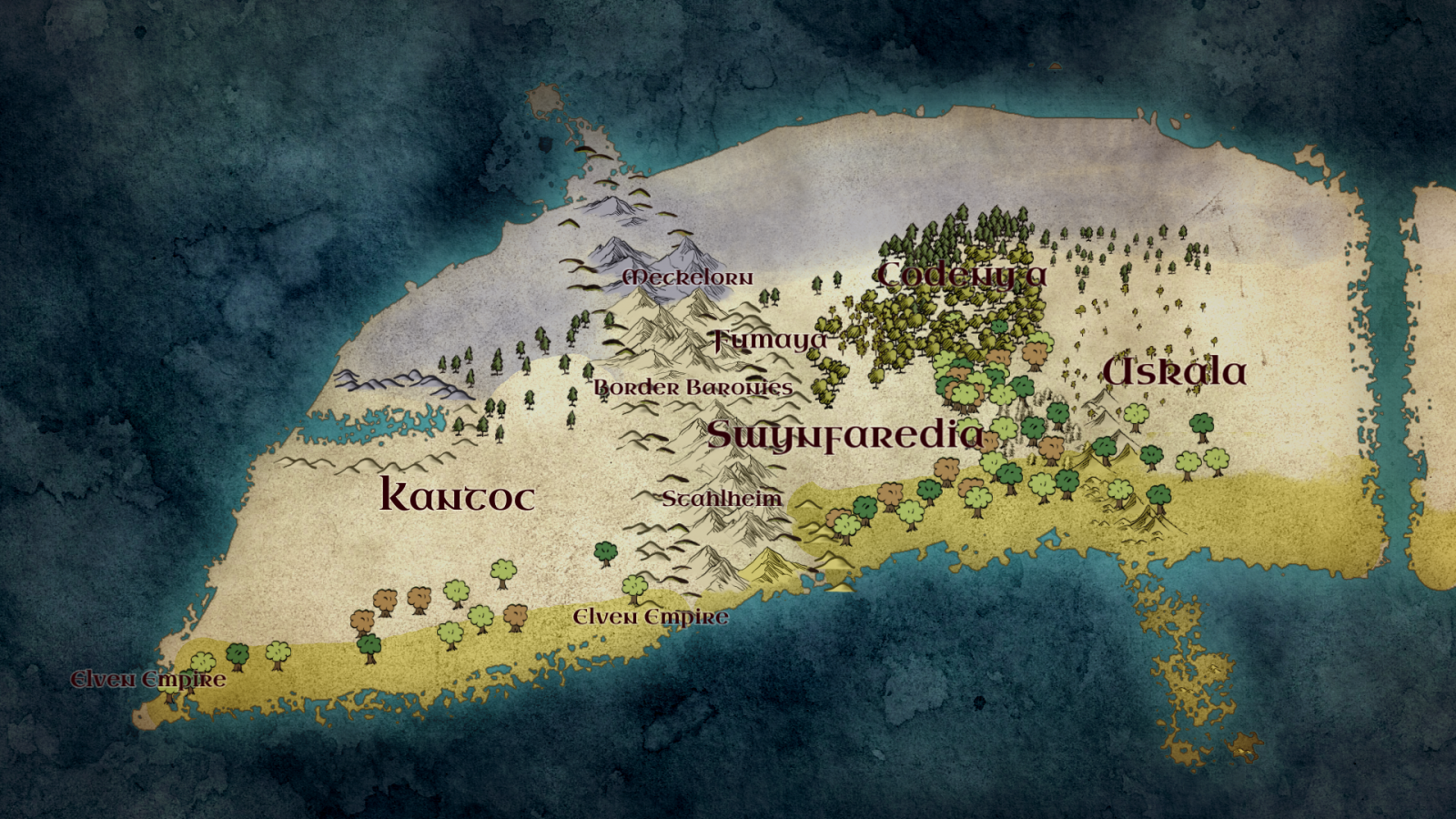
Rather than write a history from my usually omniscient perspective of Scarterra, I tried to write a history from the perspective of a biased narrator though I fear Beslfyl's voice might be too similar to my own.
I'm not sure if I need more gnomish colloquialism. "Mahrlect" is going to be a gnomish curse word, but Beslfyl is a proper lady and is not likely to drop the "M" bomb during a history lecture.
Go to Scarterra Homepage
Gnome's Eye View of History in West Colassia
As told by Beslyfle the gnome, matron of Fumaya's Tenders.
Today we West Colassian
gnomes are fortunate, arguably more fortunate than the rest of the
gnomes in
Scarterra.
It was not always this way. We owe our good fortune now to the wise and heroic actions of our ancestors.
During the
Second Unmaking, most of the
gnomes that managed to survive were those who had alliances with other races. A great many little folk had attached themselves to survivor enclaves of
elves,
dwarves,
satyrs, anyone else who would take them. There were some accounts of xenophobia early on during the
Second Unmaking, but it seems that it once it became apparent that
all mortals faced a common enemy. War creates strange bedfellows and this was a war for life itself.
After the
Second Unmaking, the numerous temporary alliances began to dissolve. We little folk are diplomatic by nature, so some
gnomes were willing and able to make their temporary alliances permanent. The
Meckelorn gnomes claim to be the direct descendants of the
gnomes who fought alongside the
dwarves during the Unmaking. The
forest gnomes of the
land of Codenya claim similar ancient ties with the wood elves.
These were exceptions, not the rule. At the dawn of
the Third Age, the majority of
gnomes chose to expand and either attached themselves to the new human tribes, or they created their own settlements which were annexed by emerging human chiefdoms.
Initially, relations between little folk and human folk were good. While the period of
The Little Unmaking had harsh winters and harsher demons, at least the mortals were getting along. There was a lot of land and not a lot of people, so there wasn't much reason to fight.
The Nine gave the
humans the basics of all the
Gifts but the mortals with Second Age mortal races still had access to more advanced farming, metalwork, seafaring, and writing techniques more advanced than the primitive
humans. The
elves and
dwarves were pretty tight-fisted with their precious lore but our ancestors shared our knowledge freely. This meant for a time
gnomes were welcome among
humans when
dwarves and
elves were treated with suspicion, envy and fear. Then the era of
The Little Unmaking gave way to the Era of Warlords where our souls were in less danger but our bodies were more vulnerable.
This era of good feelings did not last long. The Red Era, was rough for everyone,
gnomes and non-gnomes alike both before and after the Era of Warlords. I'm not going to pretend that life was
easy for the larger folk, but life was especially hard for the little folk. Once the threat of
The Void had faded, faith in
the Nine and a general community of mortalkind faded as well. After a couple generations, humanity forgot all the lore we gave them and they assumed their ancestors created the lore themselves. To humanity,
gnomes transformed from small benefactors into silver tongued parasites.
Warlords fought with each other and the strong routinely exploited the weak. We do not like to admit it, but there are times being small is a severe disadvantage.
Gnomes were commonly enslaved by
humans (and though they now deny it) by
elves. Frequently, because
gnomes are fastidious if not strong,
gnomes were often "house slaves" rather than "field slaves". Because
gnomes are small and unassuming and read nuances better than the larger folk, our enslaved ancestors were able to overheard a lot of juicy secrets.
We are not sure when Delas himself lived, but the
Order of Delas quickly grew and expanded. Using innocuous gnome household slaves as the base for their spy network, the
Order of Delas was able to isolate and eliminate the warlords and others who were especially egregious in their abuse of
gnomes.
The
Order of Delas claimed to avenge any and all
gnomes suffering injustice, but in truth they were only able to make examples of the worst offenders. Those larger folks who routinely abused little folk found themselves eating poison, suffering mysterious accidents, or finding all the skeletons in their closet exposed for all their peers and rivals to see. Eventually the bigger races took the hint and the rampant enslavement and rape of
gnomes largely ceased though
gnomes remained well below
humans and
elves in status as well as stature. Life for West Colassian
gnomes gradually got better, but they were still second class citizens and generally given the least fertile fields to farm and only the most menial professions open to them.
At the very least, the crime of larger mortals raping
gnomes became much rarer. The memory of our dark past remains. Even though the vast majority of couplings between big folk and little folk are consensual, half-gnomes are rarely fully welcome in gnome communities. Gnome mules—sorry
half gnomes, are a living reminder of what our ancestors had to endure.
While the machinations of
Vladimir the Conqueror were horrible in all the lands they touched, the aftermath was good for
gnomes in a way. Vladimir had many enemies, but his enemies hated each other almost as much as they hated Vladimir and his cronies. Since his foes were not able to provided a unified front, Vladimir's armies were able to isolate them and crush them one by one, until the little folk stepped in and helped the larger mortals pull their heads out of their asses.
With our silver tongues, we
gnomes were able to convince would-be rivals to ally firmly against a mutual foe. Apart from this, lowly gnome servants are often easy to overlook.
gnomes were and are highly literate, even those who work menial jobs can usually read and write. Lowly house servants, stable hands,
gong farmers, and other menial gnome workers were able to clandestinely deliver messages between estranged allies and they were able to spy on lands controlled by Vladimir and his cronies.
While the human bards love to sing about the heroic generals who fought Vladimir and his undead hordes, they would not have been able to muster their forces without our ancestors' communication and logistical efforts. While the common people often didn't notice the small folk's contributions, the lords and ladies
did notice the
gnomes' contributions and rewarded our ancestors fairly.
As the war time alliances solidified into new nations, there was usually at least one gnome in the room when new royal charters were being drafted and signed. As reward for their contributions, the
gnomes asked for farm land that was good—but not
too good to be declared gnomish villages.
Most of the nations formed in the aftermath of Vladimir's death do not exist anymore, at least not in name. But once our ancestors got their foot in the door of royal courts, we never let go.
This was the status quo in the continent for about a thousand years. Then came
Mordock the Destroyer. He destroyed a lot of people and things, but we managed to keep our foothold in the halls of power...barely.
Despite the name history has given him,
Mordock the Destroyer did not actually want to
destroy everything and everyone. Mordock killed a lot of royals in the human lands he conquered, but he let lesser noble families go on ruling their lands with minimal interference if they were willing to pay him taxes. The
dwarves got it rough because
none of them were willing to bend the knee to a half-orc whereas more than a few humans, both highborn and low chose to do so. Even before his first conquest, Mordock had a lot of human warriors under his banner.
Waredar used to be a very common name for gnome parents to name their girls. Now you hardly ever see it anymore, at least not north of
Mera's Lake. Of the hundreds of gnome women bearing the name Waredar during the time of Mordock, one was particularly infamous.
After Mordock conquered a sizeable number of human lands, Waredar the gnome became one of his chief advisor and his main liason between Mordock's barbarian lieutenants and civilized vassals. She was the not the
only gnome to serve Mordock's short-lived empire, but she was the main figurehead for all orcish collaberators. She was in fact known as "Waredar the Collaberator".
As everyone knows, Mordock died peacefully in his bed at a ripe old age, but like most tusk mules—sorry, like
half-orcs, he was sterile, so he had no obvious heir and his grand coalition of different tribes and mortals collapsed without Mordock's might and charisma to hold it all together.
Shortly after Mordock passed away, Waredar the Collaberator was found brutally murdered along with her entire extended family. There were bloody orc weapons left at the murder sites, but I believe she was actually killed by
humans or
gnomes because
orcs don't normally leave their weapons behind like that. That said, we can't rule the
orcs out entirely either. Waredar was not very popular with
orcs because they blamed her for Mordock restraining the orc's excesses against conquered
humans.
Anyway,
gnomes universally and loudly condemned the actions of Waredar the Collaberator and exaggerated her role in Mordock's government. This was enough to convince most
humans to not seek retribution against
all gnomes everywhere. You didn't hear this from me, but many
gnomes that actually did collaborate with Mordock's forces managed to sink into the shadows of obscurity. For better or first, we little people are often good at being overlooked when we want to disappear.
It also helped that while some
gnomes served as administrators in Mordock's empire, a lot of
gnomes helped organize the resistance against Mordock's forces both before and after his death.
A lot of wealthy
humans choose to hire gnome tutors to teach their children. Sometimes the same gnome tutor teaches three generations of the same human family. This has helped
West Colassia assimilate more of our customs and it cements the idea of having a wise advisor in human leaders of all stripes.
Not every seneschal or
bailiff is a gnome, but the stereotype of a wise and loyal gnomish advisor to the king or queen is a stereotype for a reason. We are wise and thorough, we don't make waves, and we pay our taxes on time. Human lords and ladies value
gnomes. Based on various censuses, we believe roughly one in twenty mortals West Colassian are
gnomes, but over one in ten of the members of most noble retinues are
gnomes.
We are also overrepresented in guilds because we are the best negotiators. Most
gnomes understand that the goddess
Mera is our creator, so it surprises no one that
gnomes are well represented in the
Tenders by individuals such as myself. What is maybe is surprising to the taller folk is how often
gnomes rise the ranks of the other priesthoods, both the politics driven groups like the
Masks, and
Keepers and among the more loosely organized
Rovers and
Stewards. About the only place in the
Nonagons you
don't see any
gnomes holding positions of leadership is in the
Testers. Tester leaders are expected to be able to spill blood and thump their chests while boasting loudly. When
gnomes spill blood, they rarely do so loudly...
In pretty much every realm in
West Colassia, every prince, guild master, or high priest probably has at least one gnome advisor giving good advice. With the ears of those in power, the lofty
gnomes at the top are usually more than happy to throw a bone to small folk among us small folk.
While we like to say that
gnomes in prestigious positions are more generous and community minded than
humans in prestigious positions, this is only a half-truth. We have carrots and we have sticks. We
gnomes are open and welcoming to other
gnomes but we can be brutal applying social pressure. A gnome seneschal with a reputation for being "unrespectable" among the gnome community is not going to be able to keep his position long when every gnome merchant and messenger blacklists him. A gnome seneschal with the support of the general gnome communities is going to get a lot of favorable trade deals and quiet help behind the scenes to make sure she always looks good in front of her lord.
A gnome in a high position is expected to talk his lord or lady into being generous to
gnomes in general. Thus, most gnome peasant farmers some land assigned to them that is good but not too good. We tend to get pretty good deals with the guilds and the
Nonagons as well.
And if the local human lords or ladies cannot be swayed by their loyal gnome advisors, we have carrots and sticks. The Order of the Delas has plenty of carrots and sticks to share. Their main carrot is having the most reliable messenger service in all of
Scarterra, and we—they are not averse to carrying messages for larger folks. Also very small
gnomes quietly carry very big sticks. The members of the Order are far less violent today than they were in yesteryear but we—I mean
they, still have members who will clandestinely avenge those who oppress and the princes among
humans,
dwarves, and
elves know this well.
We
gnomes are not as strong as the other races, this can be a handicap when it comes to
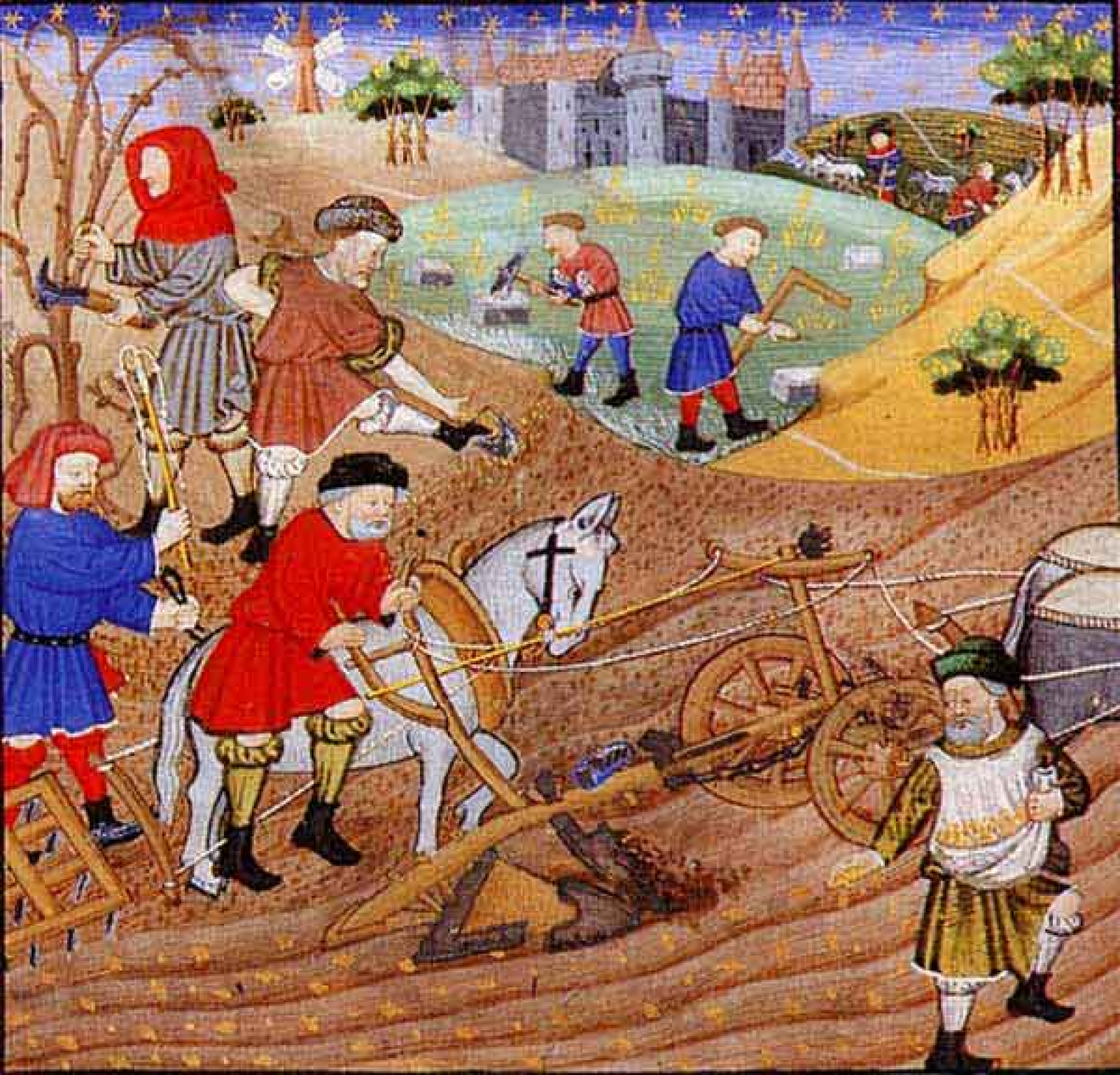
farm work. Gnome peasant farmers generally are more likely to have access to more draft animals than human peasant farmers do. This is partially because we have
gnomes at the top of society convincing the local rulers to be generous but it is also because we
gnomes are fastidious and forward thinking managers and gnomish villages managed their livestock more carefully than humans. A lot of the best animal breeders are
gnomes.
Little folk eat less than big folk. If we have comparable lands, then we have more surplus crops to trade. We can use the surplus to buy more draft animals and ensure that we can continue to have a surplus in years to come. Also, we
gnomes are very community focused. It is very difficult for three or four human families to have joint ownership over a strong ox without fighting, but three or four gnome families are able to share the beast of burden fairly.Because of our agricultural surplus, we
gnomes have proportionally more skilled craftsmen and learned sages than
humans and other big folk. The best of these get invited into the retinues of kings and other potentates helping ensure our continued prosperity for years to come.
(sidebar 1)
On The Topic Of Cultural Assimilation
How do
gnomes fit in among human, elven, or dwarven society?
Quite well, they don't take much space so they fit anywhere!
That's a common joke we've all heard before. We assimilate well because we were created to assimilate into other cultures and broker peace. That's why we have nonthreatening appearances and silver tongues.
The
humans of
West Colassia have adopted many gnomish customs.
Mera is the most widely worshiped of
the Nine among most human peasants. Most human children have a
Geu-Puppy guarding them while they sleep. Most of the larger folk celebrate
Hearth Day. Gnomish sages developed the modern feudal calendar setting the death of Vladomir the Conqueror as Year 1 and most human sages have since adopted the same calendar.
Assimilation works both ways. We picked up some traits from the larger folk too. Most
gnomes implicitly accept feudalism, a very human government concept. Originally, gnomish
Tenders were non-denominational, now nearly all gnomish
Mera worshipers are either
Walchese or
Terrawan. Most
gnomes carry crossbows rather than bows and it is far more common for
gnomes to keep a weapon now than it was for our ancient ancestors because we have adopted the militia attitude from the local big folk.
To our kind, It usually doesn't really matter if a gnome is a
Fumayan gnome or a
Kantoca gnome or whatever because we have a wide community and
gnomes mingle and mix between the various gnome enclaves in various nations and intermarriages are fairly common.
We of the greater gnome community rarely mix with
forest gnomes or
Meckelorn gnomes. Their history is pretty separate from ours. Wheras the
gnomes of
West Colassia's human lands have a common history and common heritage, the
forest gnomes and
Meckelorn gnomes are far closer to the history and culture of Codenya and Meckelorn respectively than to gnomekind in general.
I have met quite a few
forest gnomes on
Rumspringa and one or two
Meckelorn gnomes. Relations between them and us are certainly polite (they are still
gnomes after all), but there is a higher level of formality in our interactions than when meeting other supposedly "foreign"
gnomes.This isn't just about the difference between
humans and
dwarves and
elves.
The
Stahlheimer gnomes and so-called
"grey" gnomes are very much assimilated with the local
dwarves and
elves of their adopted homelands but they still are very much culturally connected to the most of the
gnomes in nearby human lands as well.
If we are not careful, we could have a falling out between
Uskalan gnomes and the rest of the little folk.
The land of Uskala is a treacherous place and I fear our kind may be assimilating
too well there.
(sidebar 2)
Gnomes At War
Most nations in
West Colassia have a small professional army on duty year round, and a large part-time militia called up in times of need.
Sometimes service in the militia is voluntary, sometimes it is mandatory, sometimes it's mandatory. Sometimes militia members are "voluntold" to join.
Gnomes may mix well with
humans,
elves and
dwarves in peacetime, but gnomish soldiers don't mix well with larger soldiers.
Sure we have less upper body strength, but a small person can be just as lethal as a big person, if they have a sharp blade or sturdy crossbow. If the militia is just defending their own village, gnome militias do fine. But
gnomes on the march are something of a liability.
We have short legs, so our soldiers cannot march as fast as larger soldiers, at least not long term. Gnome soldiers on foot cannot carry as much gear as human soldiers. Our differing reach makes mixed formations of little and big folk awkward.
Foolish generals use gnome soldiers as arrow catchers. Wise generals understand that a gnome's true strength is in fighting dirty and let their gnome soldiers do what they do best. Also,
gnomes make great quartermasters and field medics.
Some lords don't want to send poorly equipped
gnomes to their death on the battlefield, and they don't want to dirty their hands associating with gnome guerilla fighters. One thing that some human lords have adopted a controversial policy nicknamed the "little people tax" or "the coward's reparations" by those who don't agree with it. This policy was originally created by the
Elven Empire but some human lords have copied them.
In these places,
humans are required to participate in their local militia and
gnomes are not. However,
gnomes pay a higher rate of taxes and this money (in theory) is funneled into buying arms for the human militia.
Among dwarf nations,
Meckelorn gnomes serve their militia as stealth warriors while
Stahlheimer gnomes have to pay a tax in lieu of militia though it is a very small tax because Stahlheim seems to be moving away from militias in favor of a larger full-time army.
Obviously many
humans and
gnomes believe this is reasonable or they wouldn't do it, but many
humans and
gnomes alike find this policy unfair and insulting.