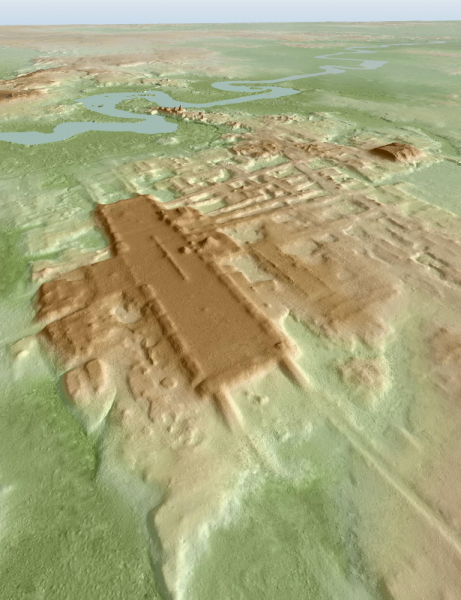
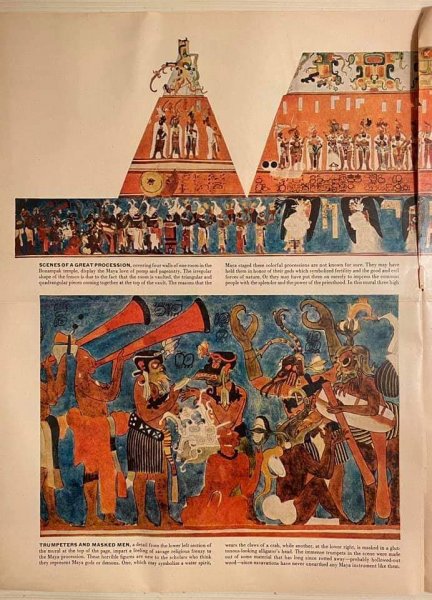
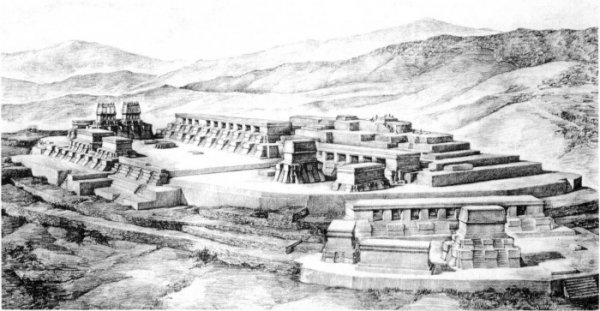
“Though there were probably some [Aguada Fénix] leaders who played central roles in planning and organizing such work, the main factor was people’s voluntary participation, which does not necessarily require a centralized government,” Inomata says. Large crowds from surrounding areas probably gathered at the ancient ceremonial site on special occasions, possibly related to key calendrical dates and astronomical events, Inomata suspects. Nine causeways connected to the site’s rectangular platform carried processions of those participating in rituals, he suggests. A set of jade axes excavated in the center of the platform may have been deposited during a ritual event.
Inomata’s conclusions make sense to anthropological archaeologist Andrew Scherer of Brown University in Providence, R.I. “The public spaces at Aguada Fénix are huge, and there is nothing to indicate that access was limited to a privileged few,” says Scherer, who did not participate in the new study.