
• The forum software have been upgraded to the latest version.

    If you notice anything that looks off, or does not work, please let us know.

    For more information, click here.

AoS "Determining Damage (D3)"

Troglodon

Ixt

Well-Known Member
Messages
604
Likes Received
353
Trophy Points
63
Well, this is a pickle.

Our Oldblood on a Carnosaur scores 3 hits and 3 wounds with its Sunstone Spear, and our opponent fails 3 saves. So, what's the damage?

The profile reads 'D3,' but where do we go from here? Do we make a single roll to determine damage, or do we roll our 3 wounding dice separately?

Here are the relevant rules:

Under 'Tools of War':
"If a rule requires you to roll a D3, roll a dice
and halve the total, rounding fractions up."

Reading way into it, of course, 'a dice' sounds singular... but that might not be enough. Let's go further.

The 'Attacking' section - which seems to proceed as 'Hit > Wound > Save > Damage' - gives the impression that damage comes last, but...

"In order to make several attacks at once, all
of the attacks must have the same
To Hit, To
Wound, Rend and Damage characteristics,
and must be directed at the same enemy
unit. If this is the case, make all of the hit
rolls at the same time, then all of the wound
rolls, and finally all of the save rolls; then
add up the total number of wounds caused."

I'm confused! Does this mean that our Oldblood's damage is determined by a single D3? Truthfully, I'd prefer it that way: the Starseer becomes an instant friend thanks to 'Curse of Fates.' That Sunstone Spear is going to be 3-damage more often than not with a Starseer around.

Can anyone weigh in? Truthfully, I tend to avoid Carnosaurs. I'm traumatized by a Cannon-heavy meta at my FLGS during 8th's prominence, so I haven't actually fielded any since. x_x

It seems, to me, that the damage wrought by all attacks is resolved with a single roll, but I dunno. It does sound that we have to re-establish Damage for different targets; for example, if the Oldblood targets two separate units, it has to redetermine damage for the second unit.

 
I think they have to be rolled separately. You only roll all attacks at once if it's same to hit, to wound, rend and damage. With variable damage you would technically roll all separate. That's how I have played it, but I could be wrong.
 
Last edited:
  • Like
Reactions: Ixt
Roll a separate D3 for each unsaved wound. :bookworm:
(after all the other rolls and decisions)
 
Hmm... maybe 'the same Damage characteristics' technically includes the 'd3' damage characteristic? *shrug* Rats! ;) Still, the more I read it, the more it references 'the damage characteristic of the weapon,' which makes it sounds that the weapon only has a single damage characteristic, not multiple damage characteristics based on the number of successful wounds. I mean, pretty much everything that I'm reading points back to there being only a single roll...



I suppose that if you guys are right, Curse of Fates + Sunstone Spear still isn't bad, basically equating to +1 damage.
 
Last edited:
I'm fairly certain that you roll a separate D3 for each wound unsaved. I see your train of thought regarding the rules to roll multiple attacks, but the fact is that the damage is random. The damage characteristic technically is the same, it's D3, so you're right there. But then you need to roll each one individually because they were each different attacks. You can't just roll a 5 for dmg and apply that number to all three attacks.

If it went the way you're thinking about it, you would roll the damage BEFORE you start attacking, and declare "my next 3 attacks will do this much damage", but I don't think it works this way.

Unrelated, but I love when one attack gets through unsaved, and it ends up killing 2 or 3 models hahaha
 
Yeah, that's how I've always played it... but it's just occurred to me that there's no concrete wording either way. >_< I can't support either conclusion without a non-sequitur. Bleh! I suppose I'll go with the less explosive option (though, for argument's sake, it's also the less risky option) until I see some hard proof either way.

You wouldn't have to declare prior to attacking, though. It'd work the same way: hit, wound, save, damage. Difference is that you'd decide how much damage with a single die rather than multiple.

I love that too! Nothing like the 'hella-cleave' that drops a few mooks.
 
If you take a weapon that has 3 attacks and does 3 damage and all wounds were unsaved you would apply 9 wounds so a D3 is no different in my eyes, roll a D3 for each unsaved wound caused.
 
Well, I've emailed GW. In the past, that's been about as helpful as shouting my question into the night sky. I can't find anything in the rules that points in either direction.
 
Er... now that I've read through this section for the 90th time, something's occurred to me. It might actually work both ways: rolling a single D3, or rolling several times. There are two procedures for making attacks, and both (in the case of our Oldblood on Carnosaur) seem to be optional - I don't think that there's a "right way" so long as you pick whichever you prefer.

I know that we're all used to how this worked in 8th edition, but I do find it exceedingly strange that everything is now written in the singular ('the weapon's damage characteristic') and that the rules constantly refer to the weapon itself rather than the model doing the wounding (or the wounds,even). If a weapon has 'a damage characteristic,' then that surely must stay the same no matter how many wounds you've scored? Wouldn't rolling multiple die to determine damage be putting more emphasis on the model's damage output rather than its weapon's capability, the damage of which is, again, regularly mentioned only in the singular throughout the rules (rather than the model)? Can a weapon have several damage characteristics?

(puts on tinfoil cap)

Here we go:

Inside the spoiler is the 'Making Attacks' section.

MAKING ATTACKS

Attacks can be made one at a time, or, in
some cases, you can roll the dice for attacks
together. The following attack sequence is
used to make attacks one at a time:


1. Hit Roll: Roll a dice. If the roll equals
or beats the attacking weapon’s To Hit
characteristic, then it scores a hit and you
must make a wound roll. If not, the attack
fails and the attack sequence ends.

2. Wound Roll: Roll a dice. If the roll
equals or beats the attacking weapon’s
To Wound characteristic, then it causes
damage and the opposing player must make
a save roll. If not, the attack fails and the
attack sequence ends.

3. Save Roll: The opposing player rolls a
dice, modifying the roll by the attacking
weapon’s Rend characteristic. For example,
if a weapon has a -1 Rend characteristic,
then 1 is subtracted from the save roll. If the
result equals or beats the Save characteristic
of the models in the target unit, the wound
is saved and the attack sequence ends. If
not, the attack is successful, and you must
determine damage on the target unit.

4. Determine Damage: Once all of the
attacks made by a unit have been carried
out, each successful attack in‘flicts a
number of wounds equal to the Damage
characteristic of the weapon. Most weapons
have a Damage characteristic of 1, but some
can in‘flict 2 or more wounds, allowing
them to cause grievous injuries to even the
mightiest foe, or to cleave through more
than one opponent with but a single blow!

In order to make several attacks at once, all
of the attacks must have the same To Hit, To
Wound, Rend and Damage characteristics,
and must be directed at the same enemy
unit. If this is the case, make all of the hit
rolls at the same time, then all of the wound
rolls, and finally all of the save rolls; then
add up the total number of wounds caused.

Something that I'd previously looked over is that the entire numbered list is only for making attacks one at a time.

1st paragraph, final sentence,
"... The following attack sequence is
used to make attacks one at a time:
"

If you have three attacks, then you're going to be going through that list three times (probably wise if you're trying to kill or wound three specific dudes in a unit, for example). If you choose to play it this way, then it seems inevitable that your D3 damage must be randomized multiple times.

Oldblood 'Blue' attack 1 against Alpha, 1 hit, 1 wound, 1 failed save, 1 damage.
Oldblood 'Blue' attack 2 against Musician, 1 hit, 1 wound, 1 failed save, 2 damage.
Oldblood 'Blue' attack 3 against Standard Bearer, 1 hit, 1 wound, 1 failed save, 3 damage.

Since these attacks all target different models and they're made one at a time, then, yes, they'd all have different damage characteristics. I can't think of a logical way to finish one attack sequence only to prescribe it a damage characteristic later, because it'd potentially change the outcome of the combat.

So, that's method 1: rolling 1 attack at a time, getting all of your damage results 1 at a time.

Method 2 is to roll several attacks at once.

Final paragraph,
"In order to make several attacks at once, all
of the attacks must have the same To Hit, To
Wound, Rend and Damage characteristics,
and must be directed at the same enemy
unit. If this is the case, make all of the hit
rolls at the same time, then all of the wound
rolls, and finally all of the save rolls; then
add up the total number of wounds caused."


Although all of the attacks have the 'D3' characteristic (which is, in fact, a 'damage characteristic'), 3 separate damage characteristics can occur, which would retroactively violate this rule (unless 'D3' is enough to satisfy it).

To me, 'D3' is more of a placeholder for a damage characteristic, because 'D3' indicates 3 possible outcomes. You also can't do 'D3' damage, you can only do '1, 2, or 3' damage. I don't think that a randomized damage characteristic bars a player from using this method, I think that it just means that a single roll covers it because that's the only way to ensure a single outcome. If the inverse is true, we'd have to attack one-at-a-time, which I doubt was the intent because they'd not have given us two methods.

So it'd go,

Oldblood 'Blue' makes 3 attacks > gets 3 hits > gets 3 wounds > Red fails 3 saves > 'Blue' rolls a single die to get a matching damage characteristic > 'Blue' adds up his wounds.

Still, there's no concrete wording. I keep getting caught up on this...

"... each successful attack in‘flicts a
number of wounds equal to the Damage
characteristic of the weapon."


... because it could so easily go either way, and, yet again, we see the weapon's damage characteristic mentioned in the singular.

I suppose I'll take the 'majority rules' approach. It seems that it's entirely up to interpretation, unless you feel that 'D3' is a suitable damage characteristic (in which case, there's still no rule for determining how many dice are to be rolled!). I'd figured that I'd just explain where I'm coming from so I don't look all beardy. ;) It seems like either way is legit, each with their own merits and drawbacks.
 
Last edited:
But if you roll 3 D3 you are making singular attacks, one dice, one attack?

If your targeting different models do it singular.

Thats how I do it anyhow.
 
The last thing that's said in the spoiler:

"...and finally all of the save rolls; then
add up the total number of wounds caused."

No on method 2 haha, I still can't agree with rolling one die to find the damage on 2 or more unsaved attacks. You never get to find out the damage of these type of attacks until a save roll fails, so you would just roll for each unsaved wound. 3 attacks, 2 roll well, 1 saved, you only roll a D3 for damage, right? Now 4 attacks, 3 roll well, 1 saved, now you get to roll 2D3 for damage. The randomness is the damage, you are right to hang on to the "damage characteristic" bit because that is precisely how much damage each unsaved wound will do, D3. Precisely D3 is a weird thing to say haha. I stand by rolling how ever many attacks the weapon is, and adding up damage at the end (without trying to sound argumentative) .

If you ever do get a reply back from GW, and I'm wrong... I'll be sad. I won't even be mad, I'll just cry.
 
Our Oldblood on a Carnosaur scores 3 hits and 3 wounds with its Sunstone Spear, and our opponent fails 3 saves. So, what's the damage?

3 times a d3 and add the results from the 3 rolls to see the total damage done, really don't make it more complicated! ;)
 
  • Like
Reactions: Ixt
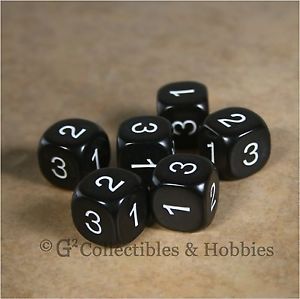
Roll 3 of these and add the total.
154251-s-l300.jpg

(they have 1-3 printed twice)
 
The new Death book features a mini faq in which it is stated clearly you must roll the damage multiple times.
 
The new Death book features a mini faq in which it is stated clearly you must roll the damage multiple times.
Oh! That's what I'm looking for. Good to know. Thanks. :)
 
The more I think, the hotter it gets inside this eggshell. There will probably be a point where further thinking will be risky. I don't want to think about whether I have already crossed that line because of the inherent risk.

You did ask for a non-sequitur, didn't you?

I see no conflict with a weapon / multiple attacks having a characteristic of D3. Group those together to determine how many hits got through. Then resolve each hit's damage with a separate roll. I can't manufacture a "one roll to rule them all scenario" from what I see in the rules.

Man, it's getting hot in here.
 
The more I think, the hotter it gets inside this eggshell. There will probably be a point where further thinking will be risky. I don't want to think about whether I have already crossed that line because of the inherent risk.

You did ask for a non-sequitur, didn't you?

I see no conflict with a weapon / multiple attacks having a characteristic of D3. Group those together to determine how many hits got through. Then resolve each hit's damage with a separate roll. I can't manufacture a "one roll to rule them all scenario" from what I see in the rules.

Man, it's getting hot in here.
Lack of a rule stating what you've said (til Rekmeister posted one), plus many indirect references in the rules hinting a weapon's singular "damage characteristic" rather than the potentially many "characteristics" encouraged by making multiple rolls to resolve a D3 placeholder in a single combat.
 
Back
Top