• The forum software have been upgraded to the latest version.

    If you notice anything that looks off, or does not work, please let us know.

    For more information, click here.

Poll: The Lord of the Rings vs. The Hobbit vs. The Rings of Power

Which is the one to rule them all?

  • Peter Jackson's The Lord of the Rings movie trilogy

  • Peter Jackson's The Hobbit movie trilogy

  • Amazon's The Rings of Power series


Results are only viewable after voting.
Last edited:
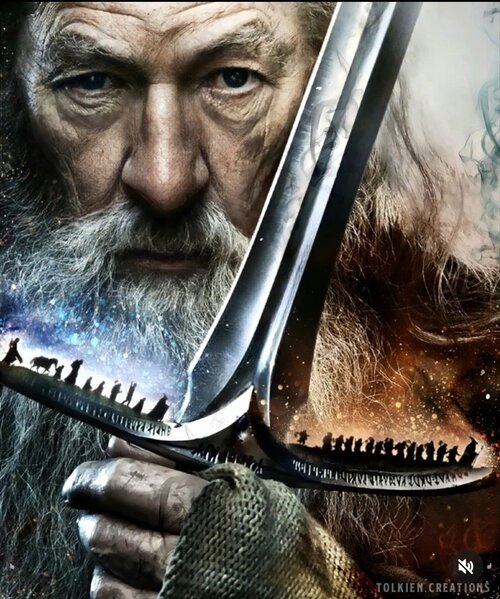
372641642_299557822675715_7305764905753072812_n.jpg
 
What rules were ignored?

Perhaps I am wrong, but I'm under the impression that this rule was ignored. \/

For the context of your poll vote, disregard the books themselves and base your decision entirely on the films/show.

Perhaps I am wrong. I've been wrong a lot lately. Perhaps I solipsistically
assumed that the only reason someone would have voted for The Hobbit is because he liked the book better.

Anyway, I followed the rules you set forth for this poll. The Hobbit is my favorite book, and without it I wouldn't have gotten into the rest of the Tolkien's world.
 
Perhaps I am wrong. I've been wrong a lot lately. Perhaps I solipsistically
assumed that the only reason someone would have voted for The Hobbit is because he liked the book better.
The lone dissenting vote was cast by @Lord Agragax of Lunaxoatl , who does indeed like the Hobbit movies better than the LOTR movies.


Well, we all should be happy for that single vote to The Hobbit.
Otherwise (from the poll) we couldn't tell the defference between The Hobbit and Rings of Power. ;)
As it was foretold...

What's more, my vote ensures that the ranking is properly correct, with Rings of Power firmly at the bottom :D
 

I will say here that it is mightily unfair to compare the Goblin King and the Hobbit Trolls with four human-sized Orc/Uruk characters, because they, as Monstrous Infantry-sized creatures significantly larger than that, could never be portrayed simply by putting an actor in makeup (not unless he was standing on the shoulders of another anyway). A far better comparison for these two would be with the Cave Troll and Mordor Trolls from Lord of the Rings, who, funnily enough, are also CGI.

As for Azog and Bolg, I honestly see them as far and away more intimidating than any of the four Lord of the Rings Orcs/Uruks above, simply because the former two are so much more capable, and so much more of a threat to the heroes throughout the films they are in. Azog is the Big Bad of the Hobbit Trilogy, second only to Sauron and the Ringwraiths, and one of the few Orcs given the privilege of speaking with Sauron himself. He is known to have fought and killed a Dwarf King with many centuries of battle experience, as well as nearly killing the young Thorin and mortally wounding him in their final fight. Bolg, meanwhile could only be killed by a character with the level of OP-ness and plot armour of Legolas, and even then he gives the Elf the biggest run for his money in all his film appearances, twice. By contrast, the Orc on the bottom left in the LOTR montage is wounded by a Rohirrim pretty easily when his mob is ambushed by Eomer's Riders, before being unceremoniously stepped on by Treebeard as he crawls after Merry and Pippin. The one on the bottom right is a run-of-the-mill Mordor Orc commander, and would be no match for any of the heroes in the series had he been put into a fight scene. Lurtz did kill Boromir, but only because Boromir was distracted by his masses of Uruk-Hai Scouts (and he shoots him from afar with his bow, rather than fighting him in combat). When he is given a chance to fight one-on-one, he is killed pretty easily by Aragorn. Gothmog was a strategist, yes, but not on the level of Azog, and as a combatant he is also dispatched with ease by Aragorn. I rate my film characters based on their deeds and their power, not simply by how they're rendered.


And a message to all CGI-phobes out there - it's rather ironic that, despite being younger than most of you, I've seen a lot of old films that many of you haven't even heard of, let alone seen, and I can tell you that practical effects that are cheaply done look just as fake as underdone (or overdone) CGI. Don't believe me? Watch At the Earth's Core, a 1960s film with easily the worst practical effects I've ever seen and only made watchable by the late Peter Cushing's acting. Even the old adaptations of better-known stories like Journey to the Centre of the Earth and The Lost World, not having the budget to hire a stop-motion legend like Ray Harryhausen, were reduced to sticking crests and spines onto real-world lizards and calling them 'Dinosaurs'.

I honestly think a lot of this modern-day pleasure of shitting on CGI in part comes down to 'nostalgia' for those few old films that did come up with good practical effects (and were rightly praised for them, I might add, in particular Harryhausen's creations), and either a willingness to conveniently forget the mass of older films that didn't, or a lack of knowledge of their existence.

Both practical effects and CGI have their uses - practicals for close-up shots and scenes with small groups of actors, and CGI for creating creatures that couldn't be done with practical costumes and makeup, and battle scenes involving thousands. Both have their good points and their weaknesses, and they should be interweaved together to make the best of both. I can understand the downsides of using large amounts of CGI, but at the same time I think the more people become afraid to use CGI where it's most necessary, out of fear of CGI-phobes criticising productions purely because of CGI use, the more it will cause filmmaking to degenerate to the level of the pre-1990s era where CGI was nonexistent and practicals were all filmmakers had, which I honestly think will be a great shame. CGI has been able to achieve so many things that practicals just couldn't have done, and deserves credit where it's due.

 
Last edited:
I will say here that it is mightily unfair to compare the Goblin King and the Hobbit Trolls with four human-sized Orc/Uruk characters, because they, as Monstrous Infantry-sized creatures significantly larger than that, could never be portrayed simply by putting an actor in makeup (not unless he was standing on the shoulders of another anyway). A far better comparison for these two would be with the Cave Troll and Mordor Trolls from Lord of the Rings, who, funnily enough, are also CGI.

As for Azog and Bolg, I honestly see them as far and away more intimidating than any of the four Lord of the Rings Orcs/Uruks above, simply because the former two are so much more capable, and so much more of a threat to the heroes throughout the films they are in. Azog is the Big Bad of the Hobbit Trilogy, second only to Sauron and the Ringwraiths, and one of the few Orcs given the privilege of speaking with Sauron himself. He is known to have fought and killed a Dwarf King with many centuries of battle experience, as well as nearly killing the young Thorin and mortally wounding him in their final fight. Bolg, meanwhile could only be killed by a character with the level of OP-ness and plot armour of Legolas, and even then he gives the Elf the biggest run for his money in all his film appearances, twice. By contrast, the Orc on the bottom left in the LOTR montage is wounded by a Rohirrim pretty easily when his mob is ambushed by Eomer's Riders, before being unceremoniously stepped on by Treebeard as he crawls after Merry and Pippin. The one on the bottom right is a run-of-the-mill Mordor Orc commander, and would be no match for any of the heroes in the series had he been put into a fight scene. Lurtz did kill Boromir, but only because Boromir was distracted by his masses of Uruk-Hai Scouts (and he shoots him from afar with his bow, rather than fighting him in combat). When he is given a chance to fight one-on-one, he is killed pretty easily by Aragorn. Gothmog was a strategist, yes, but not on the level of Azog, and as a combatant he is also dispatched with ease by Aragorn. I rate my film characters based on their deeds and their power, not simply by how they're rendered.


And a message to all CGI-phobes out there - it's rather ironic that, despite being younger than most of you, I've seen a lot of old films that many of you haven't even heard of, let alone seen, and I can tell you that cheap practical effects look just as fake as underdone (or overdone) CGI. Don't believe me? Watch At the Earth's Core, a 1960s film with easily the worst practical effects I've ever seen and only made watchable by the late Peter Cushing's acting. Even the old adaptations of better-known stories like Journey to the Centre of the Earth and The Lost World, not having the budget to hire a stop-motion legend like Ray Harryhausen, were reduced to sticking crests and spines onto real-world lizards and calling them 'Dinosaurs'.

I honestly think a lot of this modern-day pleasure of shitting on CGI in part comes down to 'nostalgia' for those few old films that did come up with good practical effects (and were rightly praised for them, I might add, in particular Harryhausen's creations), and either a willingness to conveniently forget the mass of older films that didn't, or a lack of knowledge of their existence.

Both practical effects and CGI have their uses - practicals for close-up shots and scenes with small groups of actors, and CGI for creating creatures that couldn't be done with practical costumes and makeup, and battle scenes involving thousands. Both have their good points and their weaknesses, and they should be interweaved together to make the best of both. I can understand the downsides of using large amounts of CGI, but at the same time I think the more people become afraid to use CGI where it's most necessary, out of fear of CGI-phobes criticising productions purely because of CGI use, the more it will cause filmmaking to degenerate to the level of the pre-1990s era where CGI was nonexistent and practicals were all filmmakers had, which I honestly think will be a great shame. CGI has been able to achieve so many things that practicals just couldn't have done, and deserves credit where it's due.
I agree with some of that.
 
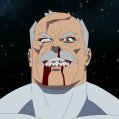
R.I.P. Bernard Hill

[After] three days the Men of the Mark prepared the funeral of Théoden; and he was laid in a house of stone with his arms and many other fair things that he had possessed, and over him was raised a great mound, covered with green turves of grass and of white evermind. And now there were eight mounds on the east-side of the Barrowfield.

Then the Riders of the King's House upon white horses rode round about the barrow and sang together a song of Théoden Thengel's son that Gléowine his minstrel made, and he made no other song after. The slow voices of the Riders stirred the hearts even of those who did not know the speech of that people; but the words of the song brought a light to the eyes of the folk of the Mark as they heard again afar the thunder of the hooves of the North and the voice of Eorl crying above the battle upon the Field of Celebrant; and the tale of the kings rolled on, and the horn of Helm was loud in the mountains, until the Darkness came and King Théoden arose and rode through the Shadow to the fire, and died in splendour, even as the Sun, returning beyond hope, gleamed upon Mindolluin in the morning.

'Out of doubt, out of dark, to the day's rising
he rode singing in the sun, sword unsheathing.
Hope he rekindled, and in hope ended;
over death, over dread, over doom lifted
out of loss, out of life, unto long glory.'


But Merry stood at the foot of the green mound, and he wept, and when the song was ended he arose and cried:

'Théoden King, Théoden King! Farewell! As a father you were to me, for a little while. Farewell!'
 
Back
Top