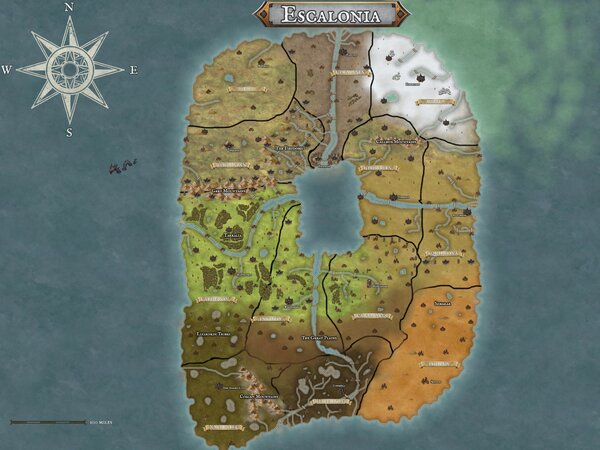
My research indicated that the two most popular map programs for fantasy world builders like us are Inkarnate and Wonder Draft. There is a lot of debate on internet forums on which one is better.
Inkarnate has more special features and more frequent updates. Inkarnate also has a free to use version
I'm rather miffed that the free version of Inkarnate is so restrictive on the buildings you can choose to include on your map - there were some great Dwarf buildings that would have fitted well to mark settlements in Wodristan and the Fiefdoms, and similarly a good selection of Elf buildings that could have been used for Abral and Dhaverroth, but the team at Inkarnate seem content to keep those behind a paywall so, being conservative with my money and blooming proud of it, I had to do without. Fortunately the buildings I was able to choose from do an adequate job at representing the main settlements across Escalonia, though I will add the following explanations:
- All the Dwarf settlements in the Feifdoms are strongholds in the style of Warhammer and Lord of the Rings Dwarfs/Dwarves, while the Gnome settlements are less fortified, so I simply used the Fortress symbol for the Dwarf holds and the village symbol for the Gnome settlements (though a fair few of them are bigger than villages in actuality). The towers in the north and east of the Fiefdoms represent the Brochs of the primitive Glenclans.
- The fortified cities on hills in Calderon are meant to represent hillforts, as per their neo-Celtic culture.
- The 'Orc Strongholds' in the Great Plains are meant to represent a mixture of Greenhide and Earthskin Orc encampments, Gnoll and Plains Human villages.
- The Grey Mountains Tribesmen live in holds dug into the mountains themselves, and rarely have any visible external buildings or constructs - the fortresses and towers on either side of the range represent the fortifications built as a result of the ongoing stand-off between Wodristan and Calderon over who gets to own the mountain range (with the Grey Mountains Tribesmen caught in the middle as a neutral party that launches raids against both sides).
- The fortified city markers in Iotheiles represent the Labyrinth Cities.
- In Abral, all the smaller communities of Elves were forced to flee to the remaining cities when the Freezing set in, and most of these cities are naught but ruins, cracked and crumbled by the perpetual cold. Only the four cities present on the map remain inhabited, and most ordinary Abrali Elves instead live a nomadic existence as hunters.
- The 'Orc Strongholds' in the south of Aquileona and north of Phorus represent the Insectoid Hives of Szharar, which is itself named as a region of the map.
- The 'Orc Strongholds' in Suri are the few known Felinid camps to exist, in their last known positions, for these regularly move across the land due to the Felinids' tendency to wander for many weeks at a time with no sign of their return (sound familiar?).
First, Inkarnate only works when you have internet.
Second, you don't own your own maps, Inkarnate owns them.
Though surely if there was ever an ownership dispute, one could prove that your Inkarnate maps were created by you by proving that you alone can login to the account on which you developed those maps?
Anyway, your map looks good.
I'm pleased with it, it suitably captures the vision for my fantasy world that has existed in my mind and on scrappy hand-drawn maps for years.
World Anvil has a feature that I've barely tapped into. Map pins. On your world map, you can pin for every nation and land mark and clicking on the pin will bring up the article on that. Or another map.
Hypothetically a world map can have pins for regional maps, and a regional map can have pins for towns and other local areas and those maps can have pins for individual buildings and you can go all the way down to the cupboard below the stairs.
Sounds good, I'll see if I can try that in my Escalonia World Anvil with this map I've made. Inkarnate have smaller-scale maps for battlefields and town plans as well, so I may well be drawn toward making some maps for the capital cities of the different factions.
After taking way too long, I went with Wonder Draft.
I'd like to see your digitised map of Scarterra, it'd be great if you uploaded it to your RPG thread - currently with your world I see only a couple of drawn examples of maps very much like my own that I refused to scan and upload here because I didn't think they'd look presentable enough.
As an aside, did you nick my idea of a supercontinent with a central lake for your First Age Scarterra?
At least you had the decency to make the lake smaller and turn the orientation to Landscape.
Anyway, I wonder if you've noticed anything different about my map to my initial descriptions at the beginning at this thread?
Namely, this:
This was a new idea for another playable lesser faction in my game system that will also feature at some point in one of my later novels - Feornost, the last free city of Upravania:
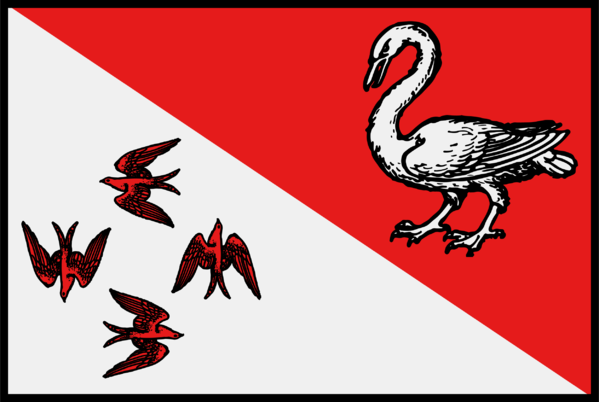
As the Cult of Necromancy began to sweep Upravania at the behest of the malevolent Howardi dynasty, lynch-mobs and armed patrols commanded by the ruling family's allies swept the land, murdering (and subsequently resurrecting the corpses of) those who objected to the rise of the new religion. Soon, only four dissident nobles remained, principally due to their objections being hidden from the public eye. These brave men sought each other out, and dubbed themselves the Swallows, after their desire to migrate south from the land of madness and misery to any free place of plenty they could find. They had attempted to flee to Wodristan, and from there south to the human lands of Calderon and Esworo, but the Howardis' reach had extended across the land, and all routes out of the country were blocked. The men were forced to retreat to the port city of Feornost, the dominion of Lord Krall, the eldest and most respected of the Swallows, to which the Cult of Necromancy and its legions of Undead lay siege by land and sea for three months. During these dark times, those soldiers who had chosen loyalty to the Swallows over the fear of the Howardis gradually dwindled, but those who remained had become impeccable fighters, clad in thick plate armour developed in response to the Undead threat. However, even their spirited defence would have failed were it not for a large army of Abrali Elves, who emerged without warning from their Winter-bitten realm at the same time as an alliance of Dwarfs, Gnomes and Glenclan Humans from the Wodristan Fiefdoms arrived to relieve the beleaguered city. Between these three forces, the Undead were driven back, and Feornost freed from damnation.
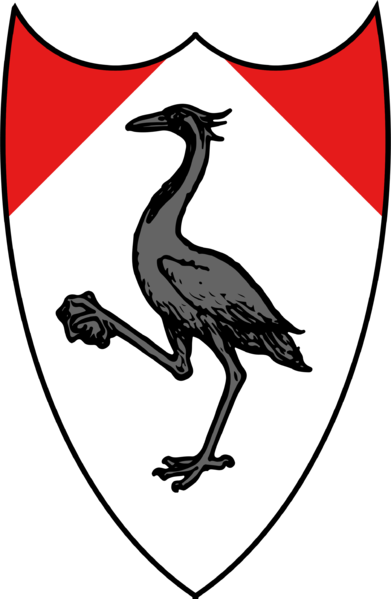
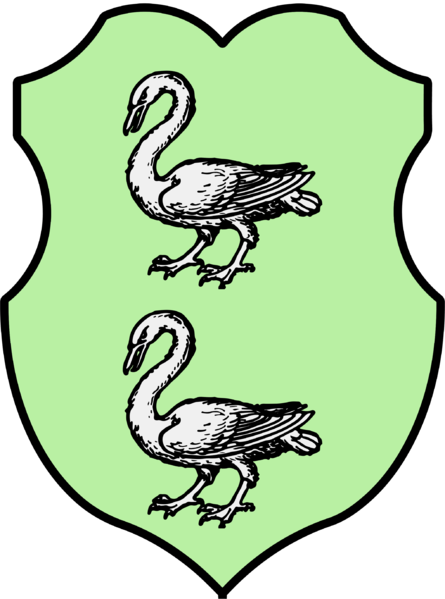
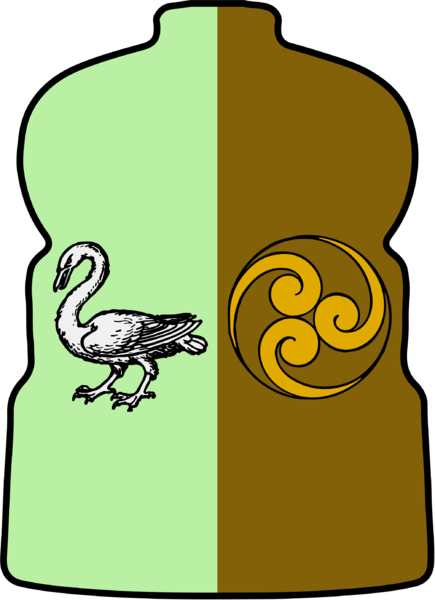
Since then, Feornost has been a thorn in the side of the Necromancers of Upravania, for it has successfully blocked the land's undead fleets from accessing the Central Lake, and the city has been subjected to regular sieges and assaults ever since. Three quarters of the city's population had died during the great battle that birthed its freedom, but many of the Dwarfs, Gnomes, Humans and Elves who came to its aid that day chose to stay and help rebuild, in particular the Abrali Elves, who saw the opportunity to escape from their chilled homeland once and for all. Not only did this result in the construction of concentric rings of ever-more insurmountable defensive networks over the following centuries, to solidify the city's independence from Upravania, but also Feornost has become the most cosmopolitan place in Escalonia, with all four inhabitant races dropping all inhibitions for the sake of survival and feeling no qualms about intermarrying and blending cultures. The current Prime Minister of Feornost, Lanceoth Mesdocrow, is a distant descendant of three of the four Swallows, the chiefs of the Gloamuir Glenclan and the Royal House of Abral, and has married a woman of mixed Elf, Gnome and Dwarf parentage. Though there are some Dwarf, Glenclan and Gnome words and traditions that have been preserved in Feornost, the vast majority of the language and most customs are a combination of Upravanian and Abrali, such that the city's current flag now bears the White Swan emblem of Abral alongside the four red swallows of the four founders of the state.
Though Feornost has a population greater than most other cities in Escalonia, its manpower is still far less than that of any of the Twelve Great Factions, and has replied upon the combination of its impenetrable defence network and the elite skill of the troops of its private army. Feornost's Trained Bands are extremely well-armoured and benefit from a powerful mixture of Human courage, Dwarven toughness, Elven speed and Gnomen ingenuity to prevail. Their favoured weapons are long spears, heavy broadswords and lethal double-handed blades and flails, as well as the lances of the deadly Paladin cavalry squadrons. Bows are rarely used in the army of Feornost, for these weapons proved useless in conflicts against the Undead, but citizens of Dwarven and Gnomen stock have engineered powerful artillery to deliver lethal fusillades of shot to cover the charges of the infantry and cavalry.
To fund this small but dangerous military, Feornost has gained its income through trade across the Central Lake (mainly arms and armour for food and coin) and, in particular, banking. In amidst the slate-grey fortifications, Feornost is home to the biggest financial institutions in Escalonia, including the Grand Palmate Bank and the Audium School of Commerce. Anyone with a talent for bean-counting may apply to the Audium for expert tuition, and students from as far south as Esworo and Scaramonde have enrolled to learn commerce and money handling from the Financiarch Elders. However, only those who have lived in Feornost for ten years or more may be allowed to seek employment at the Palmate, as a high-security institution that incorporates the Ministerial Treasury of the city among other vaults. The Prime Minister is elected from the Commune Mayors via sponsorships from corporate bigwigs and Financiarchs, based upon the number of sponsorships gained and the power and influence of each of those sponsors. The city is only a partial democracy, but this is seen as for its own protection, for it requires a strong leader, approved of by as many of the city's great and good, and the most prestigious among them, as possible, to keep it safe from the ravening hordes of the dead, and one act of dissentious treachery or foolhardy madness on the part of a weakling could cost the entire populace their lives. The people of the city hope that Mesdocrow will have the strength of will to strike a blow back at Upravania, and if he were to succeed, there is a chance that he could be the one to cure the Deadlands from the sickness that currently infects it once and for all.
During the development of my map, I thought it would be fun to develop a small city-state with impenetrable defences that was holding out against the legions of Undead the Upravanian forces had at their command, and for it to be a more multicultural place than the rest of Escalonia. I also like the idea of a highly elite humanoid alliance army that place emphasis on tanking enemy attacks with armour and then hitting hard back to win the day (currently the most 'elite' factions in the setting are the Tarkalians, who are less humanoid and have relatively little armour, the Aquileonans, who are infantry-based and still don't have as much armour as could be possible, and Iotheiles, whose Minotaurs again have less armour and are more about the offence - by contrast Feornost will be focused primarily on defence with some of the best armour in the game). For its aesthetics and models to be used in my Escalonia wargame, I was inspired by Mantic's Basilean range, though without the angels and big cats, and its unit roster and background being more the style of a Medieval Italian City-State with more money and story politics than is good for them.