
-
The forum software have been upgraded to the latest version.
If you notice anything that looks off, or does not work, please let us know.
For more information, click here.
You are using an out of date browser. It may not display this or other websites correctly.
You should upgrade or use an alternative browser.
You should upgrade or use an alternative browser.
AoS Army Harmonizer
- Thread starter samheim
- Start date

Ripperdactyl
samheim
Well-Known Member
- Messages
- 463
- Likes Received
- 355
- Trophy Points
- 63
Seriously can we just ban trolls? that is against the rules. (posted in this very thread!)
What is against the rules?

Skink Chief
ILKAIN
Well-Known Member
- Messages
- 1,845
- Likes Received
- 3,389
- Trophy Points
- 113
according to http://www.lustria-online.com/threads/forum-rules.39/, most of what you post is.

Skink Priest
Lizerd
Well-Known Member
- Messages
- 3,391
- Likes Received
- 9,478
- Trophy Points
- 113
Rollercoasters are suppose to be fun though. This is just upsetting.
Memes for the meme god!


Carnasaur
The Red Devil
Defender of Hexoatl
- Messages
- 1,054
- Likes Received
- 1,644
- Trophy Points
- 113
It is a good measurement, but keep in mind IQ (intelligence) by itself means nothing since you also have EQ (emotional/social).IQ is really not a good metric of intelligence. It was created as a means to measure learning potential in adolescence. Primary it was developed to differentiate between students who were underprefroming in caparison to their piers as a result of mental limitations or because of outside environments.
This is why there are some people that are incredibly clever but have no idea how to behave around people, and other times, you have someone that is very charismatic, but not the brightest in the bunch.
Look here for more info (top link on google):
https://www.diffen.com/difference/EQ_vs_IQ
Since you mention 140 and 150 IQ, I am wondering if this is the old Cattell Scale IQ tests?Provided you take into account it's limitations, like how the tests are dependent on culture & language as well as on what we think someone should know at a certain age. So if for example you haven't had a formal western schooling you pretty much will do terrible on the test by definition. But provided the various subjects have the same sort of background it's a reasonable measure. And also, obviously by its nature the further you end up on the extremes on the scale the less accurate it becomes. The difference between a 140 IQ and a 150 IQ can be as little as 1 wrong question which could just be bad luck.
Though even with those, there should be no references to culture, language or math skills in the actual tests?
If the test is based upon the knowledge of the person, it is not a true IQ test, but instead a knowledge test.
By taking a test through for example Mensa, the test itself has no relevance to where you live or your knowledge. The tests just check the person's ability to think logically on a limited timespan. Note. Today its the Wechsler scale that is being used, and the top score you can get on the normal test is 135 (if you get this, you can find out your true IQ through a longer IQ test at a certified psychologist, if you do care.)
Skink Chief
ILKAIN
Well-Known Member
- Messages
- 1,845
- Likes Received
- 3,389
- Trophy Points
- 113
Can attest to that, went through the process when I was in 7th grade as part of the IAAY (Institute for the Academic Advancement of Youth) through Johns Hopkins. Took my SAT's and an IQ test when I was 13 (god that was sooo long ago lol). I scored a 1520 overall on the old 1600 point scale, the new one is to 2400 for which my score would translate to approx 2290.It is a good measurement, but keep in mind IQ (intelligence) by itself means nothing since you also have EQ (emotional/social).
This is why there are some people that are incredibly clever but have no idea how to behave around people, and other times, you have someone that is very charismatic, but not the brightest in the bunch.
Look here for more info (top link on google):
https://www.diffen.com/difference/EQ_vs_IQ
Since you mention 140 and 150 IQ, I am wondering if this is the old Cattell Scale IQ tests?
Though even with those, there should be no references to culture, language or math skills in the actual tests?
If the test is based upon the knowledge of the person, it is not a true IQ test, but instead a knowledge test.
By taking a test through for example Mensa, the test itself has no relevance to where you live or your knowledge. The tests just check the person's ability to think logically on a limited timespan. Note. Today its the Wechsler scale that is being used, and the top score you can get on the normal test is 135 (if you get this, you can find out your true IQ through a longer IQ test at a certified psychologist, if you do care.)
Last edited:

Slann
Canas
Ninth Spawning
- Messages
- 7,142
- Likes Received
- 10,784
- Trophy Points
- 113
There's also the fact that you have an IQ value for different subparts of your intellect (e.g. spatial vs. reasoning) which ultimatly is aggregated into the single score we know. If there are large discrepancies between these various subparts it can lead to issues. For example you can have increadible reasoning skills, but be utterly incapable of actually explaining what's going on in your head to someone else.It is a good measurement, but keep in mind IQ (intelligence) by itself means nothing since you also have EQ (emotional/social).
This is why there are some people that are incredibly clever but have no idea how to behave around people, and other times, you have someone that is very charismatic, but not the brightest in the bunch.
Look here for more info (top link on google):
https://www.diffen.com/difference/EQ_vs_IQ
Nah, just random numbers to point out that towards the extremes it gets inaccurate due to how the tests work.Since you mention 140 and 150 IQ, I am wondering if this is the old Cattell Scale IQ tests?
Some of the more obvious questions on the tests where your culture is going to matter:Though even with those, there should be no references to culture, language or math skills in the actual tests?
If the test is based upon the knowledge of the person, it is not a true IQ test, but instead a knowledge test.
By taking a test through for example Mensa, the test itself has no relevance to where you live or your knowledge. The tests just check the person's ability to think logically on a limited timespan. Note. Today its the Wechsler scale that is being used, and the top score you can get on the normal test is 135 (if you get this, you can find out your true IQ through a longer IQ test at a certified psychologist, if you do care.)
- give the next logical number in this sequence
- Next logical shape/thing in this sequence
- name the opposite of this word
- define this word
- memories this string of words (faaaaaaaaaaaaaar easier if you know the language
 )
) - reasoning puzzles like this one:
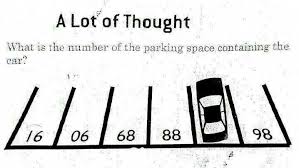 which is a puzzle chinese kindergartners are expected to solve instantly and western adults tend to actually need time for as the clue relies on the logic in the drawing of a real world parking lot, not on the logic in the visible number sequence.
Of course the makers try to limit this as much as possible. And current tests are far better than older ones. But it's still an important flaw in them that needs to be taken into account when you make someone do the test.
Carnasaur
The Red Devil
Defender of Hexoatl
- Messages
- 1,054
- Likes Received
- 1,644
- Trophy Points
- 113
In the event, an IQ test is based on anything else than the ability to think logically/reason under a limited timespan. Then I totally agree, the person's knowledge of the culture, language, and knowledge will be very important.Then there's also the fact that certain cultures place more or less value on certain skills. And the IQ tests are of course based on these values. For example an IQ test tends to have far more memorization questions than it does about spatial reasoning. It's one of the reasons why asian countries tend to score relativly high, they place heavy emphasis on memorization which is a great asset to have when making IQ tests. On the other hand, places with bad formal education score relativly low due them never really developing their skills.
I don't particularly like this type of test, since someone can as you say, be quite intelligent in one field, but still fail the test due to not being good in subject A, or that the test is not in their native language, etc.
A test like the one linked below is better in this regard since no prior knowledge is required, and it takes into mind the person's age and the time they use to complete it. It is true that you can train your brain on solving logic puzzles, but studies show that it has a small effect, and it is very hard to train yourself more than a few points above your "normal" level so to say.
Please note, for anyone that decides to take a look, that any result from a test that is not officially governed is only to give yourself an idea of your level.
http://test.mensa.no
Slann
Canas
Ninth Spawning
- Messages
- 7,142
- Likes Received
- 10,784
- Trophy Points
- 113
Hence the need to do it in the correct language and the subdivision in the various subcatagories which they of course try to balance out. But there is of course a limit to how well you can balance that. After all, who's to decide what's more "valuable" your ability to reason abstractly internally, or you're ability to express whatever it is you think to another or spatial reasoning, or whatever other catagory there is.In the event, an IQ test is based on anything else than the ability to think logically/reason under a limited timespan. Then I totally agree, the person's knowledge of the culture, language, and knowledge will be very important.
I don't particularly like this type of test, since someone can as you say, be quite intelligent in one field, but still fail the test due to not being good in subject A, or that the test is not in their native language, etc.
You can actually gain quite some points just by practising. I think the world record is made by someone who explicitly practised for it. And she went up quite a lot of points over her various tries. Admittadly, she was already at the very edge, so getting one or two more correct anwsers can translate into fairly impressive swings in terms of IQ.A test like the one linked below is better in this regard since no prior knowledge is required, and it takes into mind the person's age and the time they use to complete it. It is true that you can train your brain on solving logic puzzles, but studies show that it has a small effect, and it is very hard to train yourself more than a few points above your "normal" level so to say.
In general though I think the main issue was that it's easy to score relativly low due to aforementioned problems of culture & langauge barriers while scoring relativly high due to excessive practise was very difficult.
Also, any question can be made easier by prior knowledge, or things your used to. Here's a great example, much like the chinese riddle earlier:
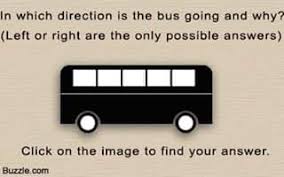
Depending on where you're from you'l come to a different anwser using the exact same reasoning. Which makes making questions for something like this very difficult.
This is probably also why ultimatly you only really care about which broad catagory you end up in, and not the precise score. It makes a bit of an error margin acceptable
Carnasaur
The Red Devil
Defender of Hexoatl
- Messages
- 1,054
- Likes Received
- 1,644
- Trophy Points
- 113
If we consider that every person is only allowed to attempt three times to take the Mensa test, and there have to be at least six months between each time they retake the test; and that each time the test will differ. This base test is also capped at 135, so one or two more correct if you are at the top, does not matter.You can actually gain quite some points just by practising. I think the world record is made by someone who explicitly practised for it. And she went up quite a lot of points over her various tries. Admittadly, she was already at the very edge, so getting one or two more correct anwsers can translate into fairly impressive swings in terms of IQ.
This is why studies show that the average gain by studying is perhaps going from 110 to 114 on the next test.
Slann
Canas
Ninth Spawning
- Messages
- 7,142
- Likes Received
- 10,784
- Trophy Points
- 113
she didn't do it for the mensa one, she practised for a "normal" one with a psychologist. Which is one that isn't capped. Admittadly she also made it her life's goal and studied excessivly for it, so she's bound to be an outlier.
Also, going from 110 to 114 would mean going from the 70-ish percentile to the 80-ish percentile (exact numbers depend on the specific test). Which is quite a massive improvement.
Anyway point remains, practise does pay off
Also, going from 110 to 114 would mean going from the 70-ish percentile to the 80-ish percentile (exact numbers depend on the specific test). Which is quite a massive improvement.