
Slann
Lord Agragax of Lunaxoatl
Eleventh Spawning
- Messages
- 9,797
- Likes Received
- 21,523
- Trophy Points
- 113
For a couple of years now, I've been thinking and working on my own fantasy setting for both a series of novels I have been writing and also a rank-and-flank mass combat wargame like Warhammer Fantasy and Kings of War. After being inspired by @Scalenex's brainstorming threads made to discuss his own fantasy realm for an RPG he was thinking of designing, I have decided to follow suit and present my creation here to garner reactions from the general fantasy-loving public.
So without further ado, I present to you all the realm of Escalonia!
At the very middle is the Central Lake, a huge body of fresh water that in many ways is more like a large inland sea, and from this lake flow four wide tidal rivers, one in each direction of the compass, all the way to the sea. These four rivers effectively divide the supercontinent into quadrants, and have often been used to establish natural borders between nations.
The Western River is the calmest and with the slowest current of them all, slowly meandering from side to side like a sidewinder serpent as it nourishes the temperate grasslands of that side of the continent.
The Northern River is the wildest and most unpredictable, as slow-flowing as its western brother one minute, almost as merciless and angry as the ocean it feeds the next, as if it were constantly objecting to having to flow through the colder northern half of Escalonia.
The Eastern River is shallow and sickly compared to its brethren, for in the east of Escalonia the climate is drier and more arid, and thus the Eastern River is party to the least rain.
The Southern River is the most abundant with life, for it flows through Escalonia's hotter southern regions, and such warm temperatures and the moist environment around this river encourage vast quantities of wildlife to make their home in and around it.
Quarter 1: The Northwest
Escalonia's north-western quadrant has the dishonour of possessing both the cold climate of the northern half of the continent and the heavier rainfall that inhabitants of the western side have to endure - the further north and west you go, the worse it gets - as well as playing host to several ranges of steep, rocky mountains. Indeed, the very north of the area is also prone to especially strong winds, meaning few trees last long up there before they are blown over, leaving a vast stretch of near-empty highlands with little in the ways of shelter. Here, only the meanest and most aggressive have any hope of surviving - humans did once eke out a living in this hill country, but they have since been driven out by a more violent yet similarly intelligent species, the Felinids of Suri, a sadistic and cruel race of feline humanoids that actively enjoys torturing and killing prisoners merely for their whims of pleasure (largely based on how cats are the one creature other than humans that kill for the fun of it - had to have a convincing evil non-human race somewhere).
Further south, the climate becomes (slightly) more accommodating, even to the point where the odd few trees can be seen and the coarse heather is replaced with patches of well-nourished green grass. However, the terrain is still pock-marked with the foothills of the two mountain ranges sandwiching the area, the Grey Mountains to the south and the Shrieking Crags to the north, and it is very rare for any building to be constructed upon a completely flat piece of ground. This hilly landscape makes up the kingdom of the Dwarfs of Wodristan, the most powerful Dwarf nation in Escalonia. While sharing the origins of the other Dwarf kingdoms in the east side of the Northwest quadrant, Wodristan is by far the most advanced, having largely abandoned the traditional axes, hammers and shields of their bretheren in favour of a more disciplined strategy featuring serried ranks of Pike Guard supported by smaller units of musketeers on the flanks. Additionally the Dwarfs of Wodristan are the only Dwarfs to be unafraid of regularly riding short, stout ponies, and have developed entire cavalry regiments to support the slow-moving bodies of their armies (I've thought of the Dwarfs of Wodristan as being styled around the armies of the English Civil War, with their distinctive rock-paper-scissors kind of unit roster - pikemen beats cavalry beats musketeers beats pikemen).
The other, smaller Dwarf kingdoms are all found in the south-east region of the Northwest quadrant. Although described as kingdoms, these nations are little more than family-based clans, and where the Wodristan Dwarfs have largely distanced themselves from this way of life, thereby allowing their kingdom to have expanded so much, the Dwarfs of these clans have resolutely maintained to remain in the past. Here the Dwarf culture has existed as it has done for millennia, with inter-clan grudges being settled with axe and hammer and notable quantities of beer being swigged when half-time comes round. Due to their proximity to the shores of the Central Lake, many of these Dwarf clans have constructed notable trade and military fleets, and use these to compete with both each other and other races to try and seize the monopoly on various commodities. Their cousins in Wodristan refer to these smaller Dwarf factions as Wodristan's Feifdoms, and indeed often prompt clan leaders to pay tributes to Wodristan as if they were part of Wodristan's own territory, but in return Wodristan have always done their best to help protect their cousins' beleaguered holds from the wicked Felinids and the mad Cultists of Necromancy, as good Dwarfs should, and thus the two Dwarf groups maintain a friendly relationship despite their differing cultures (you guessed it, these are the more traditional Dwarfs we know and love).
While this region of Escalonia largely consists of the Dwarfs from these Feifdoms, there also exist a few settlements of Gnomes and humans, who are the last remnants of the culture that formerly inhabited the northwestern Highlands before the Felinids ousted them. Having long given up reclaiming their homeland, they have since degenerated into warlike family groups, who both compete with the Dwarf clans and rely upon them for protection against Upravanian raiding parties.
The Grey Mountains are the currently established border between Wodristan and the neighbouring kingdom of Calderon, in the more temperate grasslands surrounding the Western River with the majority of its territory in the Southwest quadrant. This ancient nation has been built on an alliance between humans, the reptilian Lizardkin and the kingdom of Tarkalia, the latter a smaller kingdom within Calderon ruled by the humanoid otters who founded it and evolved on the banks of the Western River. The northern border of Tarkalia is on the other side of the Grey Mountains from Wodristan, and while the human rulers of the wider kingdom of Calderon have tried to enforce peace with the Dwarfs, there remain an ongoing feud between the Tarkalians and Wodristan. Both desire for the whole mountain range to be entirely within their own borders, and defend their border fortresses aggressively against any approach made by the other to claim it. However, neither of them are ignorant of the fact that the Grey Mountains themselves are home to their own tribes of humans, who have developed their own strongholds deep within the mountains. Aggressive and warlike, these peoples will accept rulership from neither Calderon or Wodristan, and launch raids against both to steal resources and preserve their own cultures (I thought of having a Viking-type human faction represent a neutral party in the wars between Calderon and Wodristan who know the mountainous terrain better than either - Calderon will be explained in greater detail in the Southwest Quadrant section).
In the north-eastern part of the quadrant, the land is drier, although just as cold as the highland territory of the Felinids, and the inhabitants here are similarly hostile to others. There were many coniferous trees in this part of the continent, but the vast majority of them are dead. This was due to no natural event, but the meddling actions of the corrupt and decadent Howardi dynasty, the craven monarchs of Upravania. Humans they may be, but their people are unlike any of the other human kingdoms of Escalonia, for Upravania is the one faction that openly encourages the practice of the religion of Necromancy, which has been banned in all the other kingdoms for hundreds of years, on pane of death. Depravity, lawlessness and chaos perpetrate Upravania, for it has become an unholy sanctuary for all those who have ever secretly practiced the art of raising the dead, and they do so without restriction to satisfy their every whim. Nobles populate their grand houses with the awoken skeletons of the long-deceased as their servants, while unquiet spirits freely prey upon any who are not Necromancers themselves. All manner of profanities occur within alleyways, alcoves and back gardens, and gruesome rituals are performed openly in the streets, for the Howardi have no objection to allowing the dead to be party to the acts of the living, or vice versa. Like the savage Felinids who are their neighbours to the west, the extended Howardi family send out raiding parties of babbling cultist militia and remorseless undead legions to capture new souls to experiment on - indeed the Felinids and Necromancers often target each other just as much as others for abduction campaigns (This faction is another of the three main evil nations at the point in time where the stories start - they're the horde army that can spam large numbers of lightly armoured, stark-raving-mad death cultists and legion upon legion of skeletons, ghosts and other hideous undead stuff).
I haven't that much time to post stuff yet so my initial posts will be quite small, but stay tuned for more in the coming days.
So without further ado, I present to you all the realm of Escalonia!
Part One: Escalonian Geography and Inhabitants
Escalonia itself is a giant supercontinent, surrounded by oceans on all sides. Indeed Escalonia covers so much of the surface of its planet that almost every environment imaginable can be found in some region of it - it is so vast that the different areas of the continent vary wildly in climate despite all being part of the same landmass.At the very middle is the Central Lake, a huge body of fresh water that in many ways is more like a large inland sea, and from this lake flow four wide tidal rivers, one in each direction of the compass, all the way to the sea. These four rivers effectively divide the supercontinent into quadrants, and have often been used to establish natural borders between nations.
The Western River is the calmest and with the slowest current of them all, slowly meandering from side to side like a sidewinder serpent as it nourishes the temperate grasslands of that side of the continent.
The Northern River is the wildest and most unpredictable, as slow-flowing as its western brother one minute, almost as merciless and angry as the ocean it feeds the next, as if it were constantly objecting to having to flow through the colder northern half of Escalonia.
The Eastern River is shallow and sickly compared to its brethren, for in the east of Escalonia the climate is drier and more arid, and thus the Eastern River is party to the least rain.
The Southern River is the most abundant with life, for it flows through Escalonia's hotter southern regions, and such warm temperatures and the moist environment around this river encourage vast quantities of wildlife to make their home in and around it.
Quarter 1: The Northwest
Escalonia's north-western quadrant has the dishonour of possessing both the cold climate of the northern half of the continent and the heavier rainfall that inhabitants of the western side have to endure - the further north and west you go, the worse it gets - as well as playing host to several ranges of steep, rocky mountains. Indeed, the very north of the area is also prone to especially strong winds, meaning few trees last long up there before they are blown over, leaving a vast stretch of near-empty highlands with little in the ways of shelter. Here, only the meanest and most aggressive have any hope of surviving - humans did once eke out a living in this hill country, but they have since been driven out by a more violent yet similarly intelligent species, the Felinids of Suri, a sadistic and cruel race of feline humanoids that actively enjoys torturing and killing prisoners merely for their whims of pleasure (largely based on how cats are the one creature other than humans that kill for the fun of it - had to have a convincing evil non-human race somewhere).
Further south, the climate becomes (slightly) more accommodating, even to the point where the odd few trees can be seen and the coarse heather is replaced with patches of well-nourished green grass. However, the terrain is still pock-marked with the foothills of the two mountain ranges sandwiching the area, the Grey Mountains to the south and the Shrieking Crags to the north, and it is very rare for any building to be constructed upon a completely flat piece of ground. This hilly landscape makes up the kingdom of the Dwarfs of Wodristan, the most powerful Dwarf nation in Escalonia. While sharing the origins of the other Dwarf kingdoms in the east side of the Northwest quadrant, Wodristan is by far the most advanced, having largely abandoned the traditional axes, hammers and shields of their bretheren in favour of a more disciplined strategy featuring serried ranks of Pike Guard supported by smaller units of musketeers on the flanks. Additionally the Dwarfs of Wodristan are the only Dwarfs to be unafraid of regularly riding short, stout ponies, and have developed entire cavalry regiments to support the slow-moving bodies of their armies (I've thought of the Dwarfs of Wodristan as being styled around the armies of the English Civil War, with their distinctive rock-paper-scissors kind of unit roster - pikemen beats cavalry beats musketeers beats pikemen).
The other, smaller Dwarf kingdoms are all found in the south-east region of the Northwest quadrant. Although described as kingdoms, these nations are little more than family-based clans, and where the Wodristan Dwarfs have largely distanced themselves from this way of life, thereby allowing their kingdom to have expanded so much, the Dwarfs of these clans have resolutely maintained to remain in the past. Here the Dwarf culture has existed as it has done for millennia, with inter-clan grudges being settled with axe and hammer and notable quantities of beer being swigged when half-time comes round. Due to their proximity to the shores of the Central Lake, many of these Dwarf clans have constructed notable trade and military fleets, and use these to compete with both each other and other races to try and seize the monopoly on various commodities. Their cousins in Wodristan refer to these smaller Dwarf factions as Wodristan's Feifdoms, and indeed often prompt clan leaders to pay tributes to Wodristan as if they were part of Wodristan's own territory, but in return Wodristan have always done their best to help protect their cousins' beleaguered holds from the wicked Felinids and the mad Cultists of Necromancy, as good Dwarfs should, and thus the two Dwarf groups maintain a friendly relationship despite their differing cultures (you guessed it, these are the more traditional Dwarfs we know and love).
While this region of Escalonia largely consists of the Dwarfs from these Feifdoms, there also exist a few settlements of Gnomes and humans, who are the last remnants of the culture that formerly inhabited the northwestern Highlands before the Felinids ousted them. Having long given up reclaiming their homeland, they have since degenerated into warlike family groups, who both compete with the Dwarf clans and rely upon them for protection against Upravanian raiding parties.
The Grey Mountains are the currently established border between Wodristan and the neighbouring kingdom of Calderon, in the more temperate grasslands surrounding the Western River with the majority of its territory in the Southwest quadrant. This ancient nation has been built on an alliance between humans, the reptilian Lizardkin and the kingdom of Tarkalia, the latter a smaller kingdom within Calderon ruled by the humanoid otters who founded it and evolved on the banks of the Western River. The northern border of Tarkalia is on the other side of the Grey Mountains from Wodristan, and while the human rulers of the wider kingdom of Calderon have tried to enforce peace with the Dwarfs, there remain an ongoing feud between the Tarkalians and Wodristan. Both desire for the whole mountain range to be entirely within their own borders, and defend their border fortresses aggressively against any approach made by the other to claim it. However, neither of them are ignorant of the fact that the Grey Mountains themselves are home to their own tribes of humans, who have developed their own strongholds deep within the mountains. Aggressive and warlike, these peoples will accept rulership from neither Calderon or Wodristan, and launch raids against both to steal resources and preserve their own cultures (I thought of having a Viking-type human faction represent a neutral party in the wars between Calderon and Wodristan who know the mountainous terrain better than either - Calderon will be explained in greater detail in the Southwest Quadrant section).
In the north-eastern part of the quadrant, the land is drier, although just as cold as the highland territory of the Felinids, and the inhabitants here are similarly hostile to others. There were many coniferous trees in this part of the continent, but the vast majority of them are dead. This was due to no natural event, but the meddling actions of the corrupt and decadent Howardi dynasty, the craven monarchs of Upravania. Humans they may be, but their people are unlike any of the other human kingdoms of Escalonia, for Upravania is the one faction that openly encourages the practice of the religion of Necromancy, which has been banned in all the other kingdoms for hundreds of years, on pane of death. Depravity, lawlessness and chaos perpetrate Upravania, for it has become an unholy sanctuary for all those who have ever secretly practiced the art of raising the dead, and they do so without restriction to satisfy their every whim. Nobles populate their grand houses with the awoken skeletons of the long-deceased as their servants, while unquiet spirits freely prey upon any who are not Necromancers themselves. All manner of profanities occur within alleyways, alcoves and back gardens, and gruesome rituals are performed openly in the streets, for the Howardi have no objection to allowing the dead to be party to the acts of the living, or vice versa. Like the savage Felinids who are their neighbours to the west, the extended Howardi family send out raiding parties of babbling cultist militia and remorseless undead legions to capture new souls to experiment on - indeed the Felinids and Necromancers often target each other just as much as others for abduction campaigns (This faction is another of the three main evil nations at the point in time where the stories start - they're the horde army that can spam large numbers of lightly armoured, stark-raving-mad death cultists and legion upon legion of skeletons, ghosts and other hideous undead stuff).
I haven't that much time to post stuff yet so my initial posts will be quite small, but stay tuned for more in the coming days.
Last edited:
 (I didn't want to edit it paragraph by paragraph as that would ruin the effect produced by revealing it all at once)
 But your otters seem better, Science be praised!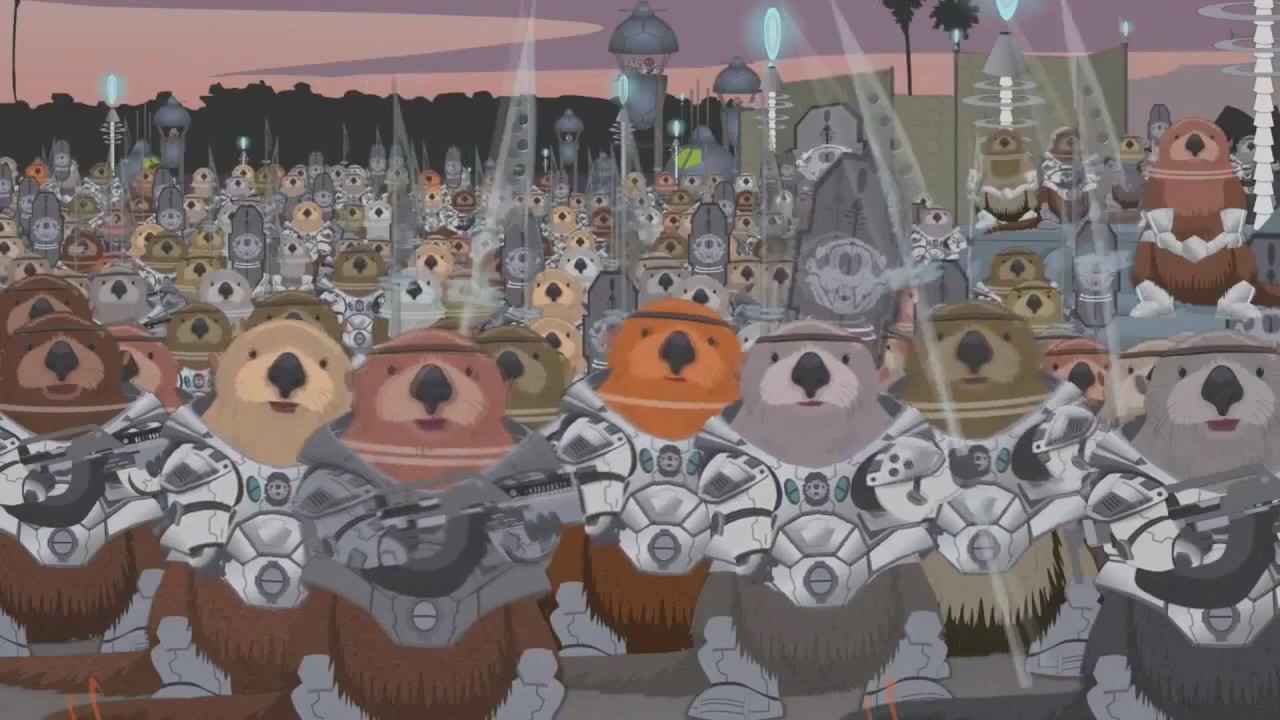

 instead of 350 pounds? (Because Kzinti and Tigers = same weight class.)