I am a late comer to this. Enjoy the like bombs everyone. Now for me to add my two cents to various things.
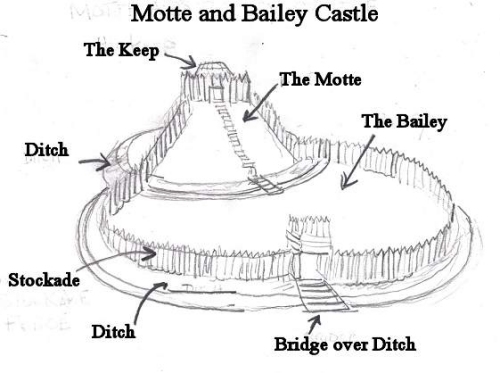
- were medieval castles bare stone?
They had wooden parts, they had medieval equivalents to concrete (which date back to Roman times and before). Every castle was different, usually reflecting the availability of local materials.
- was medieval armor heavy?
Yes and no. The most important thing is often how it fits. Perfectly fitted fifty pound is generally much less constrictive to movement than poorly fitted twenty pound armor.
If it's sharpened to cut then yes. But for the most part it was a waste of time to sharpen rapiers that much. A big problem with ueber sharp blades in general is that you lose a lot of sharpness as soon as you start hitting things.
- was a Greatsword a heavy and unwieldy weapon?
Not as much as people thing. Most modern humans have only swung a blunt replica sword. These are generally heavy and less balanced than a real fighting sword.
- could a Warbow shoot arrows over half a mile?
I don't know. I do know that the distance an arrow travels is based on the strength of the archer, the angle of the shot, the elevation of the shooter, the weight of the arrow head, the direction and strength of the wind and a bunch of other things. I'm
guessing that in ideal situations an archer could fire an arrow a half mile.
- were sail ships faster than ox carts?
I have a friend who really dived deep into naval history. The literal answer is, sometimes the ship is faster, sometimes the ox is faster but at the end of the day, if you goal is move large amounts of cargo from point A to point B, water travel is pretty much always better when available. Even if you have oxes towing a barge loaded with grain up river against the current, that's generally more economical than moving the grain over land in wheeled carts.
- were medieval horses small?
I've heard there were once breeds of horses larger than cyldsdale that are not longer around. I guess I would say look at all the dog breeds and how different they look. Most dog breeds came from seletctive breeding in the last few centuries. Horses have been carefully bred for thousands of years. They can be bred for all sorts of sizes.
That's subjective. Psychology is a fairly young science.
Compared to most peasants. Yes. I would say, owning a horse in medeiveal Europe put you in in the top 20% of medieval society. Horses trained for battle were pretty expensive. Armor was fairly expensive. More people have swords and other weapons but they still aren't free. Most knights either had a parcel of lands with peasants to work the land or they got a stipend from their lords. So yeah, I'd say they are rich. They couldn't really often sleep on feather beds and eat steak every day, but they were comparatively rich.
"The war is over, go home. We are done paying you."
...
"Oh crap, there are a bunch of highly trained and heavily armed warhardened soldiers that miss their old lifestyles!"
Though you could have knights that have horses, weapons, and armor and very little else to their name. These knights often would become robber knights that put the "dark" in the Dark Ages.
Generally speaking: Yes, the bullet can go through. Firearms are one of the reasons why heavy armor disappeared from battlefields at some point.
In some cases if the metal warps around the bullet and pierces the skin again, a person who is wearing metal armor is
more vulnerable to firearms than a person who is not wearing armor because if they weren't wearing armor the shot would have been cleaner.
From what I understand for the internet videos I've seen, if I was being shot at by musket balls I wouldn't mind wearing metal armor to cushion the blow but against guns modern riflling, antique armor is a liability.
Everyone said:
Something well thought about swords or a video about swords.
Are ______ better than swords? I'm not an expert but I do like to watch Youtube videos about medieval weaponry and one thing that I got from Shadiversity which was echoed from other Youtubers goes along the lines of.
Knights fought with lances
Pikemen fought with pikes.
Archers fought with long bows.
But all of them carried a sword as a backup weapon.
Even in the Samurai era of Japan, Samurai were likely to fight with polearms (nagatas!) and bows on the battlefield rather than their katanas even though katanas are so iconic to samurai. Katanas were mainly for self-defense, not the war. Same in medieval Europe. Men who wanted a weapon for self-defense generally carried a sword.
When you factor that swords were carried by
everyone and that swords were the self-defense weapon of choice until the invention of firearms, this means swords were more visible, so that's why swords are probably more iconic in historical fiction today.
- were medieval castles bare stone?
They had wooden parts, they had medieval equivalents to concrete (which date back to Roman times and before). Every castle was different.
- was medieval armor heavy?
Yes and no. The most important thing is often how it fits. Perfectly fitted fifty pound is generally much less constrictive to movement than poorly fitted twenty pound armor.
If it's sharpened to cut then yes. But for the most part it was a waste of time to sharpen rapiers that much. A big problem with ueber sharp blades in general is that you lose a lot of sharpness as soon as you start hitting things.
- was a Greatsword a heavy and unwieldy weapon?
Not as much as people think. Most modern humans have only swung a blunt replica sword. These are generally heavy and less balanced than a real fighting sword.
- could a Warbow shoot arrows over half a mile?
I don't know. I do know that the distance an arrow travels is based on the strength of the archer, the angle of the shot, the elevation of the shooter, the weight of the arrow head, the direction and strength of the wind and a bunch of other things. I'm
guessing that in ideal situations an archer could fire an arrow a half mile.
- were sail ships faster than ox carts?
I have a friend who really dived deep into naval history. The literal answer is, sometimes the ship is faster, sometimes the ox is faster but at the end of the day, if you goal is move large amounts of cargo from point A to point B, water travel is pretty much always better when available. Even if you have oxes towing a barge loaded with grain up river against the current, that's generally more economical than moving the grain over land in wheeled carts.
- were medieval horses small?
I've heard there were once breeds of horses larger than cyldsdale that are not longer around. I guess I would say look at all the dog breeds and how different they look. Most dog breeds came from seletctive breeding in the last few centuries. Horses have been carefully bred for thousands of years. They can be bred for all sorts of sizes.
That's subjective. Psychology is a fairly young science.
Compared to most peasants. Yes. I would say, owning a horse in medeiveal Europe put you in in the top 20% of medieval society. Horses trained for battle were pretty expensive. Armor was fairly expensive. More people have swords and other weapons but they still aren't free. Most knights either had a parcel of lands with peasants to work the land or they got a stipend from their lords. So yeah, I'd say they are rich. They couldn't really often sleep on feather beds and eat steak every day, but they were comparatively rich.
That also doesn't mean that knights didn't struggle. My favorite foreign movie is
Twilight Samurai which chronicles the life of a samurai that is a member of the ruling class on paper, but in reality he is far closer in lifestyle to the peasants under him.
"The war is over, go home. We are done paying you."
...
"Oh crap, there are a bunch of highly trained and heavily armed warhardened soldiers that miss their old lifestyles."
Though you could have knights that have horses, weapons, and armor and very little else to their name. These knights often would become robber knights that put the "dark" in the Dark Ages.
Generally speaking: Yes, the bullet can go through. Firearms are one of the reasons why heavy armor disappeared from battlefields at some point.
In some cases if the metal warps around the bullet and pierces the skin again, a person who is wearing metal armor is
more vulnerable to firearms than a person who is not wearing armor because if they weren't wearing armor the shot would have been cleaner.
From what I understand for the internet videos I've seen, if I was being shot at by musket balls I wouldn't mind wearing metal armor to cushion the blow but against guns modern riflling, antique armor is a liability.
Everyone said:
Something well thought about swords or a video about swords.
Are ______ better than swords? I'm not an expert but I do like to watch Youtube videos about medieval weaponry and one thing that I got from Shadiversity which was echoed from other Youtubers goes along the lines of.
Knights fought with lances.
Pikemen fought with pikes.
Archers fought with long bows.
All of them carried a sword as a backup weapon.
Pretty much what
@LizardWizard said.
Throughout history in most cases swords were sidearms, not the main weapon.
Okay, so I’m not the first person in this thread to say that...but I must continue spewing my own two cents.
Even in the Samurai era of Japan, Samurai were likely to fight with polearms and bows on the battlefield. Katanas were mainly for self defence, not the war. Same in medieval Europe. Men who wanted a weapon for self defense generally carried a sword.
When you factor that swords were carried by
everyone and that swords were the self-defense weapon of choice until the invention of firearms, this means swords were more visible, so that's why swords are probably more iconic in historical fiction today.
Also there were a lot more swords that were created as works of arts than there are axes and spears that were created as works of art.
Swords were used for a long time, but most of the time swords actually were not primary weapons. Just because spears are so good.
Yeah. This is especially true when you consider all the weapons that are derivatives of spears. Even Bayonets are sort of a derivative of spears. As armor got better this opened the field to warhammers and military picks. Not very efficient weapons on the whole, but these can pierce heavier armors more than spears or swords.
Oh and btw something else that many people don't know:
The uniform look that we see in many movie armies.... wasn't a thing for the most part of history, especially in the medieval period. People would bring whatever weapons and armor they could afford, and wear their normal clothes (nobles might wear certain colors but they might not).
True on the whole, but I was under the impression that nobles wanted to make their noble status very obvious. That way if they lose the battle, they are kept alive and ransomed. Common born soldiers didn't often get that privilege.
I thought the Persians had tall rectangular wicker shields with more eastern designs on them, compared to the Greeks’ round shields.
That was one of the historical reasons the 300 killed so many Persians. The Greeks’ weapons could cut right through the Persians’ shields.
Sometimes I like Shad, sometimes I don't. Lately I often don't, but I'd still like to include him here because sometimes he does cover cool topics.
Get out of my head! This is my opinion EXACTLY. I will add that Shad seems to be more accurate when talking about castles and least accurate when talking about not castles. I do like his Fantasy Rearmed Series if I don’t agree with all of it. Fantasy Rearmed is right up my alley because I am trying to create my own fantasy setting and I’d like it to make as much sense as possible considering my world has dragons and pixies in it.
True, for any period of time where civilization had an organized army structure they would produce the weapons needed. Though I am not sure the equipment was cheap for that time period standard, i.e. looking at if a peasant could afford it.
In medieval periods, most peasants couldn’t afford the best weapons but in the 21st century, we have billion dollar bombers and we now have smart bombs that individually cost many times more than the buildings they blow up.
You can always count on large quantities of resources going to the best weapons in every era even as basic needs are barely met. Huzzah!
@Aginor, Of all the videos, the medieval food videos are my favorite videos from this thread.
Alright I have a very serious question: what about me and lefty brethren in warfare? How would we be placed in units and what would they do with us, or would they just say “f u” and force us to fight as a righty?
I think it’s interesting that in pre-modern times (even as recent as the early twentieth century) left handedness was viewed as backwards or sinful.
Now left handedness can be an asset in physical contests. In baseball a mediocre left handed pitcher can strike out about as many batters as an exceptionally skilled right handed pitcher.
I noticed HEMA people talk about lefties having advantages in certain circumstances. Same thing with southpaws and professional boxers.
Well now, that's a good question. Depends on your status and where you lived. If you were a knight, fighting left-handed was often considered to be dishonorable. If you were a duelist, not only did nobody care if you fought left-handed, but it often gave you an advantage. If you were a peasant conscript in someone's militia force, you usually had a spear and a shield or some cheap-ish polearm or pike. Shield-and-spear required you to fight in formation, spear was usually in your right hand, so you're boned. Pike or polearm meant you were using both hands, so it wouldn't matter as much if you were right- or left-handed.
He said it better than I would have.
Also, I have a question, I've recently been on holidays in the mountains and I started wondering. Why aren't mountainholds like the dwarfs build more of a thing historically?
There are difficulties carving fortifications in solid rock but the main limiting factor is food. The rugged terrain may make near unassailable fortresses but you have to feed the people in the castle or fortress. Thats why you got a lot of castles and fortresses built in the middle of excellent farmland.
Underground is even worse. No sun, no photosynthesis. Because my fantasy world has magic in it, I've created things called lifestones which allow underground plants to flourish without the sun. This keeps my dwarves alive, though most of them still import food when they can.