

• The forum software have been upgraded to the latest version.

    If you notice anything that looks off, or does not work, please let us know.

    For more information, click here.

Medieval facts

Apologies in advance, but since this is supposed to be a thread about facts...


All of this is bogus info:
Yeah, spears are great! The Romans get a ton of praise for the phalanx, but after that they were so tactically inflexible as to be laughable. When romans hit the dense-ass forests in Bavaria they practically came to a halt, trying to maintain formation while moving through the trees. The local residents, who were usually a good bit taller than the average roman citizen, would just charge up to the phalanx formation, with all its bristling spears, and use their zweihanders to just hack off the ends of all the spears, terrifying the roman soldiers and crash into the formation and start hackin' away.
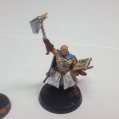
...the worst offense is suggesting that Roman legionaries and zweihander swords shared the same century. Just no. :pompus: :bookworm:
 
Snip. So, about that armor. Can a medieval cuirass stop a rifle bullet?
To quote Michael Carpenter, "My faith is my armor. My kevlar-ceramic helps."
 
Clearly @Torxhol Drakescale thinks it might be amusing to troll this thread...
My favourite medieval history story is by far that of a castle in a marsh that was being laid to siege. It is believed that this castle was constructed with limestone (which stands to reason, as it was rather prevalent in the area), and had been in the area for a bit over a century. The castle was also being laid to siege around the time that metal arrowheads had come into fashion. A common practice for archers at the time was to loose one arrow before the others, as a way to test if the walls were short enough to effectively loose over, and as one archer did such, his arrow struck the parapet near the top of the wall. Then the castle exploded. Yes. Exploded. Boom. Kablooey. NOW FOR THE SCIENCE! Limestone is a rather porous stone, and this particular castle had been around for a bit longer than century, in a swamp. This massive limestone structure had been absorbing SWAMP GAS for over one hundred years, swamp gas being primarily METHANE which is extremely volatile and combustible. When the metal arrowhead hit the top of the rampart, it struck a spark against the stone, lighting up the century's worth of explosive gas stored within, and, as such, went BOOM.
 
Yeah, spears are great! The Romans get a ton of praise for the phalanx, but after that they were so tactically inflexible as to be laughable. When romans hit the dense-ass forests in Bavaria they practically came to a halt, trying to maintain formation while moving through the trees. The local residents, who were usually a good bit taller than the average roman citizen, would just charge up to the phalanx formation, with all its bristling spears, and use their zweihandersView attachment 52423 to just hack off the ends of all the spears, terrifying the roman soldiers and crash into the formation and start hackin' away.

I hate to be the party pooper, but swords like the one pictured didn't exist until a thousand years later.
The romans were defeated, but not using such swords.

Fuck no:

1. The original Greek army that showed up at Thermopylae numbered in the thousands, and that number included Spartans, Thebans, Corinthians, and many others. The idea that it was just 300 Spartans and a handful of puny-looking other Greeks who happened to tag along is nonsense. Only when the force was at risk of being outflanked did Leonidas order a retreat whilst he did his famous sacrificial rearguard.

2. The Persian army most definitely did not count giant rhinos, monster-men-dudes, and other such shit amongst its ranks. Xerxes was also not some crazy-ass massive bald dude who looks like he just spent a few grand at Hammurabi's Wacky World of Piercings. He likely looked a bit more like this:

antique-relief-of-the-third-king-of-the-achaemenid-empire-darius-the-great-550486-bce-d2564d35-6f8d-4ba9-be78-f78e7a8289ac.jpg

3.The Persian army had uniforms, some semblance of how to march in a straight line, and was reasonably well-equipped and disciplined as far as we know. Conversely the Spartans most likely did not run into battle shirtless, and would definitely not have done something like break the phalanx midway through combat, even for some epic slow-motion action shots.

4. There's something to be said for the Spartan military doctrine, but the other Greek cities were far from pussies - Spartan dominance post the Peloponnesian war was shattered by Thebes at the battle of Leuctra, where not even Gerard Butler could withstand the overwhelming force of a 50-rank-deep Theban hoplite phalanx.

No expert on the subject by any means, but there's my ramble.
good points!
In fact if you were teleported there you would most likely not even know who is who. Judging everything we know the style of clothing and the equipment of Greek vs. Persian forces were mainly the same at that time.

The movie is based on a comic, which is based on a bizarrely exaggerated propagabda story about the battle, written quite some time after the actual event.


As for spears vs. swords:
The spear (or pike) was the main weapon in most conflicts before the 17th century, in all parts of the world we know of.

Swords were used for a long time, but most of the time swords actually were not primary weapons. Just because spears are so good.
 
My favourite medieval history story is by far that of a castle in a marsh that was being laid to siege. It is believed that this castle was constructed with limestone (which stands to reason, as it was rather prevalent in the area), and had been in the area for a bit over a century. The castle was also being laid to siege around the time that metal arrowheads had come into fashion. A common practice for archers at the time was to loose one arrow before the others, as a way to test if the walls were short enough to effectively loose over, and as one archer did such, his arrow struck the parapet near the top of the wall. Then the castle exploded. Yes. Exploded. Boom. Kablooey. NOW FOR THE SCIENCE! Limestone is a rather porous stone, and this particular castle had been around for a bit longer than century, in a swamp. This massive limestone structure had been absorbing SWAMP GAS for over one hundred years, swamp gas being primarily METHANE which is extremely volatile and combustible. When the metal arrowhead hit the top of the rampart, it struck a spark against the stone, lighting up the century's worth of explosive gas stored within, and, as such, went BOOM.
That's hilarious, though unless the inhabitants of that castle never lit a fire before seems like a made up story :p

Yeah, spears are great! The Romans get a ton of praise for the phalanx, but after that they were so tactically inflexible as to be laughable. When romans hit the dense-ass forests in Bavaria they practically came to a halt, trying to maintain formation while moving through the trees. The local residents, who were usually a good bit taller than the average roman citizen, would just charge up to the phalanx formation, with all its bristling spears, and use their zweihandersView attachment 52423 to just hack off the ends of all the spears, terrifying the roman soldiers and crash into the formation and start hackin' away.
I assume you mean testudo? Or greeks instead of romans? The romans weren't really using phalanxes anymore by the time they went into Germany.

...the worst offense is suggesting that Roman legionaries and zweihander swords shared the same century. Just no. :pompus: :bookworm:
Couldn't you make an argument that every 2-handed sword is technicly a zweihander? At least if you're speaking german?

good points!
In fact if you were teleported there you would most likely not even know who is who. Judging everything we know the style of clothing and the equipment of Greek vs. Persian forces were mainly the same.
Didn't the persians bring relativly large forces of comperativly lightly armored troops, being largely a dessert kingdom and such? Whereas the greeks basicly only brought the much heavier armoured hoplite everywhere making the two armies relativly distinct?


As for spears vs. swords:
The spear (or pike) was the main weapon in most conflicts before the 17th century, in all parts of the world we know of.

Swords were used for a long time, but most of the time swords actually were not primary weapons. Just because spears are so good.
To be honest, I'd be curious what would be the biggest advantage of the spear. The extra range and such. Or the fact that's it just infinitly easier to teach a bunch of farmers to hold a line pointing a bunch of spears forward than it is to teach each of em to become capable swordsman who don't end up cutting their neighbour instead of their enemy.
 
Clearly @Torxhol Drakescale thinks it might be amusing to troll this thread...
Terribly sorry, my statement about the zweihanders being used against romans way have come from my own misrelation of facts and ideas, as well as certain time periods. I did believe the story about the castle, but as I cannot find any legitimate information on it now, I am inclined to suspect it as false. My apologies for not doing my due diligence on fact checking, it was not my intention to "troll" this thread, as you have put it. I am a good bit less familiar with medieval eras as I am with time periods after 1750, and for this I also apologize.
 
Didn't the persians bring relativly large forces of comperativly lightly armored troops, being largely a dessert kingdom and such? Whereas the greeks basicly only brought the much heavier armoured hoplite everywhere making the two armies relativly distinct?
The Persian kingdom was not desert for the most part. So probably not.


To be honest, I'd be curious what would be the biggest advantage of the spear. The extra range and such. Or the fact that's it just infinitly easier to teach a bunch of farmers to hold a line pointing a bunch of spears forward than it is to teach each of em to become capable swordsman who don't end up cutting their neighbour instead of their enemy.
Range and ease of use are the main parts. They are also cheap and easy to manufacture.

Edit: Skallagrim made a nice video about it once. He didn't have a lot of experience with the spear but he could relatively easily sparr against two of his HEMA club mates that were using swords at the same time.
 
Oh and btw something else that many people don't know:

The uniform look that we see in many movie armies.... wasn't a thing for the most part of history, especially in the medieval period. People would bring whatever weapons and armor they could afford, and wear their normal clothes (nobles might wear certain colors but they might not).
 
For the sake of starting a friendship wrecking argument, I mean deep discussion, which shields are best?

Answer: the Norman Kite Shield.

The gauntlet is thrown!
 
Swords were used for a long time, but most of the time swords actually were not primary weapons. Just because spears are so good.
Are you sure about that last bit?

It might have to do with the raw fact that one sword contains enough metal for three or four spear tips. For the same investment of resources: arm one guy with a sword? —or— arm four guys with spears?
 
The main reason pole weapons were the primary weapon through most of recorded history is because of reach. Reach is why the bow and arrow were prominent. Reach, speed, and protection were the trifecta of battlefield prominence. That is why heavy cavalry were the queens of the battlefield.
 
The Persian kingdom was not desert for the most part. So probably not.
well maybe calling it dessert is a bit of a stretch, but still it's largely warmer and more arid than where the greeks tended to hang out for the most part. Hence as far as I remember they generally preffered troops that were lighter armoured than the greek hoplite. Admittadly "lighter armoured than a greek hoplite" doesn't mean much as the hoplite was probably the unit with the heaviest armour of the era...
 
Are you sure about that last bit?

It might have to do with the raw fact that one sword contains enough metal for three or four spear tips. For the same investment of resources: arm one guy with a sword? —or— arm four guys with spears?
Based on people who practice HEMA:
Yes.

1on1 even a beginner spearman can fight a medium level swordsman or even two.
That's what most of them say as far as I have heard.

There's even a video when a few of them tried multiple swordsmen with and without shields against multiple supermen (EDIT: LOL autocorrect corrected spearman to supermen) with and without shields IIRC.
Swords and shields worked a lot better against spears.

But yeah the aspect you mentioned (material) surely plays into it as well. We are talking about war of course. In daily life people would not run around carrying pole arms. That's where swords shine.
 
Last edited:
For the sake of starting a friendship wrecking argument, I mean deep discussion, which shields are best?

Answer: the Norman Kite Shield.

The gauntlet is thrown!
An interesting question.
I would say: it depends on where, when, and what for.
Imagine living in a 15th century medieval city. You are a civilian walking around carrying weapons for self defense. The people that you might fight against are robbers or so, armed with swords, clubs and the like.

I'd choose a buckler and a one handed sword over a kite shield any day then.

If you go to war against archers together with your buddies, then the combination of sword and a large shield might be a lot better.
....unless you are an archer yourself. Carrying a kite shield around probably won't do you any good. :D
 
Here's a cool Spear vs. Sword video by Lindybeige:

Noteworthy: All of those guys have a lot more experience with swords than with spears.


EDIT: I also noticed that @LizardWizard posted that video on page 1 already....
 
well maybe calling it dessert is a bit of a stretch, but still it's largely warmer and more arid than where the greeks tended to hang out for the most part. Hence as far as I remember they generally preffered troops that were lighter armoured than the greek hoplite. Admittadly "lighter armoured than a greek hoplite" doesn't mean much as the hoplite was probably the unit with the heaviest armour of the era...
The evidence is (AFAIK) inconclusive about that.
Remember that one of the very common things in all of history is: if someone does something and it works, everyone else starts doing it as well.
You adjust for whom you fight and where you fight. The Persian areas adjacent to Greece were likely quite similar to them.
It is true though that persians from the other side of the kingdom (which was huge at that time) most likely looked a bit different. But so would Greek soldiers from other parts of their territories (which weren't small either).

Also keep in mind that countries like we know didn't exist for most parts of history. Some areas of then Persia had been "Greece" not that long before that. Same goes vice versa, quite often with shifting loyalties.
When they didn't fight each other they were trading, and cultures did mix where they met.
Pretty much the same in medieval times all over the world, and also for people who traded with Romans in their age.
I went to an Iron age museum in Denmark and back then I was surprised to see that during that time the Roman style of clothing and jewelry was pretty popular there, despite being over 1000km away from the closest roman settlement. Archaeologists even found a lot of Roman coins there.
 
Also an interesting video, this time by Skallagrim (also a HEMA guy and IIRC he studied a few semesters of either history or archaeology. He is a quite knowledgable dude)
 
Back
Top