
-
The forum software have been upgraded to the latest version.
If you notice anything that looks off, or does not work, please let us know.
For more information, click here.
You are using an out of date browser. It may not display this or other websites correctly.
You should upgrade or use an alternative browser.
You should upgrade or use an alternative browser.
Contest April-May 2016 Short Story Contest Voting Thread
- Thread starter Scalenex
- Start date
-
- Tags
- antiheroes contest hero story

Scar-Veteran
spawning of Bob
Well-Known Member
- Messages
- 2,911
- Likes Received
- 5,630
- Trophy Points
- 113
I'm aware of the correct way of doing things - blocking lines of dialogue together and deliberately choose to do it wrong with a line between purely for clarity and ease of reading.
In the real world where there are hard returns, soft returns, indents and 1.5 line spacing I think there can be clarity without compromise, but here, where the only reason anyone should be writing is for @tom ndege to be able to read on his phone on the train every day, I think it is more humane to space it out.
I can't even approach voting and critiques yet. All stories too good!
In the real world where there are hard returns, soft returns, indents and 1.5 line spacing I think there can be clarity without compromise, but here, where the only reason anyone should be writing is for @tom ndege to be able to read on his phone on the train every day, I think it is more humane to space it out.
I can't even approach voting and critiques yet. All stories too good!
Kroxigor
thedarkfourth
Well-Known Member
- Messages
- 270
- Likes Received
- 905
- Trophy Points
- 93
There's a very simple rule that pretty much all style guides follow: start dialogue with a new paragraph. When a new person starts speaking, again use a new paragraph.
The confusion comes when people create new paragraphs in different ways. In most books, a paragraph is just a new line - without a blank space but with an indent.
In much online work, a paragraph doesn't use indents, but does use a double space.
The important thing is that whatever you use for your regular text, you also use for dialogue. So here is a classic style in a book:
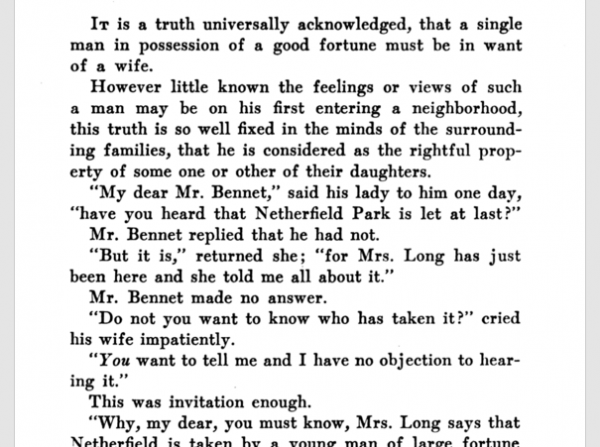
Notice that whether it's regular text or dialogue, the paragraph style is the same: no space between lines, but all new paragraphs indented.
Here is an extract from a recent piece on Short-Story.me, a popular online forum for short stories. The author follows very conventional styling:
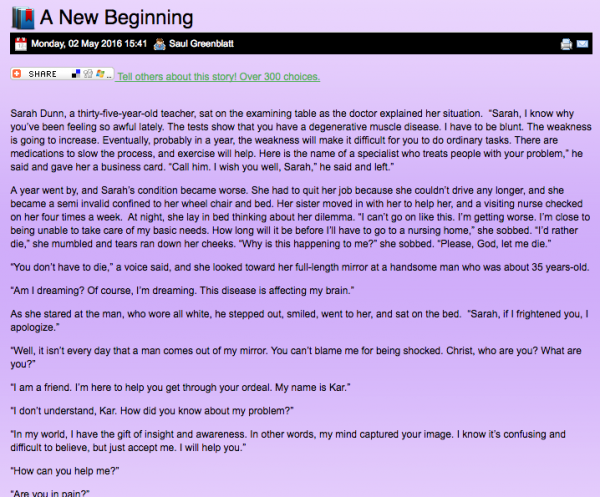
Again - dialogue or not, every new paragraph gets the same treatment.
EDIT 2: changed the second extract. I think that's clearer.
The confusion comes when people create new paragraphs in different ways. In most books, a paragraph is just a new line - without a blank space but with an indent.
In much online work, a paragraph doesn't use indents, but does use a double space.
The important thing is that whatever you use for your regular text, you also use for dialogue. So here is a classic style in a book:
Notice that whether it's regular text or dialogue, the paragraph style is the same: no space between lines, but all new paragraphs indented.
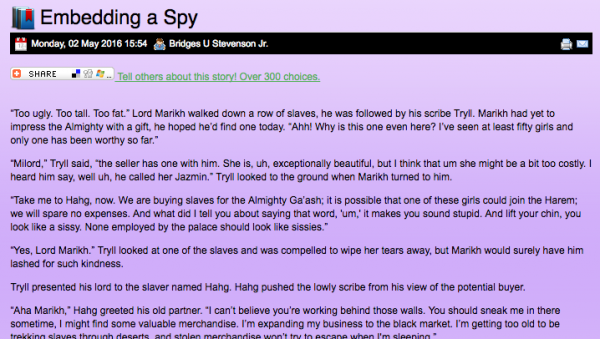
Here is an extract from a recent piece on Short-Story.me, a popular online forum for short stories. The author follows very conventional styling:
Again - dialogue or not, every new paragraph gets the same treatment.
EDIT 2: changed the second extract. I think that's clearer.
Attachments
Last edited:

Slann
Killer Angel
Prophet of the Stars
- Messages
- 20,961
- Likes Received
- 42,392
- Trophy Points
- 113
I
I didn't get one of your votes, but I'll treasure the criticism to mine.
It will be fun to debate our stories when it will be finished and authors will reveal what pieces wrote.
(Well, we already have voted, so we could do in PM... )
)
Wow.
The quality (and more importantly, the consistency) has reached the highest yet, really spectacular. Now we come to the traditional point in this great seasonal ritual honouring the Old One of Stories (does he have a name? I'm going to call him Shoad N'tezl) where you all have to suffer through a long and boring catalogue of everything I loved. To hopefully make this whole thing a little more bearable and - *shudders* - entertaining, I have decided to review each story in the voice of a different old world race. The ones in bold were my favourite and the ones I voted for.
I didn't get one of your votes, but I'll treasure the criticism to mine.
It will be fun to debate our stories when it will be finished and authors will reveal what pieces wrote.
(Well, we already have voted, so we could do in PM...
)
Carnasaur
Slanputin
Well-Known Member
- Messages
- 1,146
- Likes Received
- 1,732
- Trophy Points
- 113
Well, we already have voted, so we could do in PM...
DON'T YOU DARE.
Save your scruples and draft your debates - I want to see everyone's reaction as it happens in situ thanks.
Last edited:
Slann
Killer Angel
Prophet of the Stars
- Messages
- 20,961
- Likes Received
- 42,392
- Trophy Points
- 113
DON'T YOU DARE.

I would say that there' s no much room for possible misunderstandings...

Ok, it won't be done, i can wait
Kroxigor
thedarkfourth
Well-Known Member
- Messages
- 270
- Likes Received
- 905
- Trophy Points
- 93
DON'T YOU DARE.
Save your scruples and draft your debates - I want to see everyone's reaction as it happens in situ thanks.
I seem to remember you promising to critique my critique from last time...but we never saw that! You're a do as I say, not as I do critic

The door is always open...
Carnasaur
Slanputin
Well-Known Member
- Messages
- 1,146
- Likes Received
- 1,732
- Trophy Points
- 113
I seem to remember you promising to critique my critique from last time...but we never saw that! You're a do as I say, not as I do critic
The door is always open...
Hahaha ahhhh I was merely directing the flow of criticism. Nothing related to my void of unfulfilled forum boasts.
There's a semi-typed response somewhere. I may bring it to your door some day. Possibly also with a bag of something smelly which I'll leave on your doorstep. On fire. after I've rung the doorbell.
Kroxigor
thedarkfourth
Well-Known Member
- Messages
- 270
- Likes Received
- 905
- Trophy Points
- 93
Christ, how do I keep making my L-O heroes hate me?
Anyway, it's not my door I was referring to. It's the door to the (*ominous voice*) crytic's crypt - one of them big stone ones that swings shut of its own accord once you go through. The denizens within do not take kindly to childish pranks - unless they're motivated by a well structured character arc or are themselves a metaphor for a key inner struggle.
Anyway, it's not my door I was referring to. It's the door to the (*ominous voice*) crytic's crypt - one of them big stone ones that swings shut of its own accord once you go through. The denizens within do not take kindly to childish pranks - unless they're motivated by a well structured character arc or are themselves a metaphor for a key inner struggle.
Slann
Scalenex
Keeper of the Indexes
- Messages
- 11,545
- Likes Received
- 20,522
- Trophy Points
- 113
This thread is mighty quiet at the moment, where are the rest of the critiques?
Scalenex is working on it, but don’t expect Scalenex to write fast. Scalenex don’t write that way!
Scalenex Imparts his
Usual disclaimer: in most cases my critique negative paragraph is bigger than my positive paragraph. I liked each and every piece. I know we say this so often the statement risks losing its meaning but I think the overall quality of the stories is improving every single time. I am intending to provide constructive criticism.
I don’t care about theme a whole lot. If a piece plays fast and loose with the contest theme, I don’t let it stop me from enjoying good writing. Amazingly enough, this time around all fifteen pieces relied on the theme strongly. Nobody phoned it in. I give credit to the skillful writers, but props must be given to wise and mighty @Slanputin for picking such an excellent theme.
Thunderous applause.
And give credit to wise and handsome Scalenex for courageously passing the responsibility of theme naming to someone else!
Crickets chirping.
Moving on….
Two things came up a lot. I’m pretty Elves are at least tied with Skaven in the number of times they were used as a major source of antagonists. It’s interesting that about a third of the writers went this direction independently.
The second thing that came up a lot is pieces pushing the envelope, slightly under or slightly over the word limit. Maybe I’m biased because I had to compile everything but I think the majority of the pieces here would have been better if they were slightly shorter. I don’t think it’s just me. Many of the guest commentators @thedarkfourth invited in pointed out things that could be cut out. I’m not revealing my votes, but when I look at my favorite pieces, they tend to be the shorter ones. Perhaps story/chapter length would be a worthy topic for @spawning of Bob ’s Writer’s Wretreat.
Watching Things Burn: This piece utilized the theme of Anti-heroes very well. The protagonist does awful things in the name of his limited understanding of the greater good. Betrayal and loyalty. Action versus inaction. Nation versus family. Tradition versus change. There is a lot of inner conflict here. The author builds up a sweet surrogate father-son relationship and then crushes it before our eyes. Well done for making sad…jerk.
Everything in a short story should either advance the plot or build character. There is a lot of plot tension and character development but there is a lot of dry exposition. The author didn’t need to describe the crowd in such detail for the opening ritual. It’s mainly about the two Skinks. The author should have shortened the discussion of Slann politics too.
The King of Lustria: The piece was short yet it managed to convey an exciting battle and develop the protagonist’s character. It invoked the alien savagery of combatants by keeping them relatable. I would compare it favorably to Jack London describing Buck and Spitz fighting. The ending drove home the character. This story was elegant in its simplicity.
The link between this story and the theme of Anti-Heroes. A predator is not good or evil, it simply is. And the antagonist was a Daemon, there is no moral greyness in this story. The character was a hero; I can’t find any anti. Also the scale of the story was a bit risky. A Dread Saurian against a Bloodthirster is kind of Superman versus Goku. I’d like to see this author’s stylistic savagery applied to more down to earth combatants. That’d be more relatable. All things being equal a Dread Saurian should beat a Bloodthirster. Also the Dread Saurian had a name and the Bloodthirster did not. I never had any worry that the lizards would lose them one. I think the simply addition of naming the villain would have helped a lot, just make sure the name is imposing and blasphemous.
Eyes on the Sun: This author really had me rooting for the ambassador and the scene building was excellent. Just when I was asking “where is my anti-hero?” the protagonist did some sneaky spying then got sacrilegiously mutilated for it by xenophobic would-be allies. Well done for making me sad…jerk.
This piece was 2604 words, 104 words over the suggested max. I believe it was about 500 words longer than it needed to be. When Bob and I critique each other’s pieces we call that “a haircut.” The desert was described slightly longer than it needed to be. The orneriness of the Elves was described slightly longer than it needed to be. The ambassador’s uncertainty was described slightly longer than it needed to be. The discussion was slightly longer than it needed to be. All those “slightly”s add up and slow down the pacing.
Pirates of the Dragon Isles: Real world pirates were/are awful people. In literature pirates are romanticized anti-heroes. I view anti-hero pirates as being classic anti-hero not clichéd anti-hero, so well done. I also like that you surprise everyone but turning the tables. Hah! The Lizardmen are the pirates. The author told an exciting interesting piece and did it in barely over 1700 words, so a good economy of words The callousness of the Lizardmen pirates was a good subversion on the romanticized pirate trope.
The piece could use some more narrative structure. A short story needs a relatively even balance between introduction/conflict/resolution. It started as a story of conflict, will the humans survive or not? Then the humans are defeated really early. They didn’t even really fight back. I would have liked more fighting (or at least a good chase scene). The bulk of the story length went towards describing the Lizardmen’s ascetic variations on classic pirate gear combined with their villainous victory gloating rather than focusing on what the characters did.
Snow Saga: This piece told a lot of story using a small amount of words. The story did a good job covering the protagonist’s inner turmoil. His guilt, regret, pain and fear. The author didn’t waste time to describing the protagonist’s powers in wordy detail. We know what a werewolf is, and the battle with the looters was a great example of “show don’t tell”. I liked the artful portrayal of the ruins. Not just the death, but the lowly status of the survivors. Desperate amoral scavengers. I really like this line
“The star lizards never came….” You can tell that she never expected the Seraphon to save her but she had no better options. It was a gamble on the author’s part for including Seraphon by making them conspicuously absent, but the gamble paid off.
Out of fifteen reviews, I’m only going to say this once (EDIT: okay twice, see “Paranoia). I wish this piece was little bit longer. I get that he’s an outcast because he’s a werewolf. But I want to know what aspect of his condition he loathes most. Does he hate the way other people react (play up his expectations with the old woman). “Why aren’t you scared of me.” “I’m already dying you idiot!” Does he fear his loss of control? Play up a disconnect with his actions when he fights the looters or have him resist frenzying at the smell of blood. Does he hate that he is a killer? Run a Bruce Banner dialog and have him try and fail to talk the bandits out of messing with him “You wouldn’t like me when I’m
The Fireblade’s Challenge: This piece was perfect in word length. No word was wasted. A tiny voice in the back of my head focused on the fact that Thanquol gave his name. I wanted to know if that really was Thanquol or if it was one of Thaquol’s rivals trying to goad the Lizardmen to killing the real Thanquol. That’s not important. What important is that Thanquol’s name established two things succinctly: 1) The End Times are near so the scale is epic. 2) This is a major Faustian Pact. Explaining more would be a waste of words. I wanted to know what price Ankhachic’qo would pay for his actions but I quickly realized learning those details would have weakened the story. We already know it’s an epic Faustian Pact. Better to let Ankhachic’qo’s fate grow in our imagination.
So the author told an excellent storing using an economy of words, but I have more praise to heap on this story for the dialog. The author managed to capture the primitive savage character of the Saurus characters dialog without making their simplified speech too hard to read or too campy. Similar excellent use of the Skaven-speak. Every syllable of Thanquol made you know he was a slime ball even if you had no background in Skaven fluff. Back to the Saurus savagery, it wasn’t just the dialog, the challenge was well-told and the savage honor was shown without taking many words. Eye violence always hits me in the gut. I was cheering for Quetzan-Ti’s death and you provided it for me. Even though I knew Ankhachic’qo was doomed for his decisions, I sympathized with his decisions. I probably would have done the same thing. You eat my eyeball and all bets are off. Every author in this contest used the contest theme well but I give this one an “A+” in that category.
My biggest grouse with this piece is it’s really hard to criticize! Okay, usually I play it coy with my votes, but I can’t NOT give this one of my five votes and still sleep at night. I do have one piece of substantive criticism. I did not care for the names Quetzan-Ti and Ankhachic’qo. I can clearly see the author perused the Saurian dictionary for name inspiration which is great, but too clunky. Apostrophe jokes not withstanding, I believe even non-human names should be easy to figure out a pronunciation and easy to remember. My mind’s voice just said “Ank plus apostrophe.”
The Coward: I can’t be coy again, this has another one of my votes. Few pieces utilized the theme of Anti-heroes better. The protagonist violates the major values and norms of his society in spite of the scorn he receives, all he because he believes sincerely in his goals. By human standards, the protagonist would be a hero, not an anti-hero. Being willing to accept scorn of your peers for the greater good is heroic by our standards. But this writer captured the Dwarf mindset and made it relatable to us human viewers.
Wait, I’m done heaping praise on this piece either! I liked the organic transitions from the Dwarf present and the Dwarf past. Both with Dwarfs talking about their traditions and narrating the treasure pile. I also liked Skaven assassination. One, the fact that the protagonist fought back courageously and well showed us he’s not a true coward in all aspects of his life. Two, it set up a brilliant Butterfly Effect. If the Lizardmen (Seraphon? Not sure in this piece, didn’t really matter). If the protagonist was not carrying the severed head of a Skaven when the Lizardmen found him with their sacred treasure, the lizards would have gutted him like a fish and bowl over any other Dwarfs they find.
What could make this piece better? Not much this piece was excellent (I also got a chance to fine tune this with the author a lot before the final submission). A haircut could have made this piece slightly better. A small haircut. Given the title of the piece, the character’s inner monologue and all the dialogue with other Dwarfs he was called a coward in about 10 or 11 different ways. I would have gone with 7 or 8 accusations of cowardice to speed up the narrative or use the words saved from accusations of cowardice to expand the section covering the Skaven fight or the Lizardmen arrival.
Harvest: The author created an annoying punk kid, a classic anti-hero trope. It looked like he was going to save his village despite himself. Then it leads to a dramatic twist ending. The ending was foreshadowed heavily. The main character’s name was Ash. The wording from the Seraphon for preventing the Daemons from killing the villagers was very specific. The foreshadowing was done well. It didn’t spoil the ending, it built up anticipation for it.
This piece ran long and needed a fairly hefty haircut. The author established the kid as a smartass punk with his own first person narrative, again and again. His fellow villagers showed that they treated him like a smartass punk kid again and again. At a certain point repetition becomes unnecessary. That was compounded by the fact that the character was made to be annoying by design. A moderate amount of smart assery on the part of a teenaged anti-hero is endearing but once you cross the point of overdoing it, you can’t walk it back. When the end came I was happy the Seraphon where going to shut him up. This is the only piece where I was rooting against the protagonist and I was even rooting for the Skaven in “Paranoia.”
A Memory?: In a contest where the majority of the pieces ran a bit too long for their needs, I give this one props for an economy of words. I wouldn’t make this one shorter or longer (though I would have redirected some words). I like that it captured the essence of a Saurus being single-mindedly focused on his duty, but it did not make him stupid. On the contrary he was intelligent and clever. I like the doubt he had from being a reconstructed memory and the uncertainty he had with his final decision.
The character was well developed for all the reasons I sited above. It might have been a little too action focused. I would have liked to swap one or two of the combat paragraphs for one or two paragraphs of non-violent interaction with the protagonists spawning brothers or Skink allies. Action action “we are the darkened scale” action action “we are the darkened scale.” Rinse and repeat. The author balanced the relatable and alien with the Saurus protagonist well. I would have liked to see one situation where the protagonist’s mission-centric view point is applied to a non-violent situation. That could have added a bit of extra depth (because I want to know how the darkened scale deals with peace).
The Forgotten Slann: I like the way the author covered a Slann from spawning to the present with an economy of words. I like the daring story arc of a Slann going mad with power and ambition. I like the Slann-on-Slann conflict. I like the epic scale.
While we have a good general sense of the Slann’s slipping into madness (or at least solitude) as his/its ambitions pull him/it away from the others. I would have liked to get inside Lord Luluni’s head some more. The whole story has a feel of being externally narrated. I know Slann are alien and remote but I’d hope to touch base with Luluni’s thoughts and feelings a least a little.
The Bounty: Usually around a quarter of our contests’ pieces that go with a light hearted feel. Despites a record number of overall entries, we’ve never had fewer “light” entries. Probably the theme of anti-heroes makes lighter stories more difficult, but I will point out that Deadpool is pretty light-hearted even when it’s horrifically violent. Yay gallows humor. The author balanced the humor of the strange alliance, gun toting Skinks, cynical Slann and jovial Daemons with just the right amount of action.
This piece could have used a haircut. Not a huge haircut, but a little one. I thought the dialogs ran a bit long. They could have been shorter. Another option would be to turn some of the dialog into narrative action scenes rather than simply have characters talking about doing stuff.
Trinity: This story uses a common anti-hero trope. A bearer a cursed item. In this case a Slaanesh item. The imagery is evocative, the character is alien but relatable. The conflict is clearly portrayed in great depth with an economy of words. The sensual overtones were a bold choice.
My problem is this was too good. This piece involves corruption and obsession fueled by the dark god Slaanesh. And it’s really believable. I believe the erotic overtones were done in a mature and appropriate manner, but it’s not my cup of tea. I appreciate the skilled writing, but this is not a type of story I am particularly fond of. I don’t like Country music, but I can still appreciate the skill of the best Country music singer.
Serpent’s Brew: Infanticide wow! I swear I randomized the order I presented the pieces in I didn’t mean for the two pieces with the most mature subject matter pieces to be adjacent. The infanticide was set up with just the right combination of foreshadowing and surprise for maximum impact. I also like the chilling framing device of “thuk thuk thuk thuk.” I do not know if this is deliberate, but this is the best chosen title. Infanticide is a horrible crime for humans, it is probably not a major consideration for Lizardmen given that they barely understand the concept of infant, adorable huagerdon puppies notwithstanding. This ties well with the title. “Serpent’s Brew” sounds awfully menacing to human readers familiar with western literary tropes but a “Serpent’s Brew” would have positive connotations for Lizardmen. In Lizardmen terms, the protagonist’s crime is not the brew or the murder or even the betrayal of trust, but disobeying the Slann.
This is a strong piece and I can’t think of anything major I would change, but I think this piece could use a mild haircut. I wouldn’t take any hairs off of the fight scene, if anything I’d tried to add a parent’s desperation into the Elf’s defense. The setting exposition could have been trimmed a little. The inter-Skink dialog was definitely a smidgeon long for my taste.
Chosen: I like this piece’s clever take on the Anti-hero theme: Mazdamundi! The writer basically took the Lizardmen’s main god king and bestowed him with doubts and insecurities just like everyone else. I liked that the story was told in time jumps. That illustrates the Slann’s viewpoint and each event, though centuries apart, built on each other, advanced the plot and established character. Magnificent.
Like so many other excellent pieces in this contest, this piece could have been slightly more excellent with a haircut. I’m used to Slann and their attendants being pretty terse in their speech and this piece had a lot of dialog. That’s a personal preference so I can’t hold it against the author for having a different interpretation of Slann then me, but I do think the dialog cluttered the narrative. It should have been shorter because of it bogged down the main story. Also, I do not believe Tiq’tak’to and Kroqgar should have been included. I really loathe the name “Tiq’tak’to” for combining unnecessary apostrophes with a cheap pun that has no relation to the character, but that’s not the writer’s idea. The real reason I think they could have been omitted is that that this is a story about Mazdamundi and Zlaaq. Adding additional; celebrity cameos from the army book’s special character list is just a distraction.
Paranoia: I humbly suggest that the writer of this story open up an account on U-E and post this piece. This piece could probably have won most Under-Empire short story contests. It’s got everything Skaven fluff audiences love: betrayal, comedy, and more betrayal. I’m a zombie Skink, not a Skaven but I still like this. This and “The Bounty” are the only two pieces that make a major attempt at invoking humor. I like the crude drawing a lot. I like the skillful use of Skaven double-speak, neither overdone or underdone. I like that the author told a complete story with an economy of words.
This piece is hard for me to find fault with. Maybe it could have used more words. At the very end when every careful scheme of the protagonist unraveled and he got attacked by both Eshin assassins and the Salamanders it was hard to tell who was doing what to whom.[/S]
Last edited:
Skink Priest
pendrake
Well-Known Member
- Messages
- 3,764
- Likes Received
- 5,025
- Trophy Points
- 113
This thread is mighty quiet at the moment, where are the rest of the critiques?
I have only managed to read about four. I haz been busy. ~~~ wipes ink off fingers, or tries to ~~~
Scar-Veteran
spawning of Bob
Well-Known Member
- Messages
- 2,911
- Likes Received
- 5,630
- Trophy Points
- 113
Hooray! This time Scalenex told me to write less! Finding the sweet spot next time is inevitable!
Thanks for all the critiquery so far, folks. I personally have avoided critiquing (and even voting) so far because I am becoming intimidated by the overall quality of the writing - and the critiquing. Same thing happened with the art comp.
I just don't know what I can add. (I will still give it a go some time soon)
Thanks for all the critiquery so far, folks. I personally have avoided critiquing (and even voting) so far because I am becoming intimidated by the overall quality of the writing - and the critiquing. Same thing happened with the art comp.
I just don't know what I can add. (I will still give it a go some time soon)
Salamander
discomute
Well-Known Member
- Messages
- 842
- Likes Received
- 826
- Trophy Points
- 93
Infanticide is a horrible crime for humans, it is probably not a major consideration for Lizardmen given that they barely understand the concept of infant, adorable huagerdon puppies notwithstanding.
Now that is something I hadn't considered. Obviously they would understand life cycles, given their knowledge of lustrian animals. But to them it would be like "veal or beef" as opposed to the visceral response we have regarding infanticide. A great observation, I feel like I missed a piece of the story until now.
Troglodon
Y'ttar Scaletail
Well-Known Member
- Messages
- 666
- Likes Received
- 2,104
- Trophy Points
- 93
Egads, I had better do a few review-things too. Maybe in fives to keep my already slipping sanity mostly intact...mostly...
Ripperdactyl
Otzi'mandias
Well-Known Member
- Messages
- 451
- Likes Received
- 763
- Trophy Points
- 93
Yes please!Coming soon: The Bowser Likes this reviews! Right after I finish work today I will give my reviews on these amazing stories!
I've been re-reading my story and had a genius idea for an anti-hero-themed tale similar to my one, based around a skink having moral issues about his/her first Skaven sacrifice. I might write it up as a one off, or I could incorporate it into my my current story...
I don't know. Anyone want to steal my idea? All through my mocks I have actually planned out the next three or four posts of my current tale, so I'll have to wait a while to actually implement it.
I always have great ideas when I can't use them... But more reviews! Sooner! I can't improve my writing unless you lot help me by critiquing the pieces.
Slann
Bowser
Third Spawning
- Messages
- 5,655
- Likes Received
- 8,553
- Trophy Points
- 113
Alright, took me a bit longer to compile my notes than I had anticipated! Let me preface this by saying that I legitimately had a tough time deciding, this round of antihero stories brought a larger range than I was expecting! I almost want the next few contests to be about antiheroes you all have insprired me this much! I won't comment on writing syle, as I am unqualified, but will give the review and highlight the things I do like! Spoilers ahead.
1. Watching Things Burn:
I like a clever student who takes action. Not only does Gartol take Huaraz's advice about sacrificing something you love to the Old ones, but he also finds compromise for all of the contemplating Slann. His solution to the Slann problem is brilliant, and his sacrifice is heartbreaking but noble.
-“The Old Ones demand we give up that what we love.”
“What’d you say?” Hauraz asked his speech slurred.
“I said sleep well, mentor.”-
Gives you chills with how smoothly and calm this comes off.
2. The King Of Lustria:
I like that we get to see inside the mind of this Dread Saurian. He is the biggest and the baddest and he knows it. His intelligence mixed with his strong will, complemented by his savagery showcases him as the ultimate predator. I love that this starts out with him destroying a Carnosaur! Really showing off the kind of power needed to take the hero down!
-He rose above the Daemon’s corpse and bellowed his triumph, turning his wrath to the remaining hordes, his soul renewed after so fine a challenge.-
Not just a Savage predator but a great warrior.
3. Eyes On The Sun:
I like the culture built up here, this world seems somehow familiar, but we are still exploring it. Our feisty hero Jao is full if ambition, is clever, but still makes mistakes. You can really relate tothis kind of guy. The rules of engagement between the shaky alliance really shows off the two different cultures. A lone emissary with an armband, shows how uneasy this alliance truly is, possibly because of the events of "Serpent's Brew."
- Surely, Jao would be allowed to return home safely now, however, empty handed and with less than what he started the journey with.-
That last line is powerful. You know his journey home is going to be heartbreaking, he still has his gift, but is missing a piece of himself, his super power of having two sets of eyes, has been cut in half. Devastating.
4. Pirates Of The Dragon Isle:
I like pirates! If anyone does this conversion I want pics! Instead of KOW conversions my superfluous old school skinks and saurus might be getting this treatment. Or maybe the multibase will include ships or a deck or something.
Anyway a good old pirate story starts out with our traders running from someone or something. When the pursuers catch, I wasn't prepared for these colourful and beautifully described lizard pirates. The lizards of course ransack the vessel and specifically holding on to food and spices, but why?
-The skeletal-Skink responded with a wide and sharp-toothed grin, which contorted his skull-painted face into a truly horrifying visage:
“Time for our victory feast!”-
Oh! As far as pirates go these guys are by the books, even training a translator so there is no confusion that they have trespassed and their lives are forfeit!
5. Snow Saga:
I like the atmosphere here. This story does a great job of setting the scene. The mysterious wanderer has a shady past, he can't go back to certain places, but he still wants to help.
Then it punches you right in the heart with a torture of hope. This lady, stood through the horror, waiting for a legend that never came.
-She coughed up blood and with her last breath she said
“The star lizards never came….”-
The absence of Seraphon is what makes this a great Seraphon story. Mysterious legends. They may not even exist. But the belief is there, and if they do exist, they can't keep up with the chaos reigning. The desparate people of this realm still holding out hope.
The transformation scene was brilliant. Great description, really let you visualize it.
6. The Fireblade's Challenge:
I like the rivalry here. Archie vs Quentin, sorry, I'm no good with fantasy names, but how Q is always one step ahead of A. A makes a deal with the devil as it were, I like the idea of a skaven horned rat being the devil. Using Thanquol here is as good as any. He fans the flames and gives A an advantage, and even with that Q shows he is the better warrior, but did not come prepared for betrayal.
-What would the rat-sorcerer claim that could be worth as much as the sword. With a mixture of satisfaction and uncertainty, Ankhachic’qo raised the sword to the heavens, and bellowed the name he would forever know it by;“Rageflame! The fire-blade is Rageflame! Rageflame will purge!”-
And with that his pact is sealed, there is no going back for this saurus, forever tainted by chaos makes him as dangerous to his allies as he is to his enemies. All while he believes his actions are for the greater good. I always like it when a sword gets a good name!
7. The Coward:
I like the fact that the standard of coward is set to the Dwarven standard. Foolishly fighting to the death from our standpoint, but to theirs living through a losing battle is a great shame. Much like a samurai. On my first read through I thought this was an AOS story, with a slann planting the object there for dramatic effect, and helping out while being busy with a fight else where. Then on second read through I thought maybe it could work as an old world story, where somehow the forces of Tehenhauin were sealed by the slann to be used in the future where needs were great. Possibly several of these objects were sent out to kingdoms to aid with destroying the skaven plague. Very interesting concept to say the least.
-Thordek kicked the body out and gained some height, keeping his eyes on his kill. “It’s just a drop in the bucket, but you at least, you won’t feast this night.”-
The so called coward is one tough fellow! Smart and quick enough to act, and even the fact that he is gappy with one small victory, knowing what he is about to face shows off his bravery. Just not from where the other Dwarfs sit.
8. The Harvest
I like rooting for an underdog. I like it even more when that underdog gains some power, gets cocky and that new power turns around to bite him. Some kind of poetic justice! Or maybe not.
The best part is that if he, or even we as the audience had read between the lines, we may not have trusted the Seraphon so easily!
-“We will prevent the daemon harvest. It is better if mortals are calm and in one place to allow us to do what we must. This is easier if there is a speaker.”-
Quite chilling on the second read through. Preventing the Chaos Daemons from harvesting by ensuring there is nothing to harvest. Scorched earth tactics were always my favourite!
9. A Memory?
I like the background information here, and the jump into the present where we are set up with a fantastic villain, and an unlikely ally. The history is clear, the current mission is clear and it is satisfying when Ironfur gets got. Wait what? Of course. Of course he has decoys. Ironfur you sneaky rat!
-The mortal race would call us assassins, I think. But we are no simple cut-throats or cowards. We are the Darkened Scale and we enact judgement.-
Right there, sets up a lot, and then pitting them against skaven! Brilliant! So much opportunity to write for this story line! The memories, trying to remember the names, the faces of friends, and having trouble, but knowing the name and face of the enemy ao clearly. Makes him feel alive. Gives that heart a reason to beat. Also skaven in a cowboy hat. So awesome!
10. The Forgotten Slann
I like this big fat first gen slann! He is thrust into action and dives in toes first! Taking a bit of time to just be alive made this character so much better! Wallowing in the water, eating the local wildlife. Then remembering that he has to travel to prevent destruction of his estranged brothers. Luluni has the potential to construct great things, all in perfect order, until he can't contemplate. Then he acts irrationally. He dominates Lizards and elves alike to form an army to gain audience with Mazdamundi. Then instead of dominating those troops he has his mixed army fight them.
-Luluniregressed in the water splishing and splashing and striking at songbirds with the enormous tongue that pulled them back towards its mouth. Whilst gorging on the wildlife and reveling in the impurity of the water Luluni remembered its purpose for visiting.-
Probably my favourite bit from all of the stories. Just a Slann's day off!
11. The Bounty
I like the technology priest idea! This and the stray saurus with his dwarf buddies, could make for a great set up to a spaghetti western. Could get some pretty good shoot outs out of this. I like how the slann are betting on it, making a game of this, giving restrictions on troop types and rising to the challenge! The bloodletters and beastmen seemed pretty jovial and up for some fun.
-“Does anyone here speak sheepish?”
One of the bloodletters raised its hand. I do, but very bah-ah-ah-ah-dly.” It giggled.-
You can almost hear the collective groans of the readers with that one!
12. Trinity:
I like a good slow descent into madness. If H.P Lovecraft did the slow descent well this did it perfectly. A great rivalry here, better still a one sided rivalry. How dare he look at my preciousssss? So great so deeply satisfying when that madness takes over and out champion charges Chosi with sword drawn during practice. Chosi is dead for sure. What? Oh man that was brilliant! Didnot see that coming! Blindsided! I have heard of becoming one with your weapon before but this?
-Even as my strength faded I knew that he would not touch my sword now, it was mine, and only mine, and we would be together forever.-
Sent shivers up my spine getting that insight into the characters final thoughts.
13. Serpent's Brew:
I like this hard worker living in his own mind. Trying to make the world a better place, with the intention of respawning a long dead hero. Sitting encamped beside an ally of a different race, he does what he feels he must. He looks into his orb for answers, and it shows him what he must do. When he gets to the location of his "ingredient" he is met with a surprise. The orb had failed him. The father of the baby that Nahualli was there to kidnap was still on site.
- “Often the gods send rot to wounds they could heal” Nahualli advised. “Take it as a test of strength – the hottest flame purifies even the most tainted flesh.”-
Or had the orb failed him? Maybe he needed a test of savagery to be given the right to call back the viscious prophet Tehenhauin (Another Tehenhuain, the antihero of the skinks!). The orb even became the weapon to savagely beat a desperate father to death in order to complete the mission.
Really gives a lot to think about, and well worth multiple read throughs to get a lot of the subtleties in his story. Truly horrific to us, but to the skink, business as usual. Really defines the alien nature of the Lizardmen.
14. Chosen:
I like a good homeward bound reunion story! Watching an entire society crumble at the loss of what most would assume to be an animal, a mount. The citizens begin to lose faith in the once great Mazdamundi gives up hope. Over an animal. The lizardmen with their cold outlook on the value of a single life would be well confused by this. (Mazdamundi shows up twice in this contest, I suppose he was the slann antihero. Or Slanntihero. Sorry don't hate me!)
- It was too dark to see that Mazdamundi was awake. Or that a single tear had fallen from his cheek.-
As a pet owner I felt this right where my heart should be. Sitting there brooding over not only a lost pet, but a friend, a family member. Hard to lose someone you raised and spent every day with, even if it isn't the same apecies as you and can't speak with you. Very touching story that should be the next Disney movie!
15. Paranoia:
I like skaven relationships. They are always so fun. You nwver know who has your back, and if someone has your back, you need to watch that, back is just another knife sheath. Lyrok knows the score. Seems he has the upper hand on old Brikkit. Or does he? Wait he has a solid plan.
-A badly drawn skaven digging up out of the badly drawn ground, holding a labelled holding a labelled blob of 'poyzen' was scribbled in the dirt, presumably with the stick lying slightly to the right of it. Also, some helpful soul had drawn an arrow towards one spawning pool, and a helpful soul had scribbled 30mins next to it.-
That made me laugh out loud when I read that. The best laid plans of rats and men and ratmen...
Of course the one downfall to pointing the lizards toward your partner, they don't know or care which of you is helpful. They just know to exterminate rodents. That and Brikkit's plan was slightly better thought out!
1. Watching Things Burn:
I like a clever student who takes action. Not only does Gartol take Huaraz's advice about sacrificing something you love to the Old ones, but he also finds compromise for all of the contemplating Slann. His solution to the Slann problem is brilliant, and his sacrifice is heartbreaking but noble.
-“The Old Ones demand we give up that what we love.”
“What’d you say?” Hauraz asked his speech slurred.
“I said sleep well, mentor.”-
Gives you chills with how smoothly and calm this comes off.
2. The King Of Lustria:
I like that we get to see inside the mind of this Dread Saurian. He is the biggest and the baddest and he knows it. His intelligence mixed with his strong will, complemented by his savagery showcases him as the ultimate predator. I love that this starts out with him destroying a Carnosaur! Really showing off the kind of power needed to take the hero down!
-He rose above the Daemon’s corpse and bellowed his triumph, turning his wrath to the remaining hordes, his soul renewed after so fine a challenge.-
Not just a Savage predator but a great warrior.
3. Eyes On The Sun:
I like the culture built up here, this world seems somehow familiar, but we are still exploring it. Our feisty hero Jao is full if ambition, is clever, but still makes mistakes. You can really relate tothis kind of guy. The rules of engagement between the shaky alliance really shows off the two different cultures. A lone emissary with an armband, shows how uneasy this alliance truly is, possibly because of the events of "Serpent's Brew."
- Surely, Jao would be allowed to return home safely now, however, empty handed and with less than what he started the journey with.-
That last line is powerful. You know his journey home is going to be heartbreaking, he still has his gift, but is missing a piece of himself, his super power of having two sets of eyes, has been cut in half. Devastating.
4. Pirates Of The Dragon Isle:
I like pirates! If anyone does this conversion I want pics! Instead of KOW conversions my superfluous old school skinks and saurus might be getting this treatment. Or maybe the multibase will include ships or a deck or something.
Anyway a good old pirate story starts out with our traders running from someone or something. When the pursuers catch, I wasn't prepared for these colourful and beautifully described lizard pirates. The lizards of course ransack the vessel and specifically holding on to food and spices, but why?
-The skeletal-Skink responded with a wide and sharp-toothed grin, which contorted his skull-painted face into a truly horrifying visage:
“Time for our victory feast!”-
Oh! As far as pirates go these guys are by the books, even training a translator so there is no confusion that they have trespassed and their lives are forfeit!
5. Snow Saga:
I like the atmosphere here. This story does a great job of setting the scene. The mysterious wanderer has a shady past, he can't go back to certain places, but he still wants to help.
Then it punches you right in the heart with a torture of hope. This lady, stood through the horror, waiting for a legend that never came.
-She coughed up blood and with her last breath she said
“The star lizards never came….”-
The absence of Seraphon is what makes this a great Seraphon story. Mysterious legends. They may not even exist. But the belief is there, and if they do exist, they can't keep up with the chaos reigning. The desparate people of this realm still holding out hope.
The transformation scene was brilliant. Great description, really let you visualize it.
6. The Fireblade's Challenge:
I like the rivalry here. Archie vs Quentin, sorry, I'm no good with fantasy names, but how Q is always one step ahead of A. A makes a deal with the devil as it were, I like the idea of a skaven horned rat being the devil. Using Thanquol here is as good as any. He fans the flames and gives A an advantage, and even with that Q shows he is the better warrior, but did not come prepared for betrayal.
-What would the rat-sorcerer claim that could be worth as much as the sword. With a mixture of satisfaction and uncertainty, Ankhachic’qo raised the sword to the heavens, and bellowed the name he would forever know it by;“Rageflame! The fire-blade is Rageflame! Rageflame will purge!”-
And with that his pact is sealed, there is no going back for this saurus, forever tainted by chaos makes him as dangerous to his allies as he is to his enemies. All while he believes his actions are for the greater good. I always like it when a sword gets a good name!
7. The Coward:
I like the fact that the standard of coward is set to the Dwarven standard. Foolishly fighting to the death from our standpoint, but to theirs living through a losing battle is a great shame. Much like a samurai. On my first read through I thought this was an AOS story, with a slann planting the object there for dramatic effect, and helping out while being busy with a fight else where. Then on second read through I thought maybe it could work as an old world story, where somehow the forces of Tehenhauin were sealed by the slann to be used in the future where needs were great. Possibly several of these objects were sent out to kingdoms to aid with destroying the skaven plague. Very interesting concept to say the least.
-Thordek kicked the body out and gained some height, keeping his eyes on his kill. “It’s just a drop in the bucket, but you at least, you won’t feast this night.”-
The so called coward is one tough fellow! Smart and quick enough to act, and even the fact that he is gappy with one small victory, knowing what he is about to face shows off his bravery. Just not from where the other Dwarfs sit.
8. The Harvest
I like rooting for an underdog. I like it even more when that underdog gains some power, gets cocky and that new power turns around to bite him. Some kind of poetic justice! Or maybe not.
The best part is that if he, or even we as the audience had read between the lines, we may not have trusted the Seraphon so easily!
-“We will prevent the daemon harvest. It is better if mortals are calm and in one place to allow us to do what we must. This is easier if there is a speaker.”-
Quite chilling on the second read through. Preventing the Chaos Daemons from harvesting by ensuring there is nothing to harvest. Scorched earth tactics were always my favourite!
9. A Memory?
I like the background information here, and the jump into the present where we are set up with a fantastic villain, and an unlikely ally. The history is clear, the current mission is clear and it is satisfying when Ironfur gets got. Wait what? Of course. Of course he has decoys. Ironfur you sneaky rat!
-The mortal race would call us assassins, I think. But we are no simple cut-throats or cowards. We are the Darkened Scale and we enact judgement.-
Right there, sets up a lot, and then pitting them against skaven! Brilliant! So much opportunity to write for this story line! The memories, trying to remember the names, the faces of friends, and having trouble, but knowing the name and face of the enemy ao clearly. Makes him feel alive. Gives that heart a reason to beat. Also skaven in a cowboy hat. So awesome!
10. The Forgotten Slann
I like this big fat first gen slann! He is thrust into action and dives in toes first! Taking a bit of time to just be alive made this character so much better! Wallowing in the water, eating the local wildlife. Then remembering that he has to travel to prevent destruction of his estranged brothers. Luluni has the potential to construct great things, all in perfect order, until he can't contemplate. Then he acts irrationally. He dominates Lizards and elves alike to form an army to gain audience with Mazdamundi. Then instead of dominating those troops he has his mixed army fight them.
-Luluniregressed in the water splishing and splashing and striking at songbirds with the enormous tongue that pulled them back towards its mouth. Whilst gorging on the wildlife and reveling in the impurity of the water Luluni remembered its purpose for visiting.-
Probably my favourite bit from all of the stories. Just a Slann's day off!
11. The Bounty
I like the technology priest idea! This and the stray saurus with his dwarf buddies, could make for a great set up to a spaghetti western. Could get some pretty good shoot outs out of this. I like how the slann are betting on it, making a game of this, giving restrictions on troop types and rising to the challenge! The bloodletters and beastmen seemed pretty jovial and up for some fun.
-“Does anyone here speak sheepish?”
One of the bloodletters raised its hand. I do, but very bah-ah-ah-ah-dly.” It giggled.-
You can almost hear the collective groans of the readers with that one!
12. Trinity:
I like a good slow descent into madness. If H.P Lovecraft did the slow descent well this did it perfectly. A great rivalry here, better still a one sided rivalry. How dare he look at my preciousssss? So great so deeply satisfying when that madness takes over and out champion charges Chosi with sword drawn during practice. Chosi is dead for sure. What? Oh man that was brilliant! Didnot see that coming! Blindsided! I have heard of becoming one with your weapon before but this?
-Even as my strength faded I knew that he would not touch my sword now, it was mine, and only mine, and we would be together forever.-
Sent shivers up my spine getting that insight into the characters final thoughts.
13. Serpent's Brew:
I like this hard worker living in his own mind. Trying to make the world a better place, with the intention of respawning a long dead hero. Sitting encamped beside an ally of a different race, he does what he feels he must. He looks into his orb for answers, and it shows him what he must do. When he gets to the location of his "ingredient" he is met with a surprise. The orb had failed him. The father of the baby that Nahualli was there to kidnap was still on site.
- “Often the gods send rot to wounds they could heal” Nahualli advised. “Take it as a test of strength – the hottest flame purifies even the most tainted flesh.”-
Or had the orb failed him? Maybe he needed a test of savagery to be given the right to call back the viscious prophet Tehenhauin (Another Tehenhuain, the antihero of the skinks!). The orb even became the weapon to savagely beat a desperate father to death in order to complete the mission.
Really gives a lot to think about, and well worth multiple read throughs to get a lot of the subtleties in his story. Truly horrific to us, but to the skink, business as usual. Really defines the alien nature of the Lizardmen.
14. Chosen:
I like a good homeward bound reunion story! Watching an entire society crumble at the loss of what most would assume to be an animal, a mount. The citizens begin to lose faith in the once great Mazdamundi gives up hope. Over an animal. The lizardmen with their cold outlook on the value of a single life would be well confused by this. (Mazdamundi shows up twice in this contest, I suppose he was the slann antihero. Or Slanntihero. Sorry don't hate me!)
- It was too dark to see that Mazdamundi was awake. Or that a single tear had fallen from his cheek.-
As a pet owner I felt this right where my heart should be. Sitting there brooding over not only a lost pet, but a friend, a family member. Hard to lose someone you raised and spent every day with, even if it isn't the same apecies as you and can't speak with you. Very touching story that should be the next Disney movie!
15. Paranoia:
I like skaven relationships. They are always so fun. You nwver know who has your back, and if someone has your back, you need to watch that, back is just another knife sheath. Lyrok knows the score. Seems he has the upper hand on old Brikkit. Or does he? Wait he has a solid plan.
-A badly drawn skaven digging up out of the badly drawn ground, holding a labelled holding a labelled blob of 'poyzen' was scribbled in the dirt, presumably with the stick lying slightly to the right of it. Also, some helpful soul had drawn an arrow towards one spawning pool, and a helpful soul had scribbled 30mins next to it.-
That made me laugh out loud when I read that. The best laid plans of rats and men and ratmen...
Of course the one downfall to pointing the lizards toward your partner, they don't know or care which of you is helpful. They just know to exterminate rodents. That and Brikkit's plan was slightly better thought out!
Last edited: