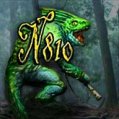
Only a fool looks at the lizardfolk and sees nothing more
than scaly humanoids. Their physical shape notwithstanding,
lizardfolk have more in common with iguanas
or dragons than they do with humans, dwarves, or elves.
Lizardfolk possess an alien and inscrutable mindset,
their desires and thoughts driven by a different set of
basic principles than those of warm-blooded creatures.
Their dismal swamp homes might lie hundreds of miles
from the nearest human settlement, but the gap between
their way of thinking and that of the smooth-skins
is far greater.
Despite their alien outlook, some lizardfolk make an
effort to understand and, in their own manner, befriend
people of other races. Such lizardfolk make faithful and
skilled allies.
ALIEN MINDS
The lizardfolk's reptilian nature comes through not
only in their appearance, but also in how they think and
act. Lizardfolk experience a more limited emotional life
than other humanoids. Like most reptiles, their feelings
largely revolve around fear, aggression, and pleasure.
Lizardfolk experience most feelings as detached
descriptions of creatures and situations. For example,
humans confronted by an angry troll experience fear on
a basic level. Their limbs shake, their thinking becomes
panicked and jumbled, and they react by instinct. The
emotion of fear takes hold and controls their actions.
In contrast, lizardfolk see emotions as traits assigned
to other creatures, objects, and situations. A lizardfolk
doesn't think, "I'm scared." Instead, aggressive, stronger
creatures register to the lizardfolk as fearsome beings
to be avoided if possible. If such creatures attack, lizardfolk
flee, fighting only if cornered. Lizardfolk aren't
scared of a troll; instead, they understand that a troll is a
fearsome, dangerous creature and react accordingly.
Lizardfolk never become angry in the way others do,
but they act with aggression toward creatures that they
could defeat in a fight and that can't be dealt with in
some other manner. They are aggressive toward prey
they want to eat, creatures that want to harm them,
and so on.
Pleasurable people and things make life easier for
lizardfolk. Pleasurable things should be preserved and
protected, sometimes at the cost of the lizardfolk's own
safety. The most pleasurable creatures and things are
ones that allow lizardfolk to assess more situations as
benign rather than fearsome.
LIZARDFOLK SPEECH
Lizardfolk can master Common, but their mindset results
in a speech pattern distinct from other humanoids.
Lizardfolk rarely use metaphors. Their speech is almost
always literal. They might pick up idioms, but only with some difficulty.
Names confuse them, unless they are descriptive. They
tend to apply their own naming conventions to other creatures
using Common words.
Lizardfolk use active verbs to describe the world.
A lizardfolk in cold weather might say, "This wind brings cold"
rather than "·I feel cold." Lizardfolk tend to define things In
terms of actions, rather than effects.
LIZARDFOLK NAMES
Lizardfolk take their names from the Draconic language.
They use simple descriptives granted by the tribe
based on an individual's notable deeds or actions. For
example, Garurt translates as "axe," a name given to a
lizardfolk warrior who defeated an ore and claimed his
foe's weapon. A lizardfolk who likes to hide in a stand of
reeds before ambushing an animal might be called Achuak,
which means "green" to describe how she blends
into the foliage.
Lizardfolk make no distinction between male and female
in their naming conventions. Each example name
includes its translation in parenthesis.
Lizardfolk Names: Achuak (green), Aryte (war), Baeshra
(animal), Darastrix (dragon), Garurt (axe), Irhtos
(secret), Jhank (hammer), Kepesk (storm), Kethend
(gem), Korth (danger), Kosj (small), Kothar (demon), Litrix
(armor), Mirik (song), Othokent (smart), Sauriv (eye),
Throden (many), Thurkear (night), Usk (iron), Valignat
(burn), Vargach (battle), Verthica (mountain), Vutha
(black), Vyth (steel)


 In my opinion, they look WAY better than the cheap pre-painted plastic things you can get as "official" figures! The LotR figures are also pretty good for DnD. Hobbits make great Gnomes