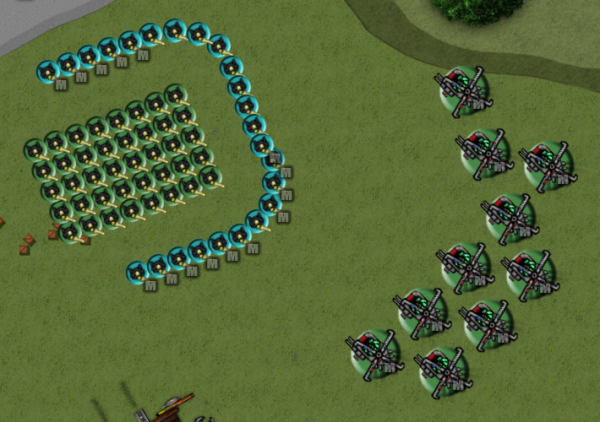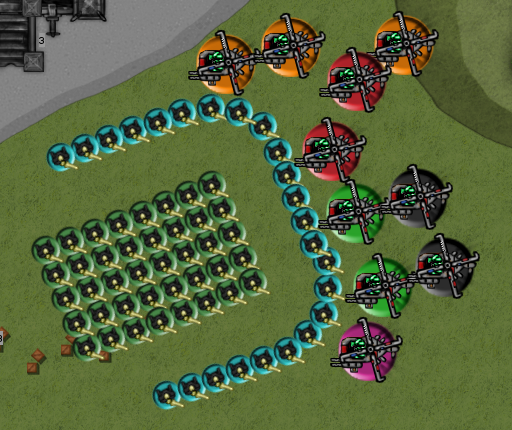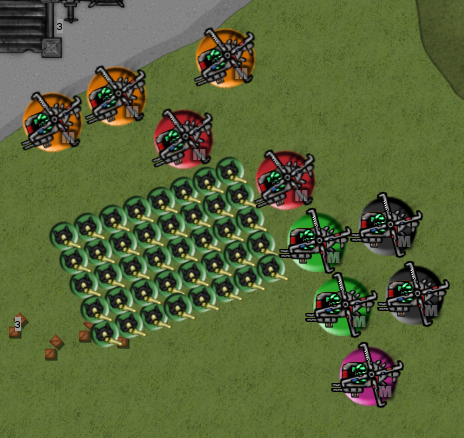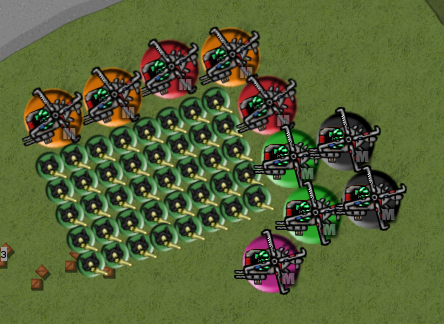
Troglodon
Ixt
Well-Known Member
- Messages
- 604
- Likes Received
- 353
- Trophy Points
- 63
Hey there, party people.
I've been testing out a couple of baseline formations for Age of Sigmar to see just how much they could affect combats. The pile-in rule's "move each model in the unit up to 3" towards the closest enemy model" wording gave me the feeling that they would cause a significant impact, so I set out to design a few.
So far, I've got...
... a list of pointers regarding charging & combat (just a few lines below),
... The Togezo Formation (beneath the pointers), for directing an 'inferior' unit against a 'superior' one,
... The Hook Formation, which can prevent retreat,
... and Mixed Unit Formations, which allows units to nest into one another (such as Skrox) and serve a wide variety of purposes.
I hope that you find those useful! Unless otherwise noted, there are a couple of things to keep in mind when employing these formations:
1) Don't show your hand.
2) Against powerful melee armies, cut the board into an L-shape.
3) Set up a perimeter.
4) Move your vulnerable units like your opponent is guaranteed to get two turns in a row.
6) Get the charge.
9) "You must construct additional pile-ins!!"
So far, the testing is going pretty well. I've only scratched the surface, so this stuff is pretty basic. Once I'm sated with how to effectively charge, I'm going to work on formations that defend against a charge, and finally formations & tactics for rescuing a unit that's getting its butt whooped (without having to retreat). Constructive feedback is appreciated, as well as any ideas that you guys may have.
 'Togezo' Formation
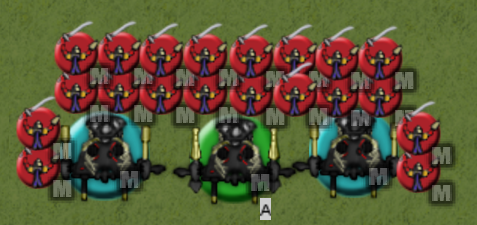
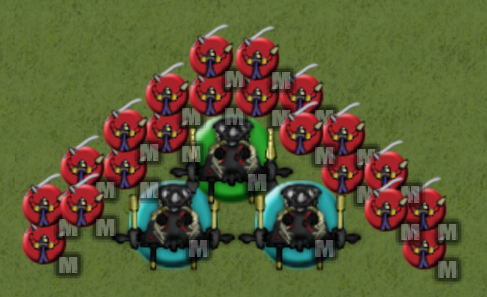
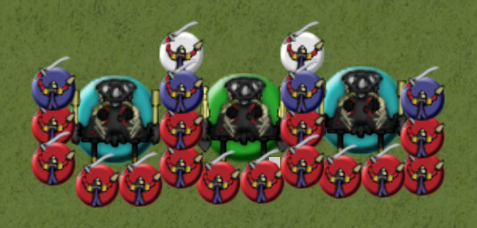
 For those of you who don't already know the character by name, Togezo (also known as 'Spiny') is a pretty nonchalant little guy in Super Mario Bros. Dropped by Lakitu from above (or idly wandering the ground), Togezo is easily identifiable due to its red shell and three spikes.
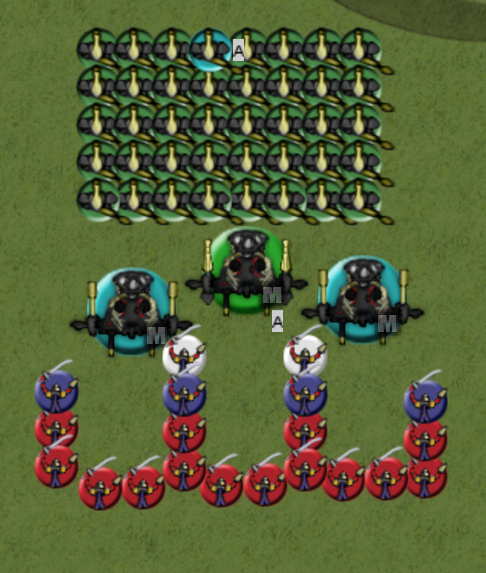
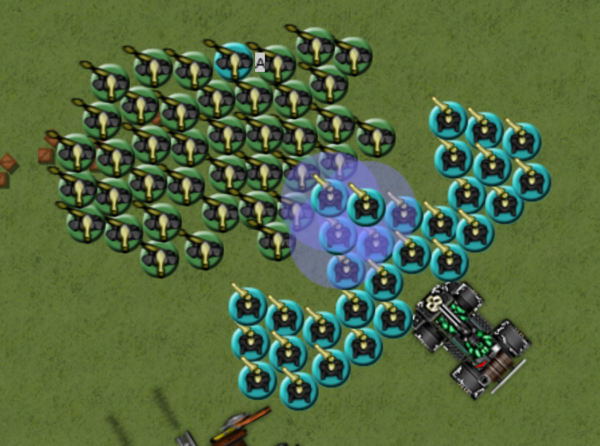
The unit formation that I've come up with is more or less the same thing: it is a three-pronged wedge, with the largest wedge in the center of the formation. It has been effective against everything with a discernable corner. In the example that I'm going to use, that center wedge has a hollow core. I pit 30 vanilla Saurus Warriors with Spears against 40 vanilla Temple Guard -- outclassed on paper, and outnumbered by 10 wounds. It's best applied when you have the second turn in the sequence.
"What did we do to deserve this?!!"
I think that this action is best taken toward the center of the board, because it creates a pretty large, pretty disruptive roadblock that neither side will be able to ignore... though you will have the upper hand.
Let's see how it goes:
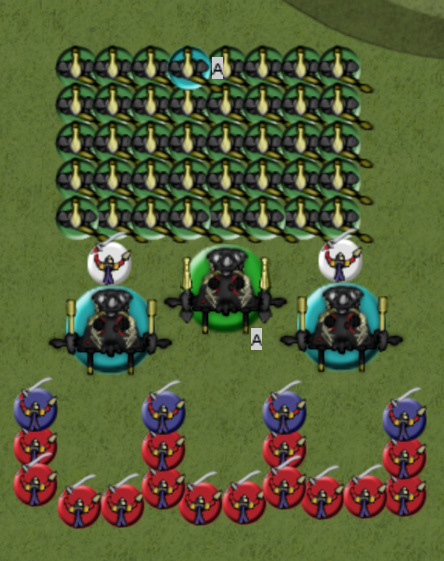
30 Saurus with Spears (blue bases) charge the very corner of 40 Temple Guard (green bases). I've used the block formation for TG (8x5) because it was easiest to clone & place in Vassal but, again, this will work against anything with some kind of corner, whether it's oblong or whatever. Do everything in your power to get the TG to pile in first! I'll say it again: Skinks are amazing for this role.
Charge with some skinks (which, let's face it, you'll probably have a lot of anyway), charge with the Saurus, and then use the Skinks as your first combat action. Activate their ability, have them step out of combat, and now the TG must pile in.
If they hadn't piled in first, they'd have still had a pretty hard time. If I had fielded 40 Saurus, they would have absolutely wiped the floor with the TG, but it's cooler to make more out of less.
I understand that they may not always be alone like this (neither unit would) - if that's the case, knock off whoever is with them (a Seraphon hero or whatever) to the best of your ability. If it's a Scarnosaur, you've got much bigger fish to fry and you'll need different units and tactics (Terradons lol).
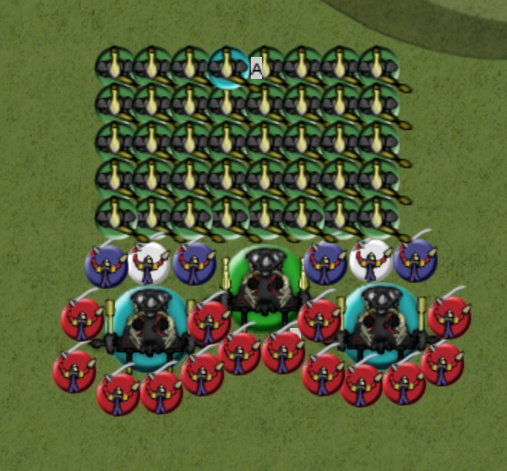
So, here we go. The Temple Guard were in a block-like formation, moving downfield. The Saurus get into formation, and charge the very corner of that block. The player controlling the Saurus gets the TG to pile in first. Here is what it will normally look like after their pile-in:
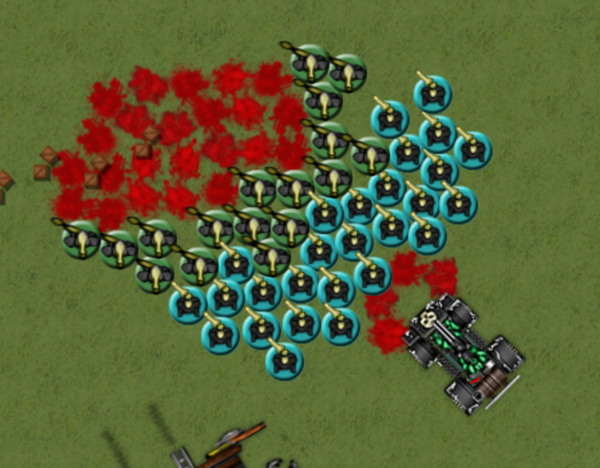
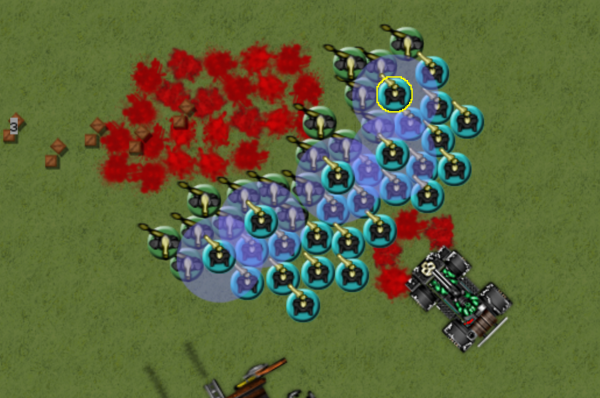
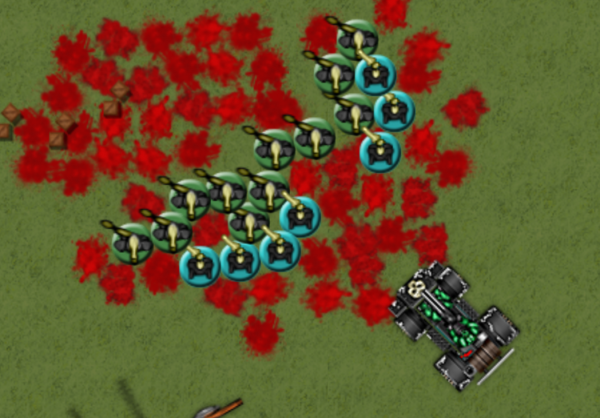
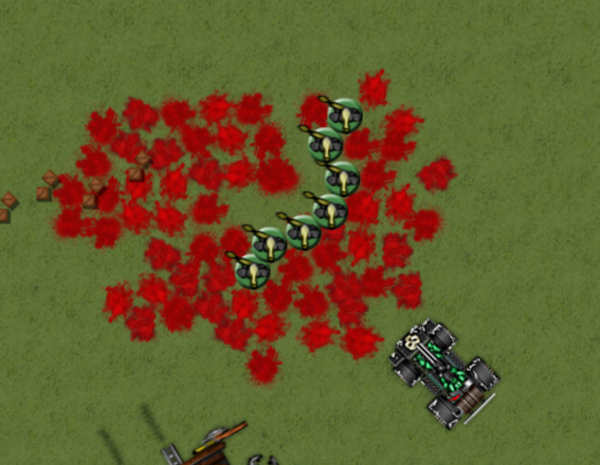
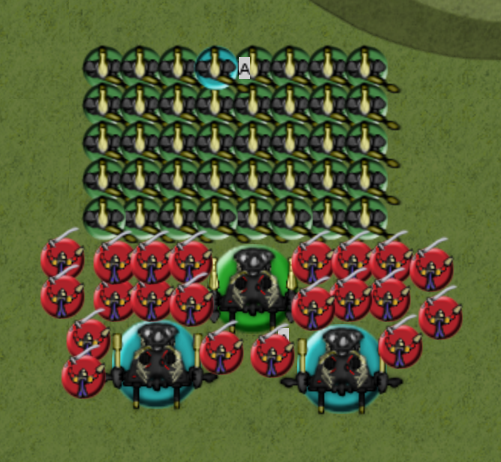
So, there you have it. Because of the ideal formation with which they'd charged the Temple Guard, 30 Saurus Warriors were able to effectively cut 40 Temple Guard down to a measly 7 models remaining. Not bad at all, in my opinion. Just about anything can take care of that, really. If they had charged the TG head-on, they'd have been pretty harshly denied. Doing this same thing with Kroxigor for support could have produced some pretty interesting results!
I'll get to work on a more in-depth look at the other formation that I'd posted, 'The Hook,' soon. That's a much more indirect strategy than this one. I'm currently trying to develop some others into higher efficiency, such as 'The Arrow,' which is a modified wing formation. Hope you guys enjoyed the read! Again, constructive feedback & additional ideas are always welcome.
*** Back to Index
I've been testing out a couple of baseline formations for Age of Sigmar to see just how much they could affect combats. The pile-in rule's "move each model in the unit up to 3" towards the closest enemy model" wording gave me the feeling that they would cause a significant impact, so I set out to design a few.
So far, I've got...
... a list of pointers regarding charging & combat (just a few lines below),
... The Togezo Formation (beneath the pointers), for directing an 'inferior' unit against a 'superior' one,
... The Hook Formation, which can prevent retreat,
... and Mixed Unit Formations, which allows units to nest into one another (such as Skrox) and serve a wide variety of purposes.
I hope that you find those useful! Unless otherwise noted, there are a couple of things to keep in mind when employing these formations:
1) Don't show your hand.
I'm trying to come up with a 'delivery' formation that models can shift into (and out of) easily without sacrificing a lot of their movement value. An Oldblood general, in particular, is pretty good here due to his Command Ability that allows a reform in the hero phase. I think that round-edged-but-rectangular formations or even crescent-shaped formations way be the way to go, here.
Either way, do not make it clear to your opponent how you intend to charge until you've charged. Otherwise, they may arrange their models in such a way that could counter you.
Either way, do not make it clear to your opponent how you intend to charge until you've charged. Otherwise, they may arrange their models in such a way that could counter you.
2) Against powerful melee armies, cut the board into an L-shape.
If you can't, then try to stretch out your deployment a bit and field plenty of mobility. Don't deploy right at the edge of your 12" mark, etc. the same way we used to fight WoC, I guess - be careful! This will give you a lot of room to work with, especially if you exploit the middle of the board by using feints. It'll also allow you to...
3) Set up a perimeter.
This is vital, and Lizardmen have several ways of doing it. Skinks, of course, are some of the best models for a 'watchman' role... but Chameleon Skinks, Oxyotl, and other units that can "walk off" are great for false perimeters. When your units are reinforced by Razordons or Skink Priests, your opponent will really have to weigh his or her options while pursuing an evenly-matched combat.
4) Move your vulnerable units like your opponent is guaranteed to get two turns in a row.
If you decide to go first, it may be wise to practice a bit of reservation. Taking Tetto'eko can help (Cosmic Herald can let you re-roll your turn's initiative die, and/or potentially theirs as well depending on how you read the rule), but this is something to keep in mind.
5) Chaff the hell out of units with a 2" range (or longer) before getting into combat.
The Togezo formation is fantastic for limiting enemy attacks but, still... you're just doing yourself a favor, here.
6) Get the charge.
This doesn't mean that you have to go first as well. I've found that it's often better to go second when utilizing quite a few of these formations. You might ask, "How am I supposed to go second? What if my opponent forces me to go first?" Well, charge with Skinks.
Skinks are interesting, because they can basically reverse the turn order for your opponent and make them act twice in a row by stepping out of combat with an otherwise unengaged unit. That can create a massive advantage for you (plus, your Skinks will appreciate it).
I'm trying to come up with formations that handle charges better than others, but it's pretty difficult given the random nature of charges (no telling how far they'll be moving). To protect against a charge, I think that Skink fodder (or layering units) is a viable strategy for sure. I've had some success utilizing a wing formation, and also a kite formation, where the broad side faces the charging unit.
7) Try to have multiple combats going on at once...Skinks are interesting, because they can basically reverse the turn order for your opponent and make them act twice in a row by stepping out of combat with an otherwise unengaged unit. That can create a massive advantage for you (plus, your Skinks will appreciate it).
I'm trying to come up with formations that handle charges better than others, but it's pretty difficult given the random nature of charges (no telling how far they'll be moving). To protect against a charge, I think that Skink fodder (or layering units) is a viable strategy for sure. I've had some success utilizing a wing formation, and also a kite formation, where the broad side faces the charging unit.
... as long as they're advantageous, of course. It'll allow you to pick and choose your fights in the combat phase, and it cuts down on your opponent's mobility. It's also a good idea to drop Mystic Shield & Celestial Rites on the units with which you intend to go second, or units that are in a bad match-up.
Pile-in really clutters the board. If you have just one fight going on, your opponent has more units open, and those are going to be more charge attempts coming your way. Again, with skinks, we can just step out of fights as well - awesome advantage to utilize, right there.
8) Don't forget that you can intentionally force your unit to fall out of 1" coherency.Pile-in really clutters the board. If you have just one fight going on, your opponent has more units open, and those are going to be more charge attempts coming your way. Again, with skinks, we can just step out of fights as well - awesome advantage to utilize, right there.
This is a smart thing to do at certain times. Remove models in any manner necessary that allows your other units to charge! Don't always peel off the back, or the sides, or whatever. You don't have to do that, and you can put your opponent in very odd positions by not doing that. For example, if you take your slain models from the center of the unit, you can charge without having to worry about this fresh charging model getting surrounded via pile-in. You'll see more when you read on with my Stegabuggy.
9)
"You must construct additional pile-ins!!" The rules say that models must be moved to the closest enemy model... but they don't say in which order! By taking your furthest models and establishing their base-to-base contact before the models that could easily get base-to-base, you will wind up with more models in combat. This is key for everyone. Going first, going second, whatever. It's essential. This is especially true when you are sending one of your inferior units against a superior one -- you will need every attack and every kill that you can get, because racking up a high Battleshock score is a very helpful means for killing infantry, especially tough and/or elite infantry.
10) Think about the models that you've got to remove, and remove them in the most advantageous way possible.
The grand scheme is similar to/the same as #8's, but the perspective is a bit different: gone are the days of always peeling off of the back rank. If it's your opponent's turn during combat, maybe peel models off of the front of the unit after charging with a wedge? You could wind up at over 3" away: this is a pretty disruptive thing to have happen, and models such as cavalry would only need to remove a few to fall out of that range. Lance charge > they pile in, kill a couple models > out of 3" range > Lance charge something that's like 15"+ away, or even the same unit. That kind of thing.
If you're fielding a hollow formation with support inside, then remove the models in the center and intentionally fall out of coherency: this will let your support charge in, which could be the difference between keeping a unit and losing a unit, etc. etc.
If you're fielding a hollow formation with support inside, then remove the models in the center and intentionally fall out of coherency: this will let your support charge in, which could be the difference between keeping a unit and losing a unit, etc. etc.
So far, the testing is going pretty well. I've only scratched the surface, so this stuff is pretty basic. Once I'm sated with how to effectively charge, I'm going to work on formations that defend against a charge, and finally formations & tactics for rescuing a unit that's getting its butt whooped (without having to retreat). Constructive feedback is appreciated, as well as any ideas that you guys may have.
'Togezo' Formation The unit formation that I've come up with is more or less the same thing: it is a three-pronged wedge, with the largest wedge in the center of the formation. It has been effective against everything with a discernable corner. In the example that I'm going to use, that center wedge has a hollow core. I pit 30 vanilla Saurus Warriors with Spears against 40 vanilla Temple Guard -- outclassed on paper, and outnumbered by 10 wounds. It's best applied when you have the second turn in the sequence.
"What did we do to deserve this?!!"
I think that this action is best taken toward the center of the board, because it creates a pretty large, pretty disruptive roadblock that neither side will be able to ignore... though you will have the upper hand.
Let's see how it goes:
30 Saurus with Spears (blue bases) charge the very corner of 40 Temple Guard (green bases). I've used the block formation for TG (8x5) because it was easiest to clone & place in Vassal but, again, this will work against anything with some kind of corner, whether it's oblong or whatever. Do everything in your power to get the TG to pile in first! I'll say it again: Skinks are amazing for this role.
Charge with some skinks (which, let's face it, you'll probably have a lot of anyway), charge with the Saurus, and then use the Skinks as your first combat action. Activate their ability, have them step out of combat, and now the TG must pile in.
If they hadn't piled in first, they'd have still had a pretty hard time. If I had fielded 40 Saurus, they would have absolutely wiped the floor with the TG, but it's cooler to make more out of less.
I understand that they may not always be alone like this (neither unit would) - if that's the case, knock off whoever is with them (a Seraphon hero or whatever) to the best of your ability. If it's a Scarnosaur, you've got much bigger fish to fry and you'll need different units and tactics (Terradons lol).
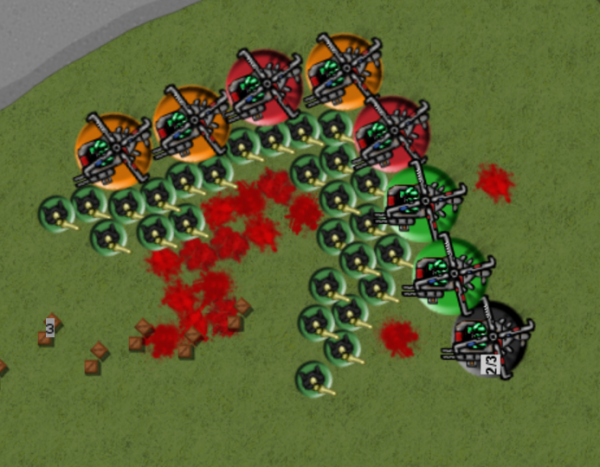
So, here we go. The Temple Guard were in a block-like formation, moving downfield. The Saurus get into formation, and charge the very corner of that block. The player controlling the Saurus gets the TG to pile in first. Here is what it will normally look like after their pile-in:
- The frontmost Saurus hit the TG on the corner at about 45 degrees. Notice that the center wedge begins to gap at its base, leaving only two ranks to make up the triangle - this is optimal, I've found.
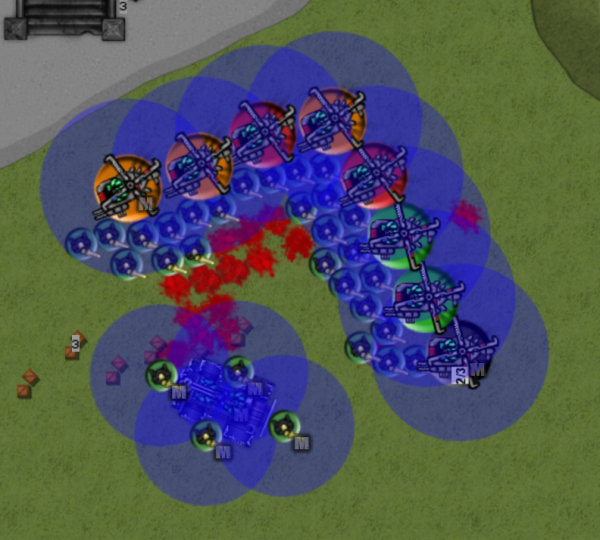
- Parked behind the Saurus unit is a 10-wound Stegadon at roughly 5" away. It's there in the slideshow as a placeholder, since it couldn't actually be there in the game. I thought that it may have been useful, but the Saurus really didn't even need it to get their job done. In any case, it was there for a pretty ruthless kind of tactic. A like-sized character/hero hanging out on the edge can be very effective as well.
- Notice how the bases of the outside wedges are placed in the 4th rank: this ensured that the closest Temple Guard would be just over one inch away after its pile-in. Depending on the number of models that you're using to make the wedge (in this example, the outside wedge is comprised of 6 models), you'll want it to start a bit deeper on the center form, like the 5th or 6th rank. If you have even more models, begin bumping the two wedges further away from the center wedge with these extra models - if your wedges are too deep, less models will get into combat.
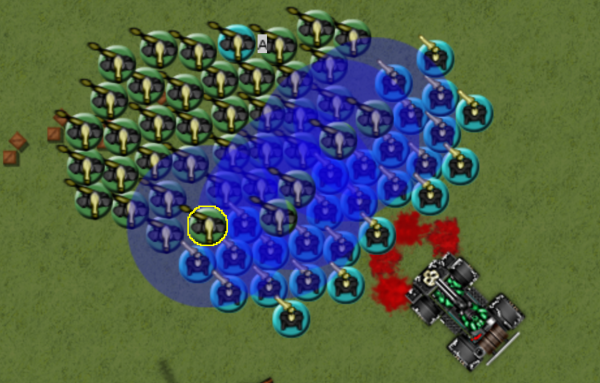
- The TG have no choice but to try to wrap around that lone model that the Saurus moved into base combat with. As such, only 4 Temple Guard will be fighting in this combat. Going first, 4 Temple Guard knock over 4 Saurus (now 40 v 26). Too bad for them: they've just stepped on the Togezo.

- Remove the back models in the center wedge first, spiraling outward. These are the models that will have the hardest time getting into combat. They will also free up room for your support to get a safe charge in later, if you have any support. In this case, we remove the 4 Saurus in front of the Stegabuggy.
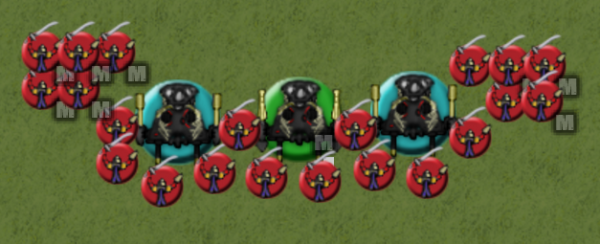
- The blue circles specify a 2" range around the Temple Guard. Saurus that fall underneath will be receiving their spear attacks. Roughly half of them will also be getting bite attacks.
- Notice that the Temple Guard are horribly, horribly organized for moving more models into combat, now. By peeling slain models equally off of each side in a diagonal pattern, it becomes even harder for these extra models to make it in. I think that at any given point, the highest number of Temple Guard that had made it into combat was only 15 (and this was shortly before being reduced to a pretty sorry state).
- Anyway, only two of them (you could argue 3, I guess) are out of range. This takes a very wise pile-in to pull off. The 24 Saurus killed 13 Temple Guard. In the first round of combat, 4 Temple Guard went first to kill 4 Saurus, and 24 Saurus went second to kill 13 Temple Guard. Combat is now 27 Temple Guard vs. 26 Saurus.
- Battleshock results: Temple Guard lose 10 more, and Saurus lose none.
- At the end of the turn, we see a meager 17 Temple Guard versus 26 Saurus Warriors.

- At this point, there would probably be some kind of roll for turn order. If the side controlling the blue Saurus wins, then they should absolutely retreat & march away. I can't emphasize that enough! Their job is done, and they have done more than enough damage against this unit. If the combat ends here, the Saurus will have won by 19 wounds.
- If they have any kind of support behind them (such as Skinks or Razordons), your Saurus will be safe and you can tarpit another unit with them. If you have Tetto'eko and gained any insight, but your opponent beat your initiative die, re-roll one or both die: as far as I can tell (and someone correct me if I'm wrong), there is nothing saying that you cannot do that!
- Otherwise, the unit will stay and probably die... which is probably fine, considering the amount of damage that they'd caused (despite being vastly inferior on paper and also outnumbered). It's like their role in 8th all over again: stick around and die slowly, maybe win a combat here or there.
- 15 Temple Guard make it in to fight 26 Saurus Warriors. They kill 13 Saurus Warriors, half of the remaining unit. This would eventually undo the Saurus.
- Now, again... if you have support behind them, pull these deaths & the battleshock deaths off of the center of the unit. Alternatively, you could pull all of them off of a far side, such as the top or bottom of the enemy unit -- this will allow your support to get a lot of attacks in, and only afford the enemy (now broken) a few back. For the most part, however, your support should be safe because everything will be base-to-base and unable to move at this point. Here's what I mean:
- With the gap in the center like that, my Stegadon can charge in. 4 Temple Guard at most can engage it... but they wouldn't have the chance, since the Stegadon is killer on the charge. As an aside, I crunched the numbers and rolled the dice - the Stegadon, going first, killed all of the remaining TG by itself.
- However, I didn't allow it to play out that way. The Stegadon remained unengaged, didn't shoot, just watched. The Saurus and TG battled on. This was the result of their fight:
So, there you have it. Because of the ideal formation with which they'd charged the Temple Guard, 30 Saurus Warriors were able to effectively cut 40 Temple Guard down to a measly 7 models remaining. Not bad at all, in my opinion. Just about anything can take care of that, really. If they had charged the TG head-on, they'd have been pretty harshly denied. Doing this same thing with Kroxigor for support could have produced some pretty interesting results!
I'll get to work on a more in-depth look at the other formation that I'd posted, 'The Hook,' soon. That's a much more indirect strategy than this one. I'm currently trying to develop some others into higher efficiency, such as 'The Arrow,' which is a modified wing formation. Hope you guys enjoyed the read! Again, constructive feedback & additional ideas are always welcome.
Last edited: